







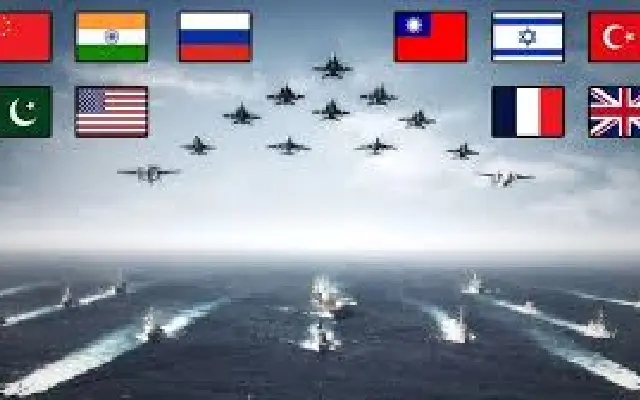


The latest Global Firepower audit gauges maritime muscle by overall displacement, revealing a clear pecking order on the high seas.
- The United States retains first place, fielding gargantuan nuclear carriers, amphibious assault behemoths and a formidable armada of atomic submarines.
- China’s PLA Navy surges into second, brandishing the planet’s biggest ship tally—including three active flattops—and relentlessly adding destroyers and frigates.
- Russia anchors third through its cruise‑missile frigates and ballistic‑missile subs, though its lone carrier stays laid‑up.
- Fourth‑ranked Japan leverages AEGIS‑equipped destroyers and twin Izumo‑class F‑35B carriers to guard vital sea‑lanes.
- India claims fifth, thanks to twin carriers Vikramaditya and Vikrant, a growing nuclear‑sub line, and blue‑water ambitions centered on the Indian Ocean.
- France slots sixth, projecting force worldwide from the nuclear‑powered Charles‑de‑Gaulle and overseas bases.
- Seventh is the United Kingdom, whose two Queen Elizabeth‑class giants headline a rejuvenated carrier strike capability.
- Italy occupies eighth, pairing its Cavour and new Trieste LHD with versatile FREMM frigates.
- At ninth, South Korea builds toward the CVX light carrier while deploying AEGIS destroyers that rival larger navies.
- Türkiye rounds out the top ten; the TCG Anadolu LHD and home‑built MILGEM corvettes elevate its Mediterranean presence.
Fleet size alone tells a different story: China hovers around 700 hulls, dwarfing America’s 440, while Sweden and Indonesia surprisingly enter the numeric top five. Yet tonnage and technology remain decisive—underscoring why India, with 594,000 tons but “only” 293 vessels, still outranks larger‑count coastal fleets. As geopolitical ripples grow, these ten sea powers will steer the world’s maritime future.
Read also: