







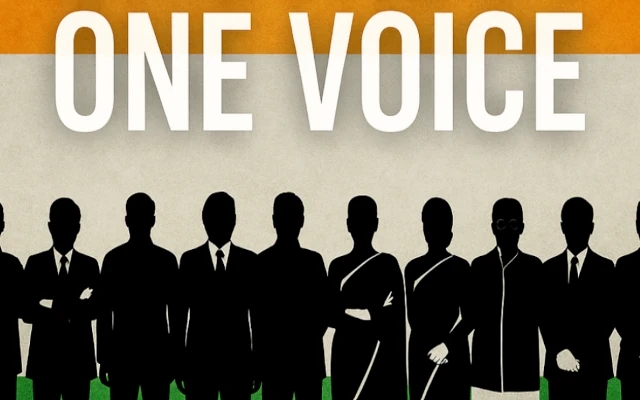


In an extraordinary display of unity, the Indian government recently launched a diplomatic initiative unlike any seen in recent times. Following the brief but intense Indo-Pak conflict, India formed a high-level parliamentary delegation comprising members from all major political parties, including opposition leaders, and dispatched them to nearly 60 countries to present a unified narrative of the events and explain India’s position on the global stage.
This move is nothing short of a masterstroke in diplomacy and nation-building. For once, politics took a backseat. These leaders, despite their ideological differences, set aside their party affiliations and spoke in one voice – as Indians. The message was unambiguous: when national interest is at stake, India stands united.
A Rare but Powerful Moment of Unity
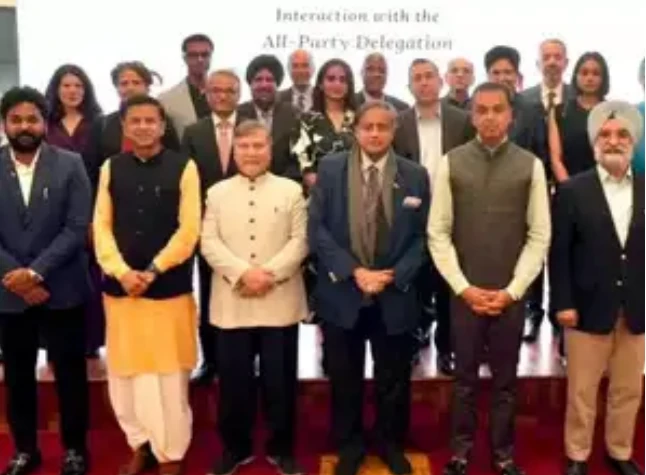 What makes this initiative even more remarkable is the transformative role of the opposition leaders. Many of them have often been fierce critics of the government, opposing policy decisions, sometimes merely for the sake of opposition. But given the opportunity to represent India globally, they have risen above party lines, shed partisan agendas, and donned the mantle of national statesmanship with dignity and conviction.
They have spoken with clarity, consistency, and a common voice—one that reflects India’s values, priorities, and legitimate concerns. They have demonstrated that when given responsibility, they can rise in flying colours and act in the larger interest of the country, beyond vote banks and media bytes.
A Case for Inclusive Governance
This raises an important question: Why not make the best use of their talent, expertise, and leadership? Why keep them perpetually in opposition when they have the wisdom and capability to contribute meaningfully?
Can we envision a new model of governance where political talent is not wasted but integrated into national missions, cutting across party lines?
Imagine a political system where it’s not always “us vs them,” but Team India working toward shared goals. Where inclusive politics replaces exclusionary power dynamics. Where the focus shifts from winning elections to winning the future.
A National Government in Spirit
If such unity can be achieved during times of crisis, why not during peacetime for development?
- A National Employment Task Force led by diverse economic thinkers and politicians.
- A Unified Healthcare Mission drawing on expertise from various states and ideologies.
- A National Sustainability Council with leaders across parties tackling climate change.
Special Project Teams with clear mandates could be formed, with participation from leaders across the spectrum. This spirit of collaborative governance could depoliticize problem-solving and bring continuity, consensus, and credibility to national initiatives.
A Global Example of Mature Democracy
India has long been celebrated as the world’s largest democracy. But can India now redefine democracy itself – from a battle of ballots to a forum for collaborative leadership?
This diplomatic mission has set a powerful precedent. It shows that when politics steps aside, leadership steps up.
Let us not allow this moment to be a mere flash in the pan. Let us institutionalize it. Let us scale it. Let us make inclusion, collaboration, and unity the new pillars of Indian democracy.
A Hope and a Challenge
As India marches toward India@2047, can we let go of ego, partisanship, and polarization? Can we build a National Purpose that’s larger than any party’s manifesto?
Can we choose vision over division, nation-building over name-calling?
This moment gives us hope that we can. Let’s not waste it.
What do you think? Should India build more bipartisan task forces and collaborative governance models? Can Indian democracy evolve from competitive politics to co-creative governance?
Authored by
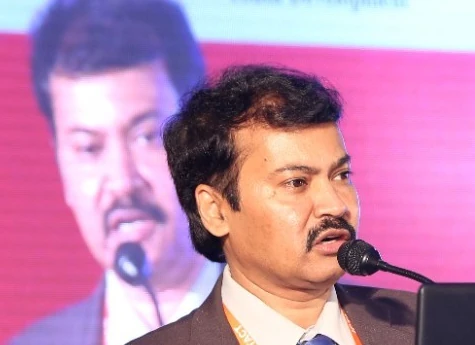 Ramesh Ranjan, Co-Founder & CEO, Author, Startup Mentor, Business Consultant, Executive Coach, Professor. The views expressed are his personal views.