







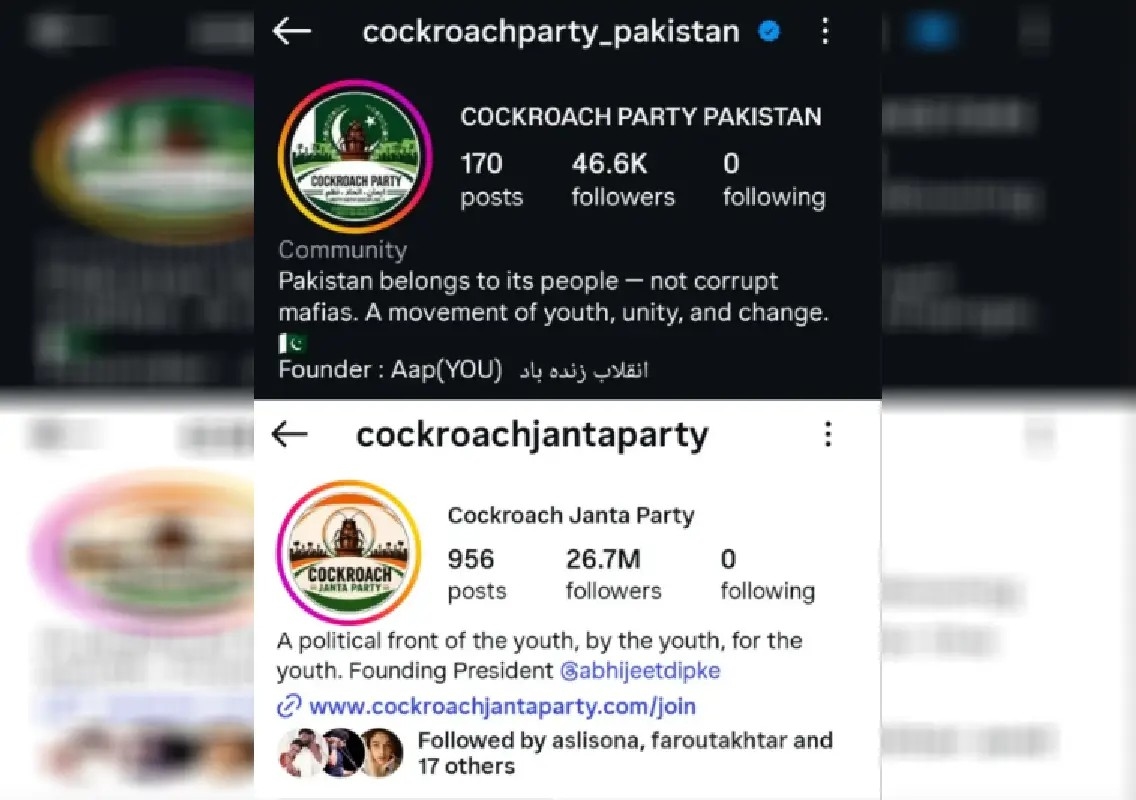


Islamabad: Activists in Pakistan have launched a new youth-led initiative called the “Cockroach Party”, drawing inspiration from India’s youth-driven movement that gained national attention during protests over examination reforms. The newly formed group says it aims to challenge systemic corruption, promote transparency and push for governance reforms through peaceful public engagement.
The development reflects the growing influence of digitally organised youth movements across South Asia, where social media has increasingly become a platform for mobilising citizens around issues such as accountability, governance and public policy.
Youth movement takes shape in Pakistan
The Pakistani activists announced the formation of the “Cockroach Party” as a platform to highlight concerns related to corruption, governance and institutional accountability.
According to organisers, the movement seeks to encourage greater public participation in democratic processes while advocating reforms that improve transparency and strengthen public institutions.
The group has stated that it intends to remain a peaceful, citizen-led initiative focused on raising awareness and encouraging constructive dialogue on governance issues.
Inspired by India’s youth-led protests
The organisers said the movement was inspired by India’s youth-led Cockroach Janta Party (CJP), which drew widespread attention during nationwide protests over alleged irregularities in competitive examinations, including the NEET paper leak.
The Indian movement gained momentum through social media campaigns and public demonstrations, eventually leading to discussions with the Union government and the announcement of several examination reform measures.
Pakistani activists said the Indian movement demonstrated how young people could organise collectively and draw attention to public issues through peaceful mobilisation.
Focus on governance reforms
The newly launched group has outlined governance reforms as one of its principal objectives.
Activists say they intend to raise issues concerning transparency, accountability in public administration and measures aimed at reducing corruption.
The organisers have also emphasised the importance of civic participation, particularly among young people, in shaping public policy and strengthening democratic institutions.
While the movement is still in its early stages, organisers say they plan to engage with citizens through awareness campaigns, discussions and peaceful public activities.
Social media driving mobilisation
Like several contemporary youth movements, the Pakistani initiative is relying heavily on social media platforms to connect with supporters.
Digital platforms have enabled organisers to share information, coordinate activities and engage with young citizens across different regions.
Observers note that social media has become an increasingly influential tool for civic engagement, allowing grassroots movements to reach wider audiences without relying on traditional organisational structures.
Peaceful civic participation emphasised
The organisers have stated that the movement is committed to peaceful methods of advocacy.
They say the objective is to encourage public discussion on governance-related issues while promoting constitutional and democratic means of seeking reforms.
Political analysts point out that youth-led civic movements have become more visible globally in recent years, often focusing on transparency, education, public accountability and institutional reforms.
Regional influence of youth movements
The emergence of a similarly named movement in Pakistan illustrates how developments in one country can influence civic initiatives in neighbouring nations.
Youth-led campaigns across South Asia increasingly draw lessons from each other’s methods of organisation, digital outreach and public engagement.
Although the issues highlighted by such movements may differ from country to country, they often share common themes of transparency, accountability and citizen participation.
The long-term impact of the newly formed Pakistani initiative will depend on its ability to sustain public engagement and translate its demands into meaningful policy discussions.
Conclusion
The launch of Pakistan’s “Cockroach Party” marks the emergence of another youth-led civic movement in the region, inspired by developments in India. With a stated focus on combating corruption and promoting governance reforms, the initiative reflects the growing role of young citizens and digital platforms in shaping public discourse and encouraging democratic participation.