







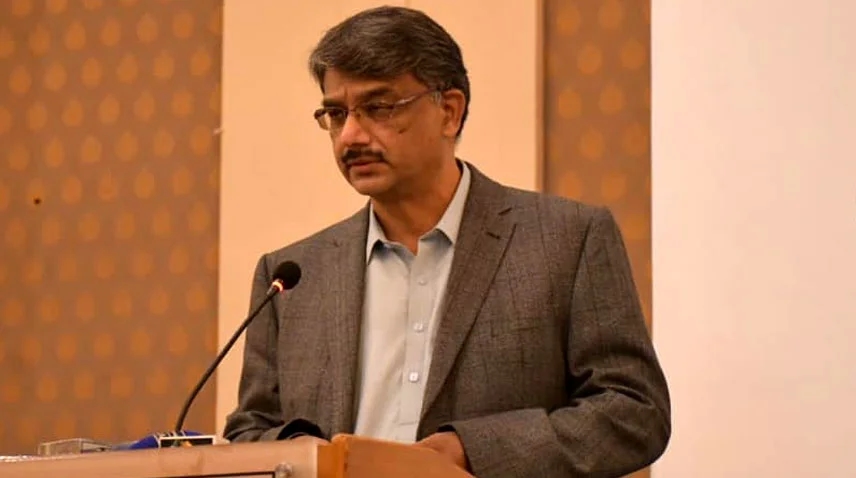


NEW DELHI: A fresh diplomatic storm has erupted after a Pakistani political leader, Haq, appeared in a viral video claiming responsibility for two major terror attacks in India — the November 10 car explosion near Delhi’s Red Fort that killed 14 people, and the massacre of 26 tourists in Kashmir’s Baisaran Valley earlier this year. His comments, which referenced “hitting India from Red Fort to the forests of Kashmir”, have triggered sharp reactions in New Delhi and renewed scrutiny of Pakistan’s alleged terror networks.
Haq’s explosive claims tie back to Red Fort blast
In the video circulating widely on social media, Haq declared, “If you keep bleeding Balochistan, we’ll hit India from Red Fort to the forests of Kashmir. By the grace of Allah, we’ve done it and they’re still unable to count bodies.” His remarks refer directly to the November 10 blast near the Red Fort, where a vehicle packed with explosives detonated, killing 14 people and injuring several others. India’s investigative agencies later traced the conspiracy to Dr Umar Un Nabi, said to be connected to a Jaish-e-Mohammed (JeM) affiliated module operating out of Faridabad. This module had been under surveillance and partially dismantled shortly before the attack. Officials believe Haq’s reference to “forests of Kashmir” alludes to the Baisaran Valley killings in Pahalgam, where armed militants opened fire on tourists earlier this year, killing 26 people.
India rejects Pakistan’s allegations on Balochistan
Islamabad has repeatedly accused New Delhi of backing unrest in Balochistan — charges India has firmly rejected. New Delhi maintains that Pakistan uses such claims as a diversion from its economic crisis and internal political instability. Following the Pahalgam attack, India intensified diplomatic pressure on Pakistan, including decisions affecting cooperation under the Indus Waters Treaty, signalling a tougher approach until Islamabad takes action against cross-border terror networks.
More Pakistani leaders hint at state-backed operations
Haq is not the first Pakistani political figure to make such admissions. Recently, Khyber Pakhtunkhwa Chief Minister Sohail Afridi claimed that Islamabad had benefited from “fake” terror attacks staged within the province. Citing reports from TOLO News, Afridi accused the federal government of “manufacturing terrorism” while blocking peace initiatives in the Khyber region. Analysts say such statements from high-ranking political figures bolster India’s longstanding charge that Pakistan uses terror as an instrument of state policy.
Operation D6: Plot behind Red Fort blast uncovered
Meanwhile, new details continue to emerge from interrogation reports connected to the Faridabad-based terror cell believed to have executed the Red Fort explosion. Intelligence sources say the group, comprising 9–10 recruits — including several medical students from Al Falah University — had been preparing for a major suicide attack planned for December 6, the anniversary of the Babri Masjid demolition. The planned strike was reportedly code-named Operation D6. Investigators allege that these students used their academic credentials to procure specialised chemicals required for manufacturing explosives. Two key figures, Dr Shaheen Shaheed and Dr Umar, are believed to have played central roles in coordinating the Red Fort attack. Dr Shaheen is accused of working on a plan to establish a women’s wing of JeM under the banner “Jamaat ul Momineen”, a new female recruitment front for the banned organisation. Her arrest followed the detention of Dr Muzammil Ahmad Ganai, another academic from Al Falah University, which remains under intensive scrutiny.
India’s investigation widens as diplomatic fallout grows
With Haq’s video fuelling fresh controversy, security agencies are expanding their probe into cross-border links, digital communication channels and international fund flows connected to the module. Diplomatically, officials say India will raise the latest admissions at global forums to highlight Pakistan’s contradictions on terrorism. New Delhi is expected to push for stronger international scrutiny of Pakistan-based groups, especially those affiliated with JeM. For now, India has reiterated that no provocation or false narrative from Pakistan will divert attention from the core issue — Islamabad’s continued support to terror outfits targeting India.