


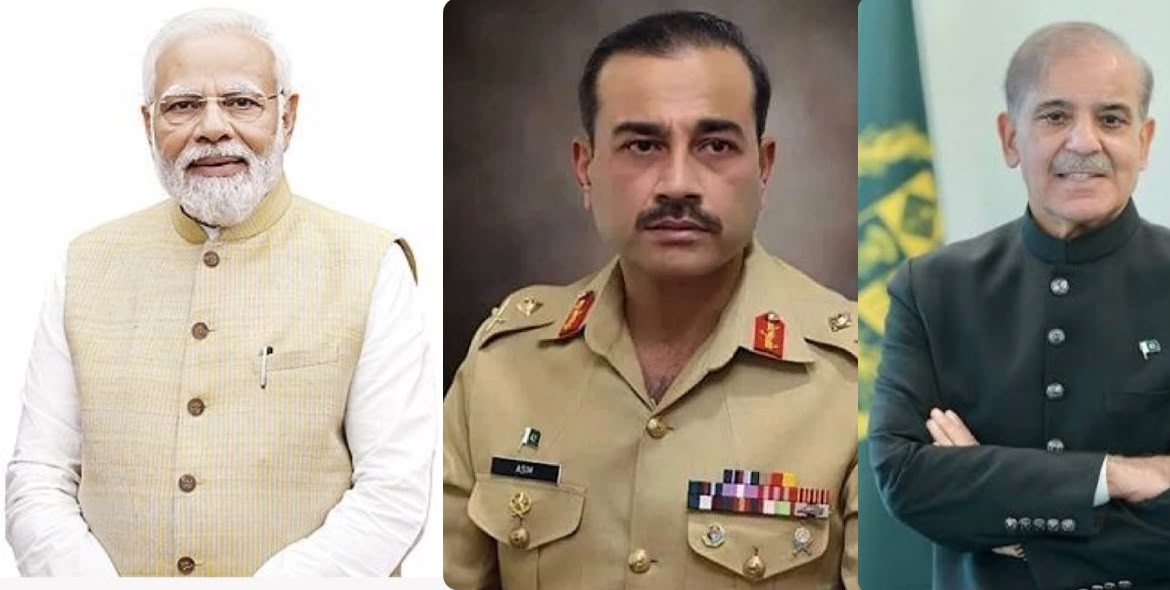


Pakistan has signed a memorandum of understanding (MoU) with Turkiye, Qatar and Indonesia to deepen cooperation in defence production, technology sharing and military research. The agreement, known as the Badr MoU, comes months after the Mecca defence pact involving Pakistan, Turkiye and Saudi Arabia. For India, Indonesia’s participation is particularly significant because New Delhi has its own defence cooperation agreements with Jakarta, including deals for BrahMos cruise missiles and Astra air-to-air missiles.
What is the Badr defence agreement?
The Badr MoU was signed in Doha, Qatar, bringing together four countries seeking closer cooperation in defence manufacturing and military capabilities. Unlike a formal mutual defence agreement, the memorandum focuses primarily on developing industrial and technological links between its participants.
Details of the agreement remain limited, but the proposed areas of cooperation include joint defence production, technology sharing, military training, research and development, and closer integration of defence supply chains.
The four countries bring different strengths to the arrangement. Turkiye has developed a significant defence manufacturing sector, particularly in areas such as drones, military electronics and other defence systems. Pakistan has an established defence industry and manufacturing infrastructure, while Indonesia offers industrial capacity and a large domestic market. Qatar brings financial resources and demand for advanced military equipment.
Closer coordination could help the participating countries pool expertise, expand production and reduce their dependence on external suppliers in selected areas. However, the extent of such cooperation will depend on the projects undertaken, the technologies shared and the investments committed by each government.
The name Badr has also attracted attention. The Arabic word means full moon, although the precise reason for choosing it for the agreement has not been officially established. Some observers have suggested a possible reference to the Battle of Badr in 624 CE, an important event in Islamic history, but that interpretation remains speculative.
How is the Badr MoU different from the Mecca pact?
The Badr agreement follows the earlier Mecca defence pact involving Pakistan, Turkiye and Saudi Arabia. Although both arrangements concern defence cooperation, they have different stated purposes.
The Mecca pact is associated with collective defence, under which an attack on one member is treated as an attack on the others. The Badr MoU, by contrast, is focused on defence production, technological cooperation and strengthening military-industrial capabilities.
The distinction matters because an industrial cooperation agreement does not automatically create a mutual defence obligation. The Badr arrangement, based on the details available, should not be treated as a commitment by all four countries to enter a war together.
The two arrangements could nevertheless complement one another. Closer defence manufacturing ties could help countries develop equipment, improve supply chains and build technical expertise that may support their broader security objectives.
Defence analyst Arda Mevlutoglu told Al Jazeera that the developments could point towards “an interconnected network of defence and security arrangements extending from the Gulf to Southeast Asia, rather than a single formal alliance”.
Such a network would not necessarily operate as a unified military bloc. Instead, it could consist of overlapping agreements with different members, obligations and areas of cooperation.
Why has Pakistan signed the Badr MoU now?
The agreement comes at a time of heightened uncertainty across the Middle East and growing debate about regional security responsibilities.
The conflict involving the United States and Iran, along with reported Houthi attacks targeting Saudi infrastructure, has increased concerns about the vulnerability of critical facilities and transport routes. Gulf countries have reasons to assess whether their existing defence arrangements provide sufficient protection against evolving threats.
Reliance on a limited number of foreign suppliers can also create challenges during periods of conflict, when demand for weapons rises and delivery schedules may be affected. Diversifying suppliers and building domestic production capabilities can give governments more options over the longer term.
US policy has added another dimension to these calculations. US officials, including Secretary of State Marco Rubio, have reiterated Washington’s defence commitments to regional partners. At the same time, US envoy to Turkiye Tom Barrack has called for countries in the Middle East to take greater responsibility for their own security.
These discussions have encouraged debate about how Gulf countries can strengthen their independent defence capabilities while continuing to work with established partners.
For Pakistan, the Badr MoU offers a framework for expanding cooperation beyond its existing defence relationships. Islamabad has relied heavily on China for military equipment and technology, and partnerships with Turkiye, Qatar and Indonesia could provide additional opportunities for industrial collaboration.
However, signing an MoU is only an initial step. The agreement’s practical value will depend on whether the participating governments establish specific projects, commit funding, share technology and deliver equipment at scale.
Why Indonesia’s participation matters to India
Indonesia’s involvement is a key reason India will monitor the agreement closely. New Delhi and Jakarta have been strengthening their defence relationship, including cooperation on missile systems and military technology.
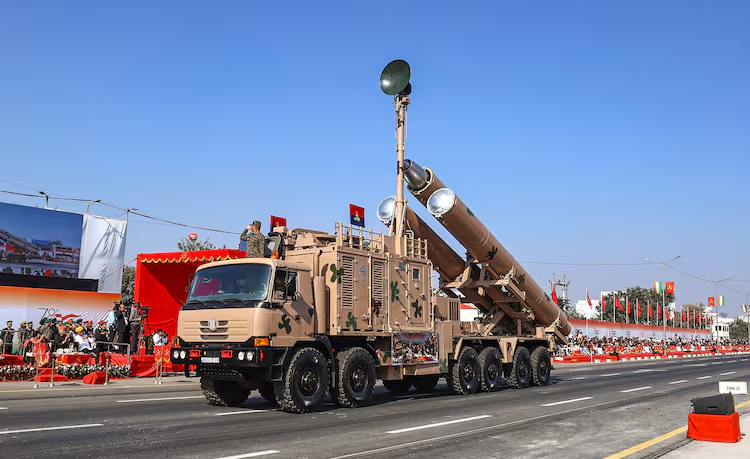
In July, India and Indonesia finalised defence deals reportedly worth around $630 million, or approximately Rs 5,953 crore, for the supply of BrahMos supersonic cruise missiles and Astra air-to-air missiles. The agreements were finalised during Prime Minister Narendra Modi’s visit to Jakarta, according to the supplied report.
BrahMos is a supersonic cruise missile jointly developed by India and Russia. Astra is an Indian-developed air-to-air missile designed to engage aerial targets. Both programmes represent important elements of India’s defence manufacturing and export ambitions.
Indonesia’s participation in the Badr MoU raises questions about how its new cooperation with Pakistan and Turkiye will coexist with its existing defence arrangements with India.
However, joining an industrial cooperation framework does not, by itself, mean Indonesia will transfer Indian defence technology to Pakistan or other participants. The actual implications depend on the MoU’s terms, the specific projects undertaken and the protections governing technology, data and intellectual property.
Experts play down immediate concerns over BrahMos and Astra
Some defence experts have cautioned against interpreting Indonesia’s participation as an immediate threat to Indian missile technology.
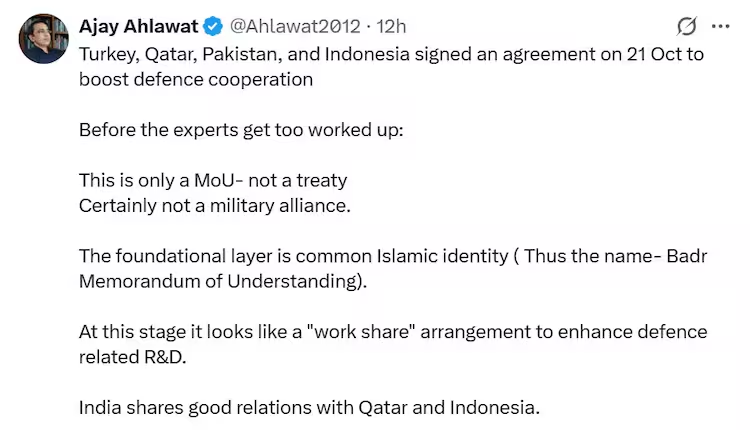
Group Captain Ajay Ahlawat (retired), a senior fellow at the Centre for Aerospace Power and Strategic Studies, said in a post on X that an MoU should not be equated with a military alliance. He described the Badr arrangement as a work-sharing agreement and noted that India also maintains good relations with Qatar and Indonesia.
Sudhir Kumar Mishra, former chief executive officer and managing director of BrahMos Aerospace, told The Times of India that the Indonesia agreement contains strict data-protection and intellectual-property provisions.
Mishra said there was no question of BrahMos and Astra technologies falling into the hands of India’s rivals.
Such safeguards are important in international defence contracts, where agreements can specify how equipment may be used, what technical information can be accessed and whether components or intellectual property can be transferred to third parties.
Nevertheless, the precise terms of the Badr MoU and the scope of any future industrial projects will matter. India will have an interest in ensuring that its own agreements remain protected, particularly where sensitive technology and proprietary information are involved.
Pakistan could gain more options for defence production
One of the clearest potential implications of the Badr MoU is the opportunity for Pakistan to broaden its defence partnerships.
Pakistan has long relied heavily on China for military equipment, although it also maintains defence ties with other countries. Cooperation with Turkiye could provide access to additional industrial expertise, while participation by Qatar could help support investment and procurement.
Joint manufacturing and research could allow Pakistan to explore new production arrangements, acquire technical skills and diversify some of its supply chains. Such cooperation could be relevant in areas where the participating countries have complementary capabilities.
However, the scale of any gains remains uncertain. An MoU does not guarantee that advanced technology will be transferred, that manufacturing facilities will be established or that countries will agree to finance specific projects.
Defence cooperation can also be constrained by differences in technical standards, export controls, budgets and national security priorities. The participating countries would need to resolve these issues before the agreement could produce substantial industrial outcomes.
What the Badr deal means for India
For India, the Badr MoU warrants attention but does not, on its own, establish the emergence of a unified military alliance directed against New Delhi.
The agreement creates a framework for defence-industrial cooperation among Pakistan, Turkiye, Qatar and Indonesia. Its longer-term significance will depend on whether it leads to concrete production projects, meaningful technology transfers and stronger military capabilities.
Indonesia’s participation deserves particular scrutiny because of its defence ties with India. At the same time, existing safeguards in Indian defence contracts and the different scope of the Badr MoU are important factors when assessing possible risks.
India will likely watch how the four countries translate the agreement into practical arrangements, especially in areas involving sensitive technologies and supply chains.
Ultimately, the Badr MoU represents a potential expansion of defence cooperation rather than proof of a new collective military commitment. Whether it becomes a significant industrial partnership or remains a broad framework will only become clear as the participating countries announce specific projects and demonstrate measurable results.