


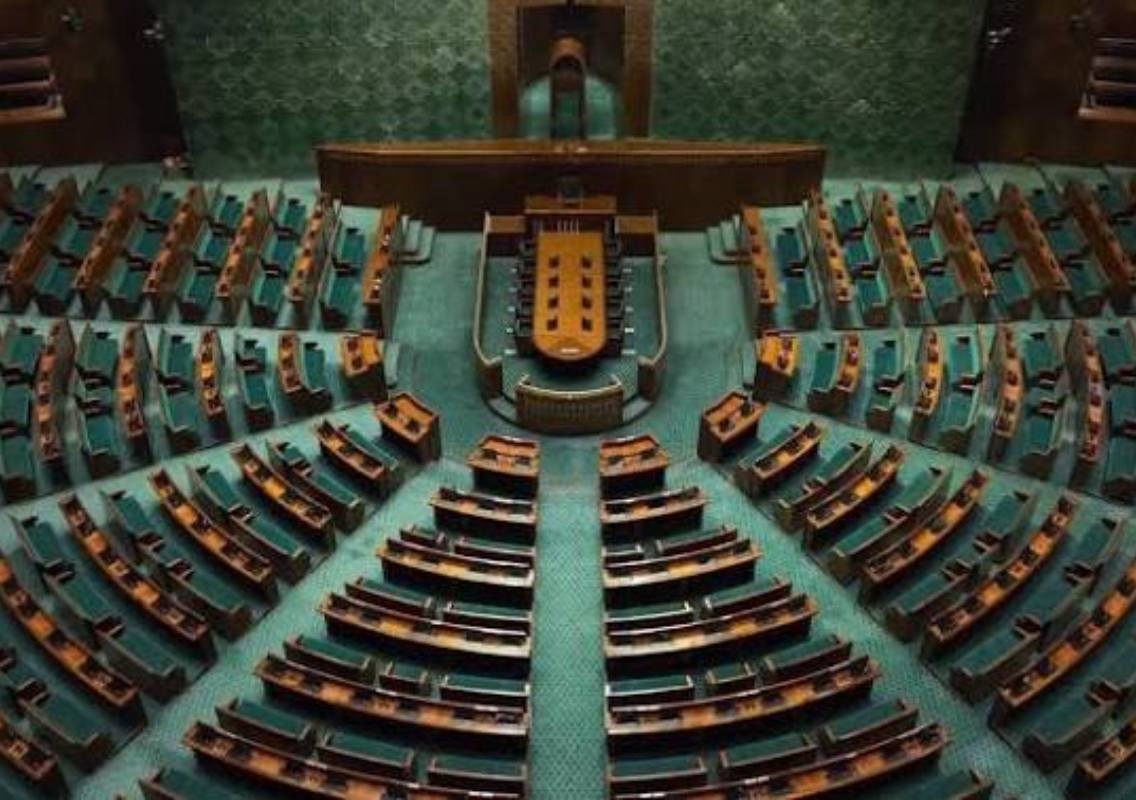


New Delhi: Parliament’s Monsoon session has remained formally open for a record 88 days after both the Lok Sabha and Rajya Sabha were adjourned indefinitely on August 13, creating the possibility of the government reconvening the Houses at short notice.
As of Monday morning, neither House had been prorogued, marking the longest such gap in Parliament’s records. The period has crossed the previous record of 87 days, set in 2008.
The prolonged delay in formally ending the session has drawn attention amid speculation that the government could convene an extended sitting to consider a constitutional amendment linked to the implementation of women’s reservation.
The proposed amendment is understood to involve increasing the strength of the Lok Sabha from its present 543 seats to a maximum of 850 through delimitation. However, no official announcement has been made about reconvening Parliament or scheduling a special sitting.
The distinction between adjournment and prorogation is central to the current situation. While both Houses have stopped their scheduled proceedings, the session has not formally ended.
Why Parliament’s Monsoon session remains open
The Lok Sabha and Rajya Sabha were adjourned indefinitely on August 13. However, an indefinite adjournment does not bring a parliamentary session to a formal close.
Adjournment is the suspension of proceedings of a House. When a House is adjourned indefinitely, it means that no date has been announced for its next sitting. The decision is taken by the presiding officer of the respective House.
Prorogation, on the other hand, formally ends a session of Parliament. It is carried out by the President of India.
Since the Monsoon session has not been prorogued, the government retains the option of reconvening the Houses within the existing session, subject to the applicable procedural requirements.
This arrangement can provide greater flexibility if the government wants Parliament to meet again without initiating the process for a completely new session.
An extended or special sitting within the existing session requires a minimum notice of two days, compared with at least 14 days for a fresh session, according to the procedural details cited in the report.
Keeping the session open therefore allows Parliament to be convened more quickly if a decision is taken.
However, the absence of prorogation does not automatically mean that another sitting will take place. No decision to reconvene either House had been announced as of Monday morning.
Women’s reservation amendment fuels speculation
The prolonged period without prorogation has prompted speculation about a possible extended sitting to consider a constitutional amendment connected to women’s reservation.
The proposal reportedly seeks to increase the Lok Sabha’s strength from 543 seats to a maximum of 850 through delimitation.
The issue is significant because the implementation of women’s reservation is linked to the constitutional and electoral framework governing the allocation of seats.
A constitutional amendment on the subject had previously failed to secure the required numbers in the Lok Sabha during a special sitting of the Budget session on April 17.
The latest speculation has therefore focused on whether the government could use the still-open Monsoon session to bring Parliament together again and take up the proposal.
However, the continued formal existence of the session should not be treated as confirmation of a government decision. There has been no official announcement that the Houses will reconvene or that the proposed amendment will be introduced during an extended sitting.
The possibility of a short-notice sitting remains one of the procedural implications of keeping the session open.
Constitution does not set a prorogation deadline
The Constitution does not prescribe a specific deadline by which a House must be prorogued after being adjourned indefinitely.
As a result, the 88-day gap does not, by itself, amount to a constitutional or procedural violation.
The period between indefinite adjournment and prorogation can vary depending on parliamentary requirements and the government’s decision on whether the Houses may need to meet again.
Historical records show several instances in which Parliament remained unprorogued for extended periods.
The previous longest gap was 87 days in 2008. Other notable periods included 76 days in 1987, 54 days in 1989, and 49 days each in 2006 and 2013. In 1963, the gap was 41 days.
The latest 88-day period has now surpassed all these previous instances.
These precedents indicate that a prolonged gap between adjournment and prorogation is not unprecedented, although the current period has set a new record.
What happened during the 2008 record period?
The 2008 instance provides an important precedent for understanding why a session may remain open for several months.
In July that year, the Lok Sabha met on July 21 and 22 to hold a confidence vote involving the United Progressive Alliance (UPA) government led by Prime Minister Manmohan Singh.
The government faced the trust vote after the Left parties withdrew support over the India-US civil nuclear agreement. The UPA government survived the vote.
Following the proceedings, the session remained formally open. The Lok Sabha reconvened on October 17 and subsequently adjourned again on October 24, with the next sitting scheduled for December 10.
The extended period without prorogation allowed the House to meet again without formally beginning an entirely new session.
The 2008 episode is particularly relevant to the current situation because it demonstrates how keeping a session open can provide flexibility when further parliamentary business may be required.
What happens next?
With the Monsoon session still formally open after 88 days, the government has the procedural option of reconvening Parliament at shorter notice than would be required for a fresh session.
The possibility has attracted attention because of the proposed constitutional amendment linked to women’s reservation and the planned expansion of the Lok Sabha through delimitation.
Nevertheless, the next step remains uncertain. No official schedule for another sitting has been announced, and the Houses could still be prorogued without reconvening.
For now, the key development is the record duration between the indefinite adjournment of both Houses on August 13 and the absence of a formal prorogation order. The 88-day gap has surpassed the previous 87-day record from 2008, while leaving open the possibility of further parliamentary proceedings within the existing session.