


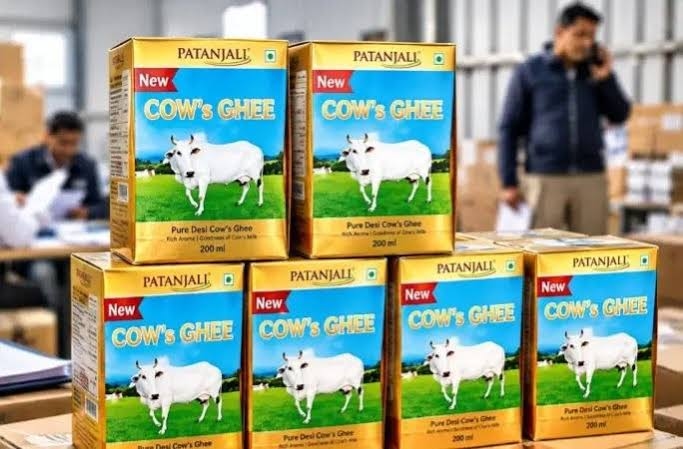


Burhanpur: Patanjali Foods has received a recall order for the sale of a particular batch of cow ghee after food safety authorities in Madhya Pradesh classified the product as “unsafe” under the Food Safety and Standards Act, 2006. The company disclosed the development in a stock exchange filing on Saturday, October 24, 2026, and said it plans to appeal against the order.
The order was issued by the Food and Drug Administration (FDA) in Burhanpur, Madhya Pradesh, following a sample that reportedly failed to conform to the prescribed food safety standards. Patanjali Foods said the matter would have no material impact on its financial or operational activities, apart from the value of the cow ghee belonging to the affected batch.
The development comes amid increased scrutiny of food products and labelling practices by regulatory authorities across India. Recent enforcement actions involving packaged food claims and suspected adulteration have brought renewed attention to compliance with food safety regulations.
Why has Patanjali Foods received the recall order?
According to the company’s exchange filing, the recall order concerns the sale of a specific batch of cow ghee in Burhanpur. The product sample did not conform to the requirements of the Food Safety and Standards (Food Products Standards and Food Additives) Regulations, 2011, which prescribe standards for food products and address matters including additives and contaminants.
Patanjali Foods stated in its filing that it had received a “recall order of sale of Cow Ghee of a Batch on account of unsafe” under the Food Safety and Standards Act, 2006.
The order relates to the identified batch rather than establishing that all cow ghee products sold by the company are unsafe. The company’s disclosure did not indicate that the regulatory action covered its entire cow ghee range.
Food safety rules require products sold in the market to meet applicable standards. When a sample fails to meet the prescribed requirements, authorities can take action under the relevant provisions of the law. The precise implications of a recall order depend on the findings, the product and the directions issued by the competent authority.
Company plans to challenge the order
Patanjali Foods said it would file an appeal against the order passed by the designated officer of the Food and Drug Administration in Burhanpur.
The proposed appeal will allow the company to contest the regulatory decision through the applicable legal process. The company has not indicated in the disclosed information that the order has been withdrawn or overturned.
In its stock exchange communication, Patanjali Foods also sought to clarify the potential business implications. It said there would be no material impact on its financial or operational activities, except for the value of the cow ghee in the particular batch covered by the order.
The financial exposure, therefore, is linked to the affected batch, according to the company’s assessment. The filing did not provide a specific monetary value for the batch or details of the quantity involved.
The recall order is a regulatory action concerning the product sample and its compliance with food safety standards. The company’s decision to appeal means the matter remains subject to the relevant proceedings.
What food safety regulations require
The Food Safety and Standards Act, 2006, provides the legal framework governing food safety in India. It establishes requirements intended to ensure that food available to consumers meets prescribed safety and quality standards.
The Food Safety and Standards Authority of India (FSSAI) sets regulations covering food products, ingredients, additives, contaminants, labelling and advertising claims. State food safety departments and designated officers are responsible for enforcement within their jurisdictions.
The Food Safety and Standards (Food Products Standards and Food Additives) Regulations, 2011, lay down requirements for different categories of food. Products that fail to meet the applicable standards can face regulatory action, depending on the nature and seriousness of the violation.
For manufacturers, compliance involves ensuring that products meet the required specifications and that samples taken for testing conform to the relevant standards. Regulatory action can also lead to recalls, restrictions on sales or other proceedings, depending on the circumstances and the applicable provisions.
In the Patanjali Foods case, the order specifically concerns a batch of cow ghee in Burhanpur. The company has said it will challenge the decision, and the outcome of the appeal will be relevant to the further course of the matter.
FSSAI action against Dabur over ‘100%’ claims
The action against Patanjali Foods comes amid other food-related regulatory interventions. The Food Safety and Standards Authority of India recently issued a prohibition order directing Dabur India Limited to stop selling food products carrying certain “100%” claims that the regulator considered misleading.
According to the reported action, the regulator said such claims violated the Food Safety and Standards (Advertising and Claims) Regulations, 2018.
The products covered by the prohibition reportedly included honey, apple cider vinegar, virgin coconut oil, sesame oil, cow ghee, coconut water, coconut milk and other food products carrying similar claims.
The action highlights the regulatory attention given not only to product safety and composition but also to how food products are presented to consumers. Labelling and advertising claims must comply with applicable rules and should not mislead buyers about a product’s nature or characteristics.
The Dabur matter differs from the Patanjali Foods case. The latter concerns a particular batch of cow ghee that reportedly failed to conform to prescribed standards, while the action against Dabur relates to product claims and labelling.
Maharashtra steps up action against suspected adulteration
Food safety authorities in Maharashtra have also intensified enforcement against suspected adulterated food products. Recent actions by the state’s Food and Drug Administration reportedly involved the seizure of suspected adulterated dairy products and sweets.
The products included colostrum, butter, khoya, paneer, ghee and shrikhand. Such enforcement drives are aimed at identifying products that may not meet applicable safety and quality requirements.
Dairy products are subject to specific standards because their composition and handling can affect consumer safety. Testing and inspection help authorities assess whether products comply with prescribed requirements and whether further action is warranted.
However, suspected adulteration and a confirmed regulatory violation are not the same. The outcome depends on the findings of inspections, laboratory testing and any subsequent proceedings.
What the order means for consumers
The Patanjali Foods order underlines the importance of food safety checks and regulatory oversight in the packaged food market. Consumers rely on manufacturers to meet prescribed standards, while food safety authorities are responsible for investigating suspected violations and taking appropriate action.
The available company disclosure identifies the affected product as a particular batch of cow ghee in Burhanpur. It does not establish that all Patanjali Foods cow ghee products are unsafe, nor does it provide details of the batch’s quantity, manufacturing date or retail distribution.
Consumers seeking clarification about a product should check the batch details on the packaging and follow any official recall or safety instructions issued by the company or competent authorities.
Patanjali Foods has said it will appeal against the order and has assessed the financial and operational impact as limited to the value of the affected batch. The outcome of the appeal and any further directions from the authorities will determine the next steps in the case.
The development reinforces the need for manufacturers to maintain compliance with food standards and for regulators to ensure that food products offered for sale meet the requirements of Indian food safety law.