







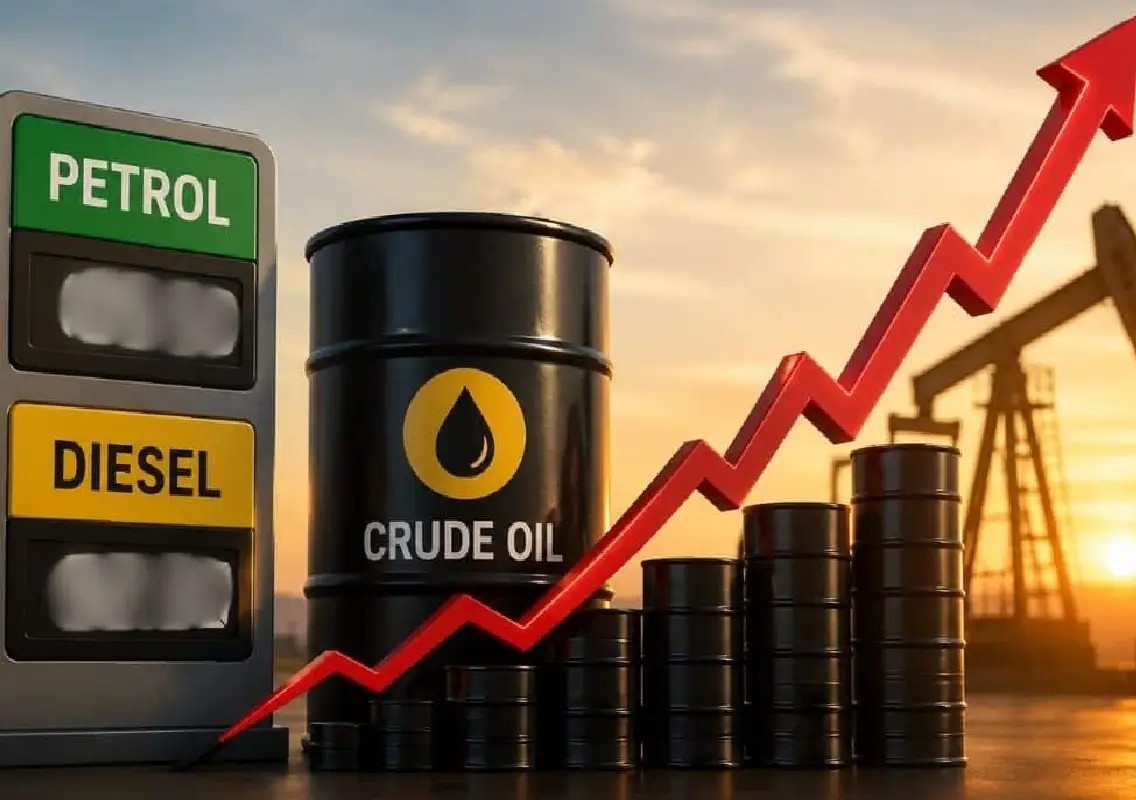


Fuel prices across India have been increased once again, with petrol becoming costlier by 87 paise per litre and diesel by 91 paise per litre.
This marks the third fuel price hike in less than 10 days, adding further pressure on households and transport sectors already dealing with rising living costs.
Repeated hikes linked to crude oil surge
According to reports, the latest revision comes amid increasing global crude oil prices and mounting pressure on oil marketing companies.
Industry experts say geopolitical tensions and supply uncertainties in global energy markets have significantly impacted crude oil rates, forcing domestic fuel price revisions.
The repeated hikes are expected to affect transportation costs, logistics, and prices of essential commodities across several sectors.
Consumers fear broader inflation impact
The latest increase has triggered concerns among consumers and businesses over a possible rise in food prices and daily expenses.
Transport operators and delivery businesses are expected to face higher operating costs, which could eventually impact prices of vegetables, packaged goods, and other essentials.
Recent fuel hikes have already contributed to increases in milk, bread, and transportation-related expenses in several cities.
Pressure mounts on middle-class households
Middle-class families and daily commuters are among the most affected as fuel expenses continue to rise steadily.
Experts warn that repeated hikes in petrol and diesel prices often create a ripple effect across the economy by increasing manufacturing, transport, and supply-chain costs.
Several opposition leaders and consumer groups have also criticised the repeated price revisions, demanding measures to ease the burden on the public.
Global tensions influence energy markets
Energy analysts say international crude oil volatility continues to remain high due to ongoing geopolitical uncertainties and supply concerns in major oil-producing regions.
Oil companies are reportedly under pressure to balance rising import costs while maintaining domestic fuel supply stability.
Further price revisions may depend on upcoming movements in global crude oil markets and government policy decisions.