







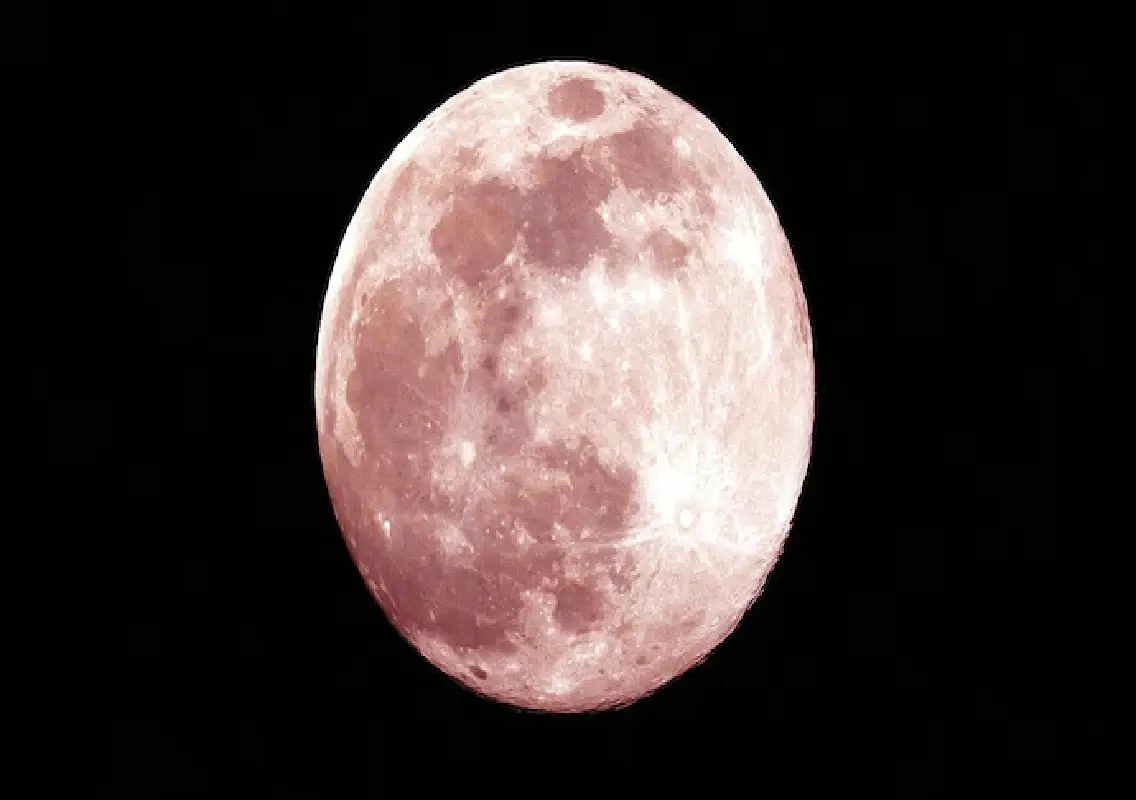


New Delhi: Skywatchers across India are gearing up to witness the much-anticipated Pink Moon 2026, which will reach its peak on April 2 and be visible throughout the night of April 1–2.
Despite its name, the Pink Moon will not actually appear pink, but it remains one of the most popular full moon events of the year due to its seasonal and cultural significance.
Date and timing of the Pink Moon
The full moon will reach its peak brightness at:
- Date: April 2, 2026
- Time: 02:11 UTC
- India time: Around 7:41 AM IST
Although the exact peak occurs in the morning hours in India, the Moon will appear nearly full and bright throughout the night, making the evening of April 1 the best time for viewing.
Why is it called the Pink Moon?
The name “Pink Moon” does not refer to the Moon’s colour. Instead, it originates from Native American traditions of naming full moons based on seasonal changes.
In April, a pink wildflower known as moss pink or ground phlox blooms in parts of North America. This led to the naming of the April full moon as the Pink Moon.
The April full moon is also known by other traditional names such as:
- Sprouting Grass Moon
- Egg Moon
- Fish Moon
All of these names symbolise the arrival of spring and new beginnings.
Will the Moon appear pink?
Contrary to popular belief, the Pink Moon will look like a typical full moon—bright and white.
However, when the Moon is close to the horizon, it may appear slightly orange or reddish. This effect is caused by the Earth’s atmosphere scattering light, not by any actual change in the Moon’s colour.
A micromoon event this year
The Pink Moon 2026 is also classified as a “micromoon,” meaning it occurs when the Moon is near its farthest point from Earth in its orbit.
As a result, the Moon may appear slightly smaller and dimmer compared to a supermoon, though the difference is subtle and often not noticeable to the naked eye.
Significance of the April full moon
The Pink Moon holds symbolic importance across cultures and traditions. It is often associated with:
- Seasonal transition from winter to spring
- Growth and renewal
- Fresh beginnings
In spiritual and astrological contexts, it is considered a time for reflection, letting go of the past, and setting new intentions.
Visibility across India
The Pink Moon will be visible across most parts of India, provided weather conditions are favourable.
Viewers can spot it from the evening of April 1 until early morning on April 2. Clear skies and low light pollution will enhance visibility.
Best way to watch
For the best viewing experience:
- Look for the Moon shortly after sunset on April 1
- Choose an open area away from city lights
- No telescope or special equipment is required
Even casual observers will be able to enjoy the full brightness of the Moon with the naked eye.
Conclusion
While it may not turn pink, the Pink Moon 2026 offers a beautiful opportunity to observe the night sky and connect with seasonal rhythms. With clear skies, it promises to be a striking celestial sight for viewers across India.