







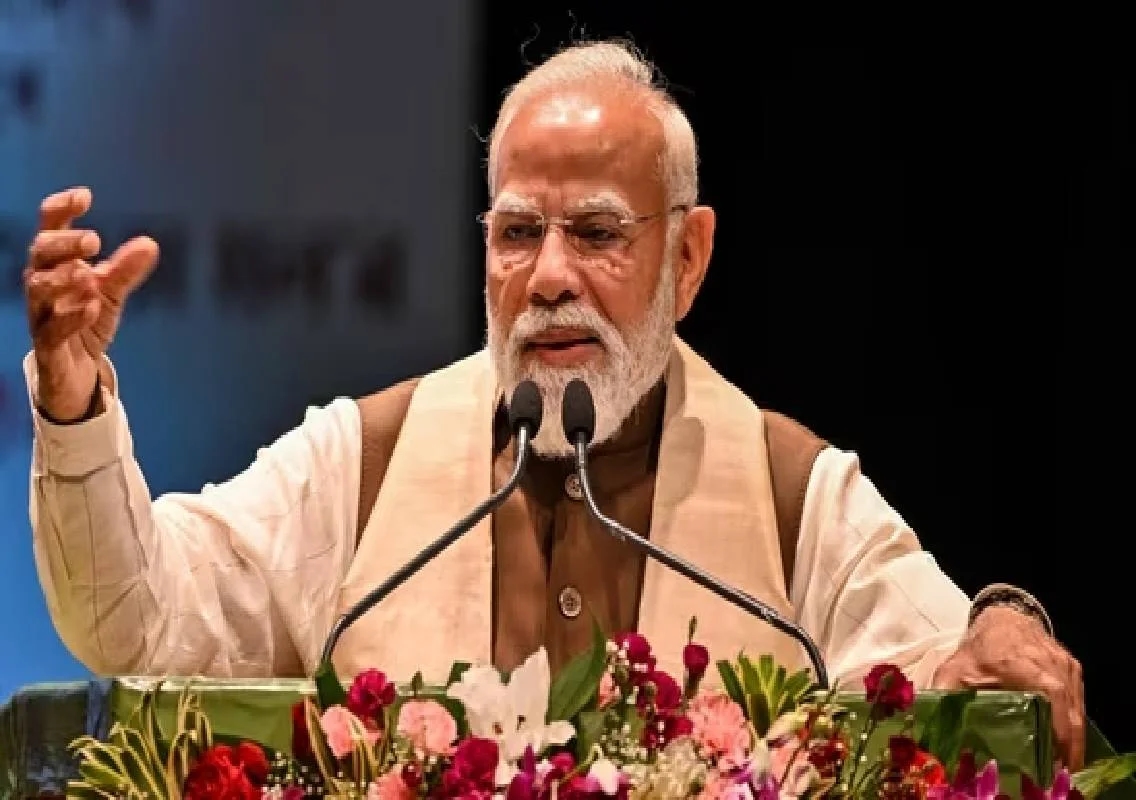


New Delhi: Prime Minister Narendra Modi on Monday said the government is moving forward with the implementation of 33% reservation for women in the Lok Sabha and state assemblies, in line with demands made by Opposition parties during the passage of the law in 2023.
Speaking at the Nari Shakti Vandan Sammelan at Vigyan Bhawan, the Prime Minister said Parliament is “on the verge of creating history” as it prepares to take up amendments related to the women’s reservation law in the upcoming session.
Push for implementation by 2029
The government is set to introduce two key bills during the three-day Parliament session beginning April 16, aimed at enabling the rollout of the women’s quota and setting up a delimitation commission.
The Prime Minister Narendra Modi noted that when the reservation law was passed in 2023, there was broad consensus among all political parties that its implementation should take place by 2029.
He said the current move reflects that timeline and is in keeping with the Opposition’s earlier demands for timely execution.
Call for unanimous support
Urging lawmakers to rise above party politics, Modi expressed hope that the amendments would be passed unanimously. He emphasised that the initiative is not about political gains but about empowering women across the country.
“This is not about which party wins or loses. The credit belongs to women, to Parliament, and to all those who have worked towards this for decades,” he said.
Debate over delimitation
However, Opposition parties have raised concerns over the proposed changes, particularly the plan to delink the delimitation process from the ongoing Census and instead base it on the 2011 Census data.
The amendments propose increasing the number of Lok Sabha seats from 543 to 816, with 273 seats reserved for women.
Critics argue that such changes require broader consultation and clarity, especially regarding representation and electoral fairness.
A ‘historic’ step for women empowerment
The Prime Minister described the move as one of the most significant decisions of the 21st century, dedicated to “Nari Shakti”. He said the initiative would help fulfil long-standing aspirations for greater representation of women in legislative bodies.
He also highlighted India’s progress in women’s participation at the grassroots level, noting that over 14 lakh women are part of Panchayati Raj institutions, with several states having 50% reservation for women in local bodies.
Women-led development focus
Modi reiterated that women-led development is central to India’s vision of becoming a developed nation. He pointed to various government initiatives aimed at improving financial independence and decision-making power for women.
According to the Prime Minister, increased participation of women in governance leads to more responsive and inclusive policymaking.
Conclusion
As Parliament prepares to debate the amendments, the proposed rollout of the women’s quota is set to become a defining moment in India’s legislative history. While political differences remain over certain aspects, the move signals a renewed push towards greater gender representation in governance.