







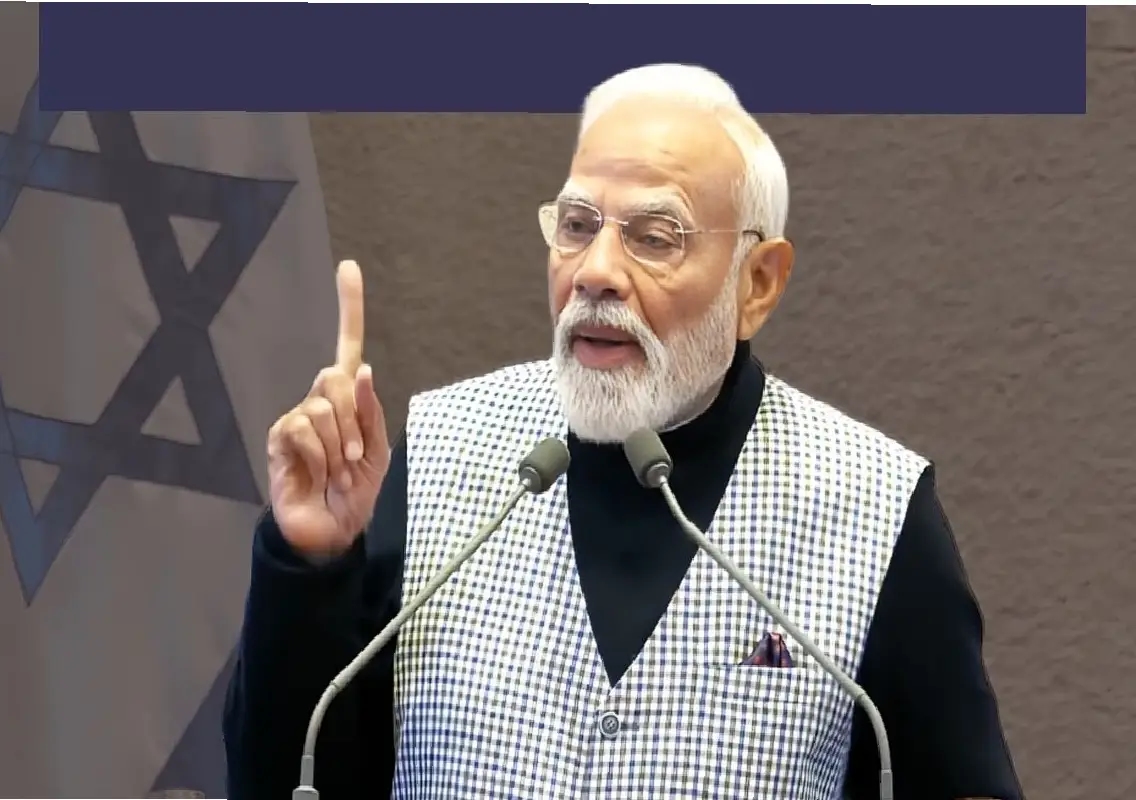


New Delhi: Prime Minister Narendra Modi on Friday extended his greetings on National Science Day, celebrating the spirit of scientific research, innovation and curiosity that continues to shape India’s progress.
Marking the occasion on February 28, the Prime Minister paid tribute to eminent physicist C. V. Raman for his landmark discovery of the Raman Effect, a breakthrough that earned him the Nobel Prize in Physics in 1930 and brought global recognition to Indian scientific research.
“Today, on National Science Day, we celebrate the spirit of research, innovation and scientific curiosity that drives our nation forward. This day commemorates the groundbreaking discovery of the Raman Effect by Sir C.V. Raman. This discovery placed Indian research firmly on the global map,” PM Modi said in a post on X.
Reaffirming commitment to research and youth
In his message, the Prime Minister reaffirmed the government’s resolve to strengthen India’s scientific ecosystem and empower young innovators.
“We reaffirm our resolve to empower our youth, strengthen research ecosystems and harness science and technology for national development and global good,” he added.
The Prime Minister also recalled a quote from Indian scriptures, emphasising that when science and knowledge converge, they provide solutions, drive innovation and help overcome challenges.
National Science Day is observed annually on February 28 to commemorate the discovery of the Raman Effect in 1928. The day serves as a platform to highlight the importance of science in everyday life and encourage young minds to pursue research and innovation.
Theme: Women in science catalysing Viksit Bharat
This year’s theme for National Science Day is “Women in Science: Catalysing Viksit Bharat.” The theme aligns with India’s vision of becoming a developed nation and recognises the vital role played by women scientists, researchers and innovators in shaping the country’s future.
The Government of India, through the Department of Science and Technology (DST) under the Ministry of Science and Technology, is hosting the national-level celebrations at Vigyan Bhawan in New Delhi.
The theme seeks to spotlight women’s contributions across scientific disciplines, from space research and defence technology to materials science and digital innovation. It also aims to inspire greater participation of women in STEM (Science, Technology, Engineering and Mathematics) fields.
National-level celebrations and lectures
The programme began with National Science Day lectures chaired by Principal Scientific Adviser Professor Ajay K. Sood. Eminent experts addressed key areas of technological advancement and strategic research.
Among the speakers was Dr Shubha V. Iyengar, who spoke on indigenous aerospace and defence technologies. Dr K. Balasubramanian addressed the importance of critical metals and advanced materials, highlighting their strategic value in emerging technologies. Shri Shashi S. Vempati delivered insights on direct-to-mobile broadcasting and its transformative potential in communication systems.
Officials said the event would include interactions with students, exhibitions of scientific innovations and recognition of outstanding contributions to research and development.
Strengthening India’s scientific ecosystem
Over the past decade, India has made significant strides in scientific research, innovation and start-up development. Government initiatives have aimed at expanding research infrastructure, encouraging public-private partnerships and supporting deep-tech innovation.
India’s growing presence in space exploration, digital technology, biotechnology and renewable energy has reinforced its global scientific standing. Observances like National Science Day are intended not only to honour past achievements but also to inspire the next generation of researchers.
As India aspires to become a developed nation, or ‘Viksit Bharat’, science and technology are seen as critical drivers of economic growth, sustainability and social progress.
Concluding his message, the Prime Minister’s remarks underscored the enduring relevance of C.V. Raman’s discovery and the broader spirit of inquiry that continues to propel India’s scientific journey forward.