







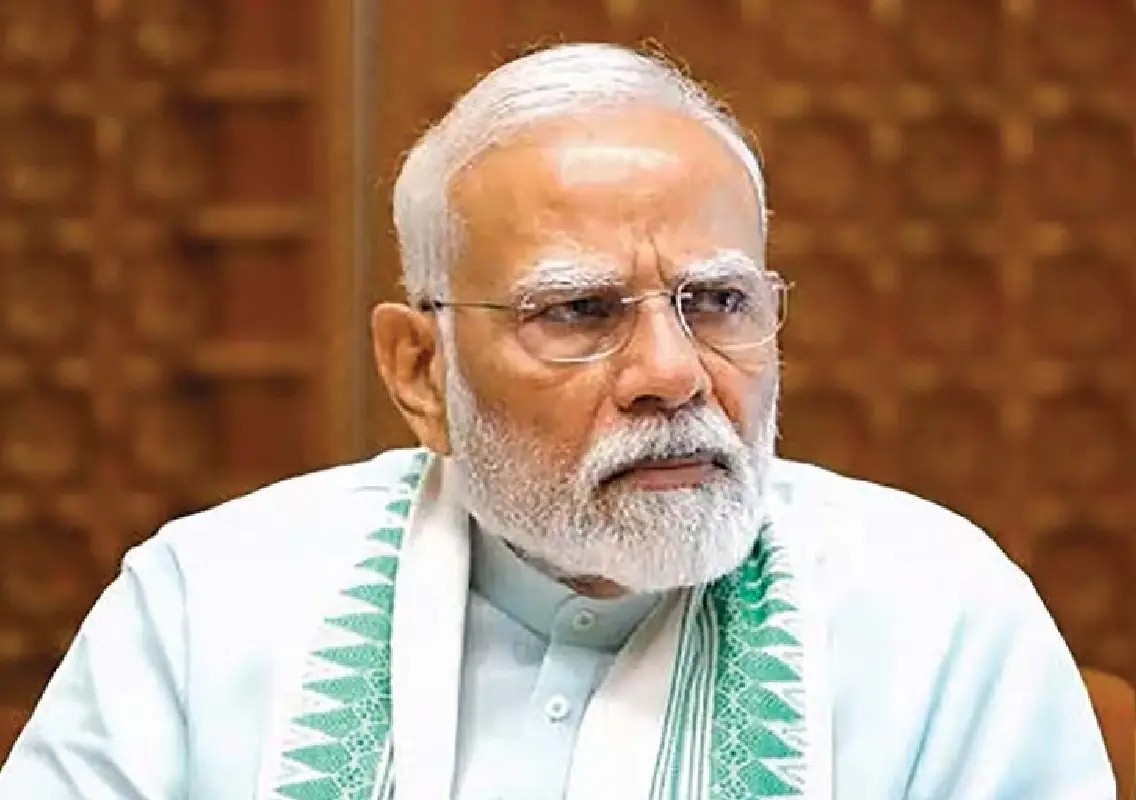


New Delhi: Prime Minister Narendra Modi has appealed to citizens to play a greater role in strengthening India’s economy amid the continuing uncertainty caused by the West Asia crisis.
Addressing a function in Hyderabad, the Prime Minister made seven appeals focused on conserving foreign exchange, reducing dependence on imports and encouraging self-reliance. The appeals include cutting fuel consumption, postponing non-essential foreign travel, reducing excessive gold purchases and supporting local products.
Seven appeals for economic self-reliance
The Prime Minister’s first appeal was for citizens to reduce the consumption of imported fuel. He suggested greater use of public transport and carpooling to reduce fuel demand and help conserve foreign exchange.
The appeal comes against the backdrop of elevated crude oil prices and continuing uncertainty around energy supplies due to the West Asia crisis. India remains heavily dependent on imported crude oil, making international energy disruptions a major economic concern.
Modi also urged people to reconsider discretionary spending, particularly expenditure that takes foreign exchange out of the country.
He called upon citizens to avoid foreign travel for a year wherever possible and suggested reconsidering activities such as destination weddings held abroad.
Appeal to limit gold purchases
Another major appeal was related to gold purchases.
Modi urged citizens to limit excessive gold buying for a year, with the broader objective of conserving foreign exchange. Gold imports constitute a significant component of India’s import bill, and reducing non-essential purchases can help ease pressure on the country’s external finances.
The Prime Minister’s appeal was framed as part of a wider effort in which individual consumption choices could contribute to national economic resilience.
Work-from-home gets another push
Modi also called for the revival of work-from-home practices wherever feasible.
Greater adoption of remote working could potentially reduce commuting, fuel consumption and associated expenses. It could also lower pressure on transport infrastructure while helping households and organisations manage certain costs.
The appeal reflects the government’s broader focus on reducing unnecessary consumption of imported energy during a period of global uncertainty.
Reduce edible oil consumption
The Prime Minister further appealed to citizens to reduce their consumption of edible oil.
India imports a substantial share of its edible oil requirements. Encouraging more measured consumption could therefore help reduce the country’s dependence on overseas supplies and conserve foreign exchange.
The appeal forms part of a larger message that economic self-reliance is not limited to government policies or industrial production but also depends on everyday consumption choices.
Farmers urged to reduce dependence on imported fertilisers
Modi also called upon farmers to reduce dependence on chemical fertilisers imported from abroad.
He stressed the importance of organic farming and greater domestic self-reliance in agriculture. Reducing dependence on imported agricultural inputs could strengthen the resilience of the farming sector while supporting domestic alternatives.
The Prime Minister linked these efforts with India’s longer-term ambition of becoming a developed nation by 2047.
Vocal for local
The seventh appeal centred on supporting locally produced goods.
Modi reiterated the importance of the ‘Vocal for Local’ approach, encouraging citizens to choose Indian products wherever suitable. Greater demand for domestic products can support Indian manufacturers, small businesses and local supply chains.
The approach is closely connected with the government’s broader vision of economic self-reliance, in which domestic production and consumption are expected to strengthen India’s ability to withstand external shocks.
Why the appeals matter amid the West Asia crisis
The Prime Minister’s message comes at a time when developments in West Asia have heightened concerns over energy supplies and international trade.
India’s large dependence on imported crude makes the country particularly sensitive to fluctuations in global oil prices. Higher energy costs can affect transportation, manufacturing, household expenditure and inflation.
The appeals therefore seek to encourage citizens to contribute to economic stability through relatively simple changes in consumption and spending.
News On AIR reported that Modi’s seven appeals are aimed at conserving foreign exchange and strengthening India’s economic resilience amid the crisis.
A call for collective responsibility
The Prime Minister’s message places individual choices within the larger framework of national economic security.
Reducing unnecessary fuel consumption, limiting avoidable foreign expenditure, moderating gold purchases, supporting local products and strengthening domestic agriculture may appear to be individual actions. Collectively, however, such measures can influence import demand and foreign-exchange outflows.
The appeals also underline the government’s renewed emphasis on economic self-reliance at a time when geopolitical disruptions can quickly affect energy, trade and supply chains.
As India works towards its Viksit Bharat goal for 2047, Modi’s message seeks to make citizens active participants in the country’s economic resilience rather than leaving the responsibility entirely to government and industry.