







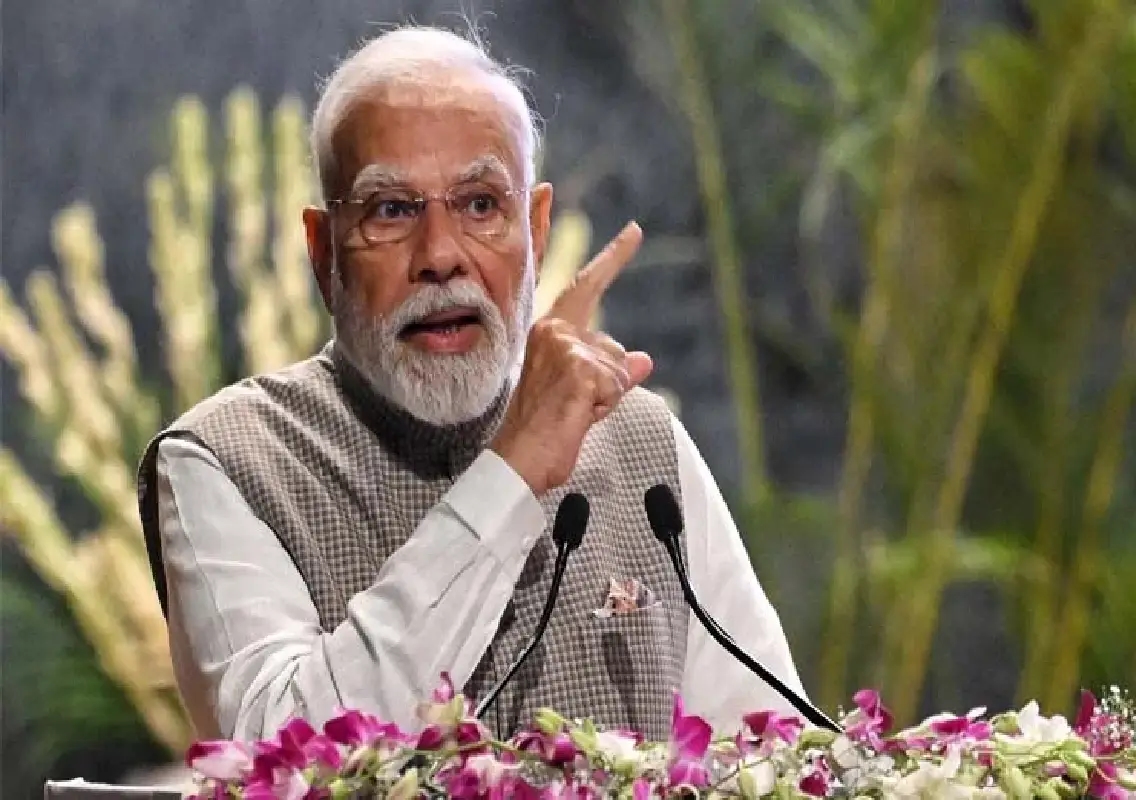


Coimbatore: Prime Minister Narendra Modi is set to visit Coimbatore, Tamil Nadu, on the 19th of this month to participate in the South India Natural Farming Summit, a major regional gathering focused on advancing natural and regenerative agricultural practices. The event, hosted by various farmers’ associations across Tamil Nadu, is expected to bring together policymakers, scientists, cultivators and stakeholders from across the southern states, with a vision to transform agricultural practices through sustainable, people-driven initiatives.
PM’s participation and agenda for the day
During his visit, Prime Minister Modi will address the South India Natural Farming Summit, sharing his insights on India’s evolving agricultural framework and the growing momentum toward natural farming nationwide. His presence is expected to draw significant attention to the movement, reinforcing the national government’s commitment to sustainable agriculture.
Apart from delivering the keynote address, the Prime Minister is also scheduled to interact with 50 scientists specialising in organic and natural agricultural systems. These scientists hail from Tamil Nadu, Kerala, Karnataka, Andhra Pradesh and Telangana. Their discussions with the Prime Minister are likely to focus on innovations, field-level impacts, evolving research and the future of natural farming in India.
Officials involved in the preparations stated that the Prime Minister’s interactions will highlight the scientific foundation of natural farming and its potential to boost soil health, crop resilience, and farmer incomes.
Summit objectives and key themes
The South India Natural Farming Summit has been conceived as a platform to outline policies aimed at broad-based natural farming across the region. According to P.R. Pandian, Coordinator of the Organising Committee, the programme will “raise awareness and encourage adoption of natural and regenerative farming practices” across rural and semi-urban landscapes.
Pandian added that the Summit is envisioned as a people-driven movement that not only transforms agricultural standards but also ensures that the transformation is economically viable and socially inclusive. With growing concerns over soil degradation, rising input costs and climate impacts, natural farming has emerged as a compelling alternative for millions of farmers. The Summit aims to accelerate this shift by empowering cultivators with knowledge, scientific support and practical demonstrations.
Exhibition, scientific sessions and public engagement
A major highlight of the event will be a large-scale exhibition featuring nearly 300 stalls, each showcasing innovations, best practices, traditional farming wisdom, natural inputs, seed varieties and agri-tech solutions compatible with chemical-free farming.
The exhibition will also include live demonstrations of natural farming methods, soil enrichment practices, composting techniques, microbial culture preparations and water-conservation models. These demonstrations aim to help farmers directly understand, observe and adopt environmentally friendly techniques in their own fields.
The Summit will host multiple interactive sessions led by eminent scientists, policymakers, agricultural economists and farmer-leaders. These sessions are designed to break down technical knowledge into practical applications, enabling farmers to transition smoothly from conventional to natural methods. Special focus areas include climate-resilient crops, pest management through bio-inputs, regenerative soil practices, market linkages, and crop diversification.
Organisers have also emphasised strong participation from youth and women, recognising their growing roles in shaping the future of agriculture. Dedicated spaces within the exhibition will celebrate women-led farming initiatives, youth-led startups, and innovations emerging from rural communities.
National initiatives backing the Summit
The event is aligned with and supported by national-level programmes promoting sustainable agriculture. These include Bharatiya Prakritik Krishi Padhati (BPKP), a component under the National Mission on Sustainable Agriculture, and Paramparagat Krishi Vikas Yojana (PKVY), which aims to promote organic farming practices across India.
Officials note that the presence of these national initiatives provides a strong institutional framework to help farmers transition to natural farming without economic risk. These schemes offer training, financial assistance, certification support and market facilitation, ensuring that chemical-free cultivation becomes a viable long-term choice.
Conclusion
Prime Minister Modi’s visit is expected to give a significant boost to the natural farming movement across South India. With its extensive exhibition, scientific sessions and focus on community-led agricultural transformation, the South India Natural Farming Summit aims to become a turning point in the region’s shift towards sustainable and regenerative farming. The event underscores an urgent need to adopt practices that protect soil health, empower farmers, and create an agriculture system that remains both productive and ecological for future generations.