







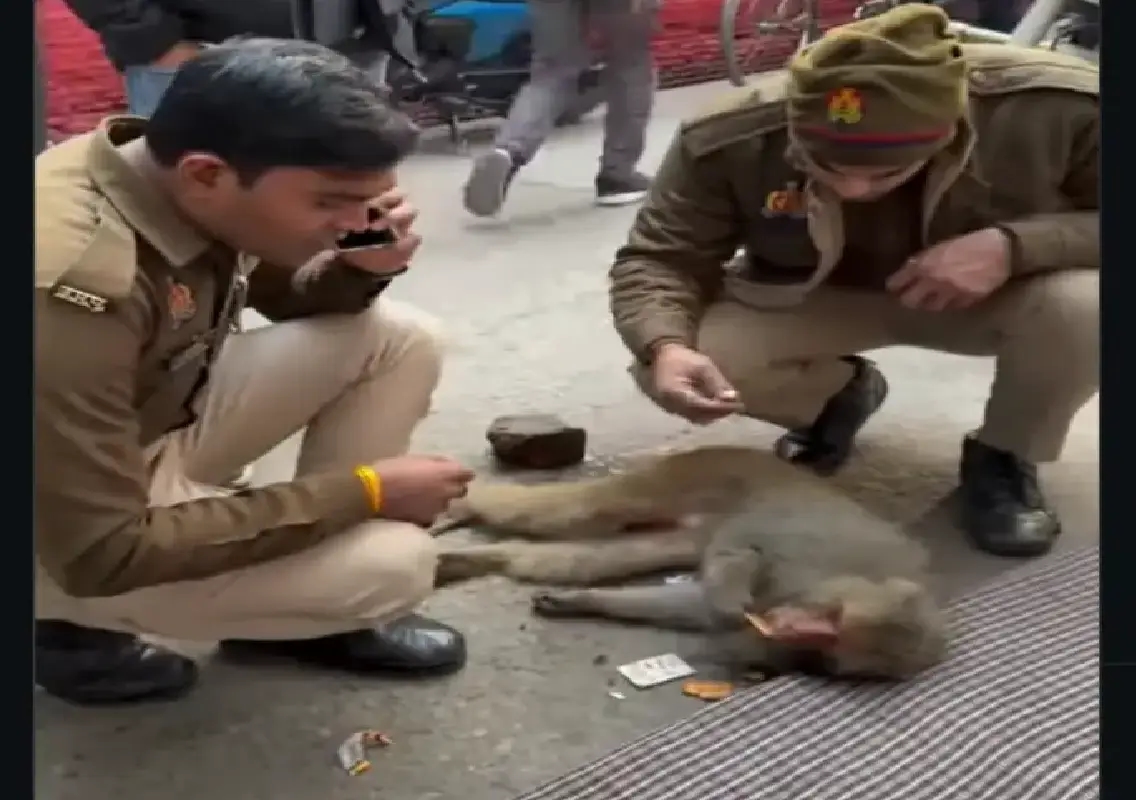


In a deeply moving incident that has touched many people online, a mother monkey that reportedly fell ill and refused to leave the spot where her baby died was rescued by local police after residents alerted authorities. The animal, seen sitting beside the lifeless infant for hours and not responding to surroundings, was eventually taken to safety with the help of rescuers, highlighting a rare and emotional moment of compassion towards wildlife.
According to local accounts, the incident unfolded when residents noticed a monkey sitting motionless near a roadside stretch, clutching or staying close to her dead baby. Passersby initially assumed the animal would eventually move away. However, even after several hours, the mother remained at the same location, appearing weak, distressed and disoriented.
Concerned citizens informed the police after observing that the monkey was not attempting to forage for food or climb trees and was showing visible signs of illness and exhaustion.
Mother monkey refused to leave spot
Eyewitnesses said the mother monkey appeared to be in visible grief and shock after the death of her baby. She reportedly tried to nudge the infant repeatedly and stayed rooted to the same place despite traffic movement and human presence nearby.
Residents said the monkey neither reacted aggressively nor tried to escape when people came closer, which is unusual behaviour for a wild animal. Some locals placed fruits and water at a distance, but she barely responded.
Animal behaviour experts note that several primate species, including monkeys, are known to display mourning-like behaviour, sometimes carrying or guarding their dead young for extended periods. Such responses are considered signs of strong maternal bonding and social emotion.
Police step in after public alert
After receiving information from the public, local police personnel reached the spot and assessed the situation. Seeing the animal in distress and unable to move properly, they coordinated with animal rescue volunteers and veterinary staff.
Officers ensured that the area around the monkey was kept clear to avoid further stress. With careful handling and support from rescuers, the mother monkey was gently secured and shifted for medical evaluation and care.
Police sources said the rescue was carried out cautiously to prevent injury to the animal or rescuers, as distressed monkeys can sometimes behave unpredictably. In this case, however, the mother monkey was reportedly too weak to resist and was handled without incident.
Veterinary care and recovery efforts
Following the rescue, the monkey was handed over to animal care personnel for treatment. A preliminary check suggested dehydration, weakness and stress-related symptoms. Vets began supportive treatment, including fluids and rest, and planned continued observation.
Animal welfare volunteers said emotional stress in animals, especially primates, can lead to reduced appetite, immobility and lowered immunity. Timely intervention improves chances of recovery.
Rescue workers also ensured that the baby monkey’s body was removed respectfully from the public area to prevent further distress to the mother and disturbance to the surroundings.
Emotional response on social media
Photos and short video clips of the rescue later circulated widely on social media, where users expressed sadness and empathy at the sight of the grieving animal. Many praised the police and rescue team for responding with sensitivity and humanity.
Users commented that the episode was a reminder that animals experience attachment, fear and loss, and that urban communities must respond with care when wildlife is in distress.
Several animal rights groups also shared the story to underline the importance of quick reporting and coordinated rescue when injured or traumatised animals are spotted in public places.
Growing need for urban wildlife response
With expanding towns and cities overlapping with natural habitats, encounters between humans and animals are becoming more frequent. Experts say that police and local administrations are increasingly being called upon to respond not just to law and order issues, but also to wildlife distress situations inside urban and semi-urban areas.
Training first responders to coordinate with forest and animal husbandry departments can significantly improve rescue outcomes. Public awareness also plays a key role, as early alerts from citizens often make the difference between life and death for injured animals.
Conclusion
The rescue of the grieving mother monkey stands out as a powerful example of empathy in action. Prompt intervention by alert residents and responsive police ensured that a distressed animal received timely care. The incident has resonated widely, reinforcing the message that compassion towards animals is an essential part of a humane society.