







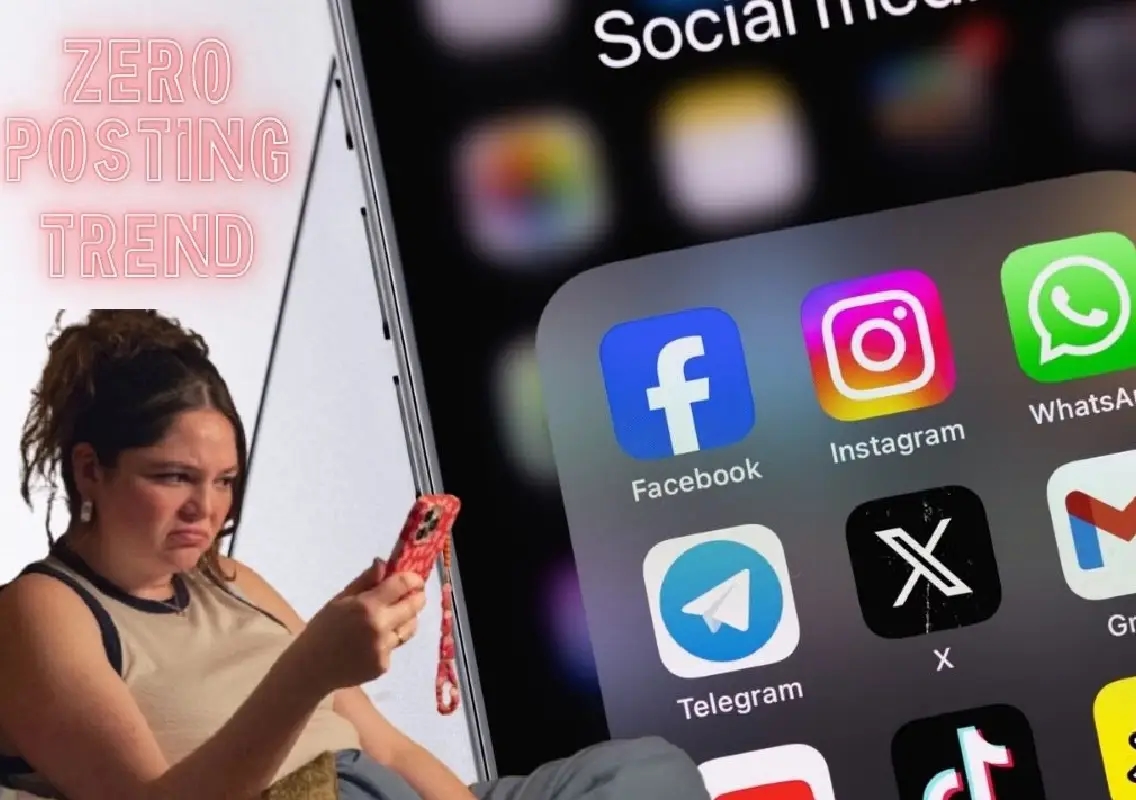


A new behavioural trend known as “Posting Zero” is gaining popularity across Instagram, TikTok, and other platforms, as young users increasingly choose to remain online without sharing posts of their own. The trend marks a significant shift from earlier social media culture, when constant posting and public updates were the norm.
A trend built on silence, not sharing
Posting Zero does not ask users to leave social media entirely. Instead, individuals continue to scroll, engage with content, like posts, and follow trends—while their own feeds remain empty for months or even years. Many still share ephemeral stories or use features like Close Friends, but public profiles stay intentionally quiet.
The shift reflects a growing desire for privacy and reduced social pressure. Gen Z, in particular, is pushing back against the expectation to curate a personal brand online. Public posts feel too exposed, too easily judged, and too mentally exhausting for many.
Why users are stepping back from posting
Experts say this behavioural change has been developing over several years. What once felt spontaneous and fun has increasingly become performative. Crafting the perfect caption, managing likes, responding to messages, and worrying about algorithms has turned posting into a chore.
Burnout also plays a major role. Endless doomscrolling, comparisons with others’ highlight reels, and a flood of AI-generated or sponsored content have made platforms feel cluttered and overwhelming. Even the comment sections under heartfelt posts often contain bots or spam, eroding the sense of genuine community.
For many, choosing not to post is a way to simplify their digital lives and reduce emotional fatigue.
How Posting Zero could reshape social platforms
If the trend continues to grow, social media may evolve into a space dominated by brands, influencers, and paid content, with fewer personal updates from everyday users. The spontaneous chaos and authenticity that once defined platforms could diminish further, replaced by curated posts and increasingly algorithm-driven interactions.
In this environment, silence becomes its own form of resistance. For many, stepping back from posting—or stepping away altogether—feels like reclaiming control over their digital identity.