







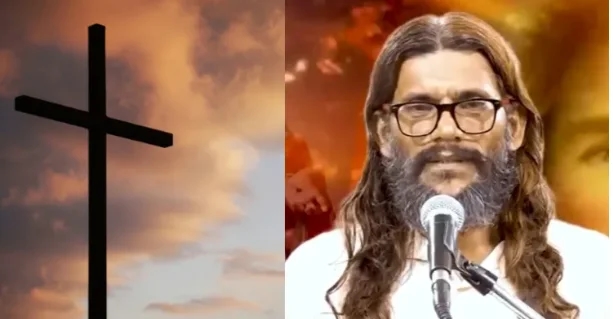


The Allahabad High Court has emphasised the need for a fair and thorough trial in the case involving Vineet Vincent Pereira, a priest facing legal action over his religious remarks.
Father Pereira has been accused of stating during prayer meetings that Christianity is the “only true religion,” which allegedly hurt the sentiments of members of another community.
No evidence of conversion found
Importantly, during the investigation, authorities found no evidence of forced or illegal religious conversion linked to Father Pereira’s activities. Despite this, a chargesheet was filed, focusing solely on the interpretation of his statements.
This has placed the priest in a difficult legal situation, where he faces prosecution despite the absence of any conversion-related wrongdoing.
Court highlights need to prove intent
Justice Saurabh Srivastava observed that for an offence under Section 295A of the IPC to be made out, there must be clear proof of deliberate and malicious intent to insult or outrage religious feelings.
The court made it clear that such intent cannot be assumed at the preliminary stage and must be established through proper examination during trial.
Expression of belief or offence?
Legal observers note that expressing one’s religious belief, even in strong terms, is not automatically a criminal act unless it is proven to be intentionally provocative.
In Father Pereira’s case, the absence of conversion evidence has strengthened the argument that the issue centres on interpretation of speech rather than any unlawful act.
Priest faces ongoing legal challenge
Despite the lack of proof regarding conversion, Father Pereira now faces the burden of a prolonged legal process. The court has allowed the case to proceed, stating that the full context and intent behind his remarks must be evaluated during trial.
The situation highlights the challenges faced by individuals in matters involving faith, where expression and sensitivity often intersect.
Court stresses due process
The court reiterated that a magistrate, at the stage of taking cognisance, is not expected to conduct a detailed analysis of evidence.
The final determination of whether any offence was committed will depend on findings during trial.