







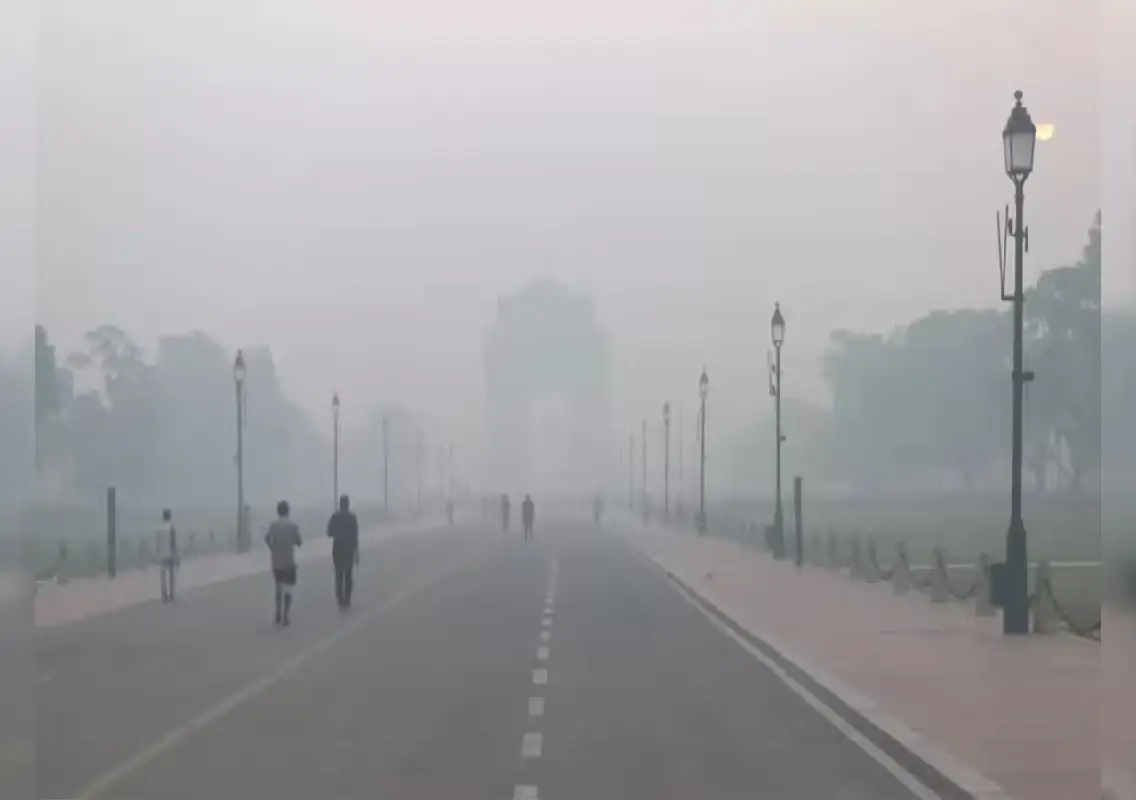


Crowds gathered at India Gate on Sunday to demand urgent government action as New Delhi once again descended into thick smog, marking the onset of another winter season of hazardous air. The protests came amid rapidly worsening pollution levels, with the Air Quality Index (AQI) crossing 350 in several parts of the city on Monday morning
Demonstrators held placards, chanted slogans, and blocked traffic to draw attention to the recurring public health crisis. Police detained several protesters, dispersing the crowd after they refused to leave the area. “We breathe poison every day, and the government watches silently,” one protester said, calling for stricter enforcement of emission and crop-burning regulations.
Air quality dips to ‘very poor’ category
According to the Central Pollution Control Board (CPCB), Delhi’s overall AQI stood above 350 on Monday, placing it in the “very poor” category. Some monitoring stations in areas such as Anand Vihar and Jahangirpuri reported levels exceeding 400 — classified as “severe.” For reference, an AQI below 100 is considered satisfactory, while anything above 400 poses serious health risks, especially for children, the elderly, and those with respiratory conditions.
Experts say the combination of falling temperatures, stagnant winds, and crop residue burning in neighbouring states has once again trapped pollutants over the capital. As smoke from Punjab and Haryana drifts into Delhi and mixes with emissions from vehicles and industries, a toxic haze settles across the National Capital Region (NCR), severely reducing visibility and causing respiratory discomfort.
India’s pollution crisis deepens
According to data from Swiss air quality tracker IQAir, India is home to six of the ten most polluted cities in the world, with New Delhi ranked as the most polluted capital globally. Environmentalists have repeatedly warned that prolonged exposure to such conditions can lead to chronic lung diseases, cardiovascular problems, and reduced life expectancy.
Government measures fall short
Authorities have implemented a graded response plan that restricts construction activities, bans diesel generators, and limits vehicle entry when air quality worsens. However, critics argue that these measures have had limited impact. A recent attempt to reduce pollution through artificial rainfall failed, as a cloud-seeding experiment did not produce the desired effect.
Subsidies aimed at discouraging crop residue burning have also shown mixed results, with many farmers claiming that the support provided is insufficient to cover alternative disposal methods.
Political leaders weigh in
Opposition leader Rahul Gandhi criticised the government’s handling of the crisis and the police response to protesters. “The right to clean air is a basic human right,” Gandhi wrote on X, expressing solidarity with citizens demanding action.
Responding to the growing outcry, environment minister Manjinder Singh Sirsa said that the central government “will continue every possible effort” to reduce pollution levels and implement sustainable solutions.
Despite periodic emergency interventions, experts note that long-term structural changes — including cleaner industrial technologies, improved public transport, and stricter enforcement of emission norms — remain essential for addressing the capital’s persistent air quality crisis.