







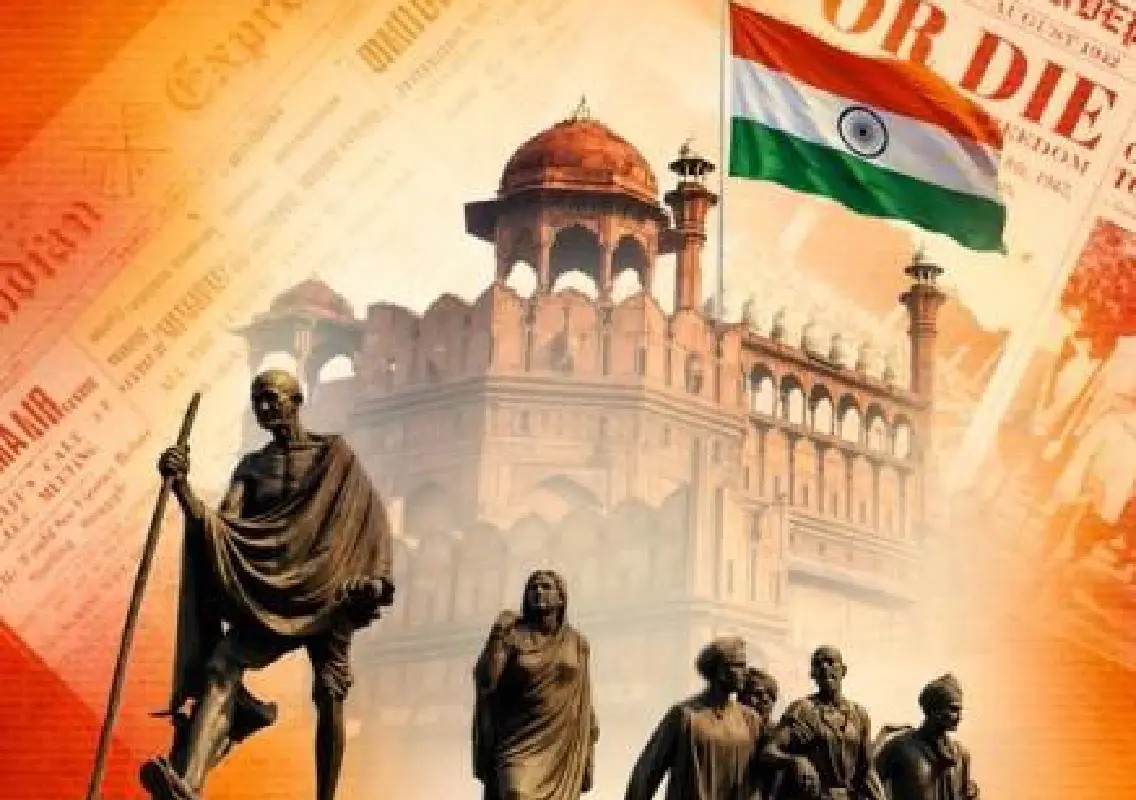


New Delhi: Quit India Movement Day, also known as August Kranti Diwas, is observed every year on August 8 to remember one of the most decisive chapters in India’s struggle for independence. The Quit India Movement was launched in 1942 under Mahatma Gandhi’s leadership, demanding an immediate end to British rule.
The movement emerged during World War II amid growing dissatisfaction with British policies, economic hardship and the failure of the Cripps Mission to offer immediate self-government. The All India Congress Committee adopted the Quit India Resolution at its Bombay session on August 8, 1942.
Gandhi’s powerful ‘Do or Die’ call
At Gowalia Tank Maidan, now known as August Kranti Maidan in Mumbai, Mahatma Gandhi gave his historic “Do or Die” call, urging Indians to intensify the struggle for freedom.
The British government responded swiftly. Gandhi and several senior Congress leaders were arrested soon after the movement began. Despite the arrests and widespread repression, students, workers, farmers, women and ordinary citizens continued protests, strikes and underground resistance across the country.
Leaders including Jawaharlal Nehru, Sardar Vallabhbhai Patel, Maulana Abul Kalam Azad, Aruna Asaf Ali, Ram Manohar Lohia, Jayaprakash Narayan and Usha Mehta played important roles in the wider movement.
Remembering the spirit of freedom
Although the British suppressed the movement, the Quit India Movement became a major turning point in the freedom struggle and strengthened the demand for independence. The movement remains a powerful reminder of the courage, unity and sacrifices of Indians who challenged colonial rule.
Quit India Movement Day also encourages younger generations to understand India’s freedom struggle and uphold the values of democracy, unity, responsibility and freedom.