







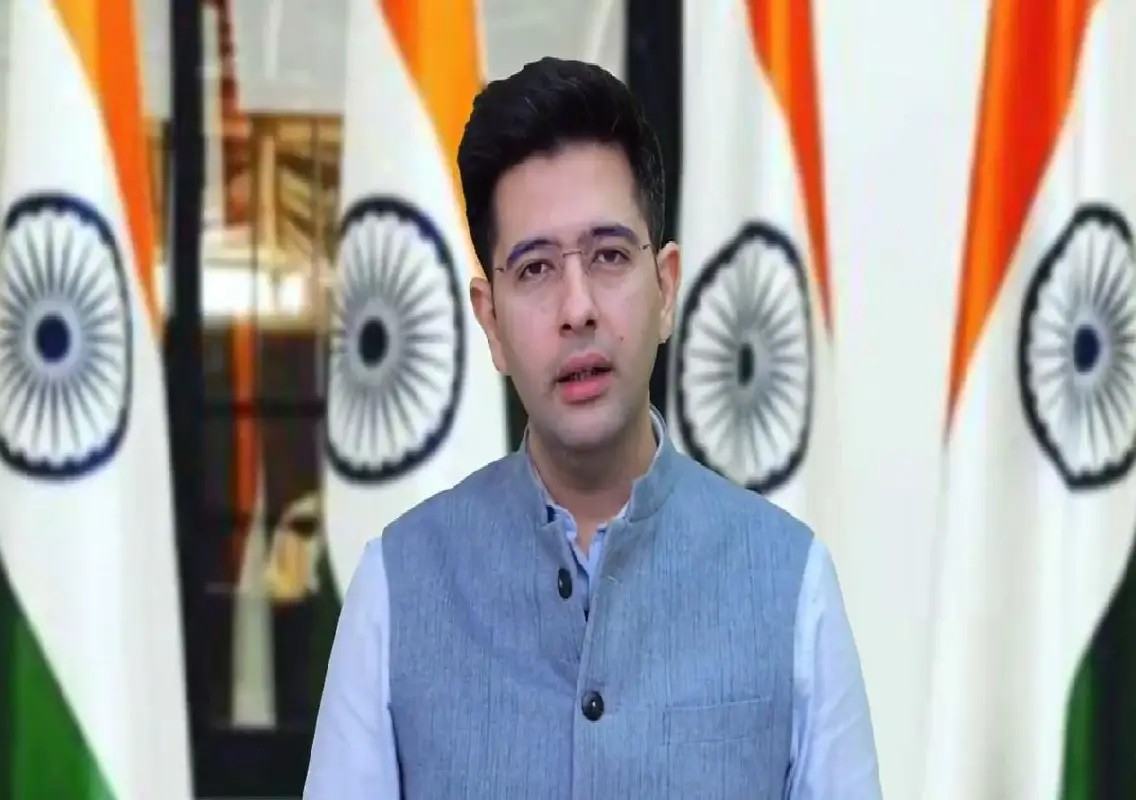


New Delhi: Rajya Sabha MP Raghav Chadha on Monday addressed the backlash following his recent move from the Aam Aadmi Party (AAP) to the Bharatiya Janata Party (BJP), stating that the party he once helped build had “changed” significantly over time.
In a candid video shared on Instagram, Chadha attempted to clarify his decision amid a wave of criticism and a reported drop of nearly 10 lakh followers on the platform shortly after his switch.
‘Party no longer the same’
Explaining his exit, Chadha said the AAP of today is vastly different from the organisation he joined over a decade ago.
“Today, this party is no longer the old party. It has become a toxic work environment. You are stopped from working and speaking in Parliament,” he said in the video.
He described himself as a founding member who had invested 15 years of his life in building the party, adding that his decision was not taken lightly.
‘Right man in the wrong party’
Chadha said he had increasingly felt out of place within the party and eventually concluded that he was “the right man, but in the wrong party.”
He revealed that he had considered multiple options before making the move, including quitting politics altogether or attempting internal reforms. However, he ultimately chose to join another political platform.
The MP emphasised that his decision was driven by “disappointment, disenchantment, and disgust,” rather than fear or external pressure.
Multiple MPs exit AAP
Chadha’s departure was part of a broader political shift, with six other AAP Rajya Sabha MPs—Ashok Kumar Mittal, Harbhajan Singh, Sandeep Kumar Pathak, Vikramjit Singh Sahney, Swati Maliwal, and Rajinder Gupta—also resigning from the party and joining the BJP on April 24.
With their induction, the BJP’s strength in the Rajya Sabha has risen to 113 members.
Chadha argued that the collective exit reflects deeper issues within the party, stating, “One person can be wrong, two people can be wrong, but not seven people can be wrong.”
Social media impact and outreach
The shift has had a visible impact on Chadha’s social media presence, often seen as an indicator of popularity among younger audiences. His Instagram video appears to be an effort to reconnect with followers and present his perspective directly.
In the video, he sought to reassure supporters that his political commitment remains unchanged.
Will continue public work
Chadha maintained that his exit from AAP does not signal a retreat from public life. Instead, he said he would continue to remain politically active and raise public issues with renewed energy.
“I will continue to raise your problems with more energy and enthusiasm,” he said.
Conclusion
Raghav Chadha’s move from AAP to BJP marks a significant political development, especially given his long association with the party. While he has cited ideological and organisational concerns for his exit, the shift has sparked debate over internal dynamics within AAP and the broader implications for opposition politics.