







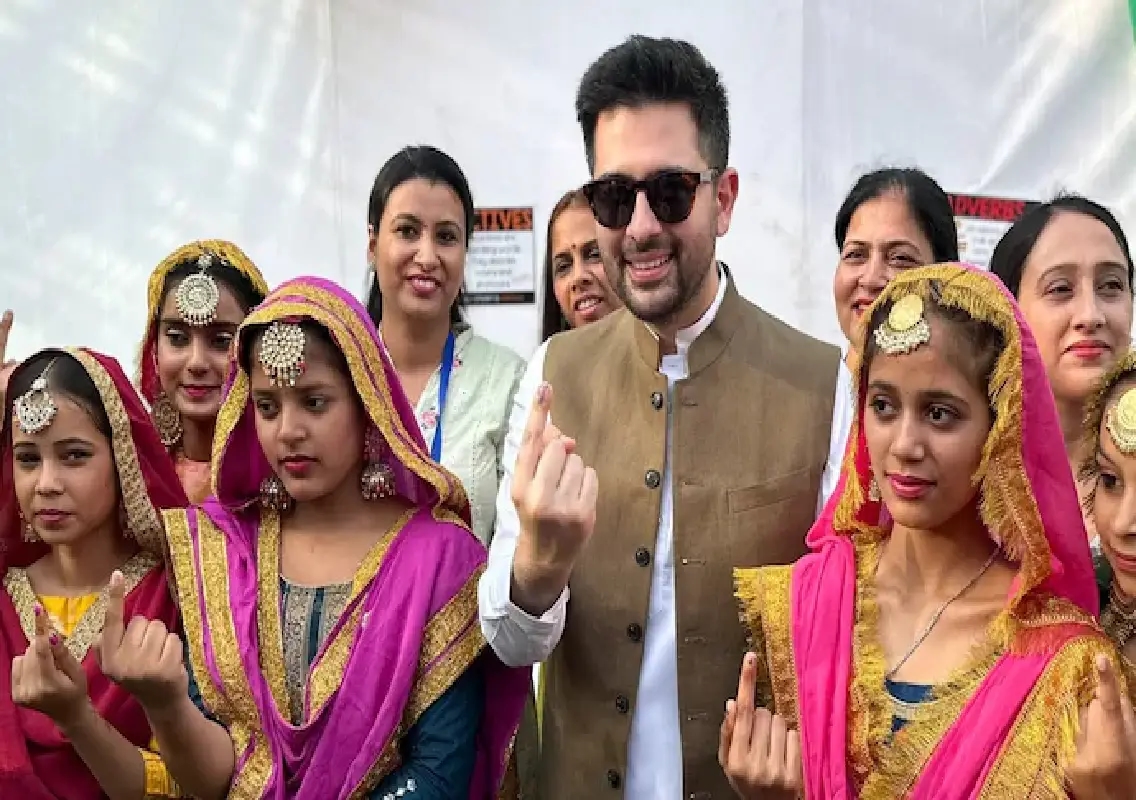


New Delhi: Amid ongoing speculation about internal rifts within the Aam Aadmi Party (AAP), Rajya Sabha MP Raghav Chadha has triggered fresh political chatter by reacting to a social media suggestion that he should launch a youth-centric “Gen-Z” political party.
The 37-year-old leader shared an Instagram Reel by a content creator suggesting the formation of a new party aimed at young voters, captioning it with the words “Interesting thought.” The brief response has fuelled intense speculation about his future political course.
Social media post ignites debate
The Reel, posted by a creator under the handle “Seedhathok”, argued that Chadha should consider forming his own political outfit instead of joining another party. The creator claimed such a move could attract strong support from India’s youth.
The video has garnered significant traction online, with tens of thousands of likes and widespread engagement, reflecting the growing curiosity around Chadha’s political positioning.
Chadha’s decision to amplify the post—even without an explicit endorsement—has been interpreted by many as a subtle signal amid his strained ties with the party leadership.
Rift within AAP leadership
The development comes shortly after Chadha was removed as the deputy leader of AAP in the Rajya Sabha. The party appointed MP Ashok Kumar Mittal as his replacement, indicating a clear shift in internal dynamics.
The move followed reports of differences between Chadha and AAP convenor Arvind Kejriwal. While neither side has publicly detailed the reasons for the fallout, party insiders have pointed to disagreements over political strategy and public positioning.
Following his removal, Chadha remarked that he had been “silenced, not defeated,” signalling his dissatisfaction with the decision.
Criticism from party leaders
Several AAP leaders have openly criticised Chadha in recent days. Among them were Atishi, Sanjay Singh, and Saurabh Bhardwaj.
Critics accused him of failing to raise key issues related to Punjab in Parliament and questioned his perceived reluctance to directly challenge Prime Minister Narendra Modi.
Some leaders also pointed to his absence during critical moments for the party, including public events and protests, as well as his stay in the United Kingdom for eye treatment when AAP was facing political challenges.
Chadha’s counter-response
Responding to the criticism, Chadha defended his record as a parliamentarian, stating that his work speaks for itself. He asserted that Punjab remains central to his political identity and commitment.
He highlighted several issues he has raised in Parliament, including the demand for a corridor to Nankana Sahib, legal guarantees for farmers, groundwater concerns in Punjab, and calls for Bharat Ratna recognition for freedom fighter Bhagat Singh.
Chadha also emphasised his engagement with broader public issues such as gig worker welfare, financial reforms, menstrual health, and student debt relief—topics that have resonated strongly with younger audiences.
Rising popularity among youth
Despite the internal tensions, Chadha has built a strong following among young Indians. His speeches in the Rajya Sabha frequently go viral on social media, particularly when addressing contemporary socio-economic issues.
His advocacy for policies like student debt relief and paternity leave has further strengthened his image as a youth-oriented leader, earning him the tag of a “Gen Z favourite” among supporters.
Political implications
The speculation around a potential new political outfit remains unconfirmed, and Chadha has not made any formal announcement. However, his engagement with the idea has added a new dimension to the ongoing political developments within AAP.
Political analysts suggest that even a hint of a new party could influence the dynamics of youth politics in India, especially if it taps into issues relevant to younger voters.
Conclusion
While it remains unclear whether Raghav Chadha will chart an independent political path, his recent social media activity has intensified discussions about his future. As tensions within AAP continue to unfold, his next move could have significant implications for both the party and the broader political landscape.