







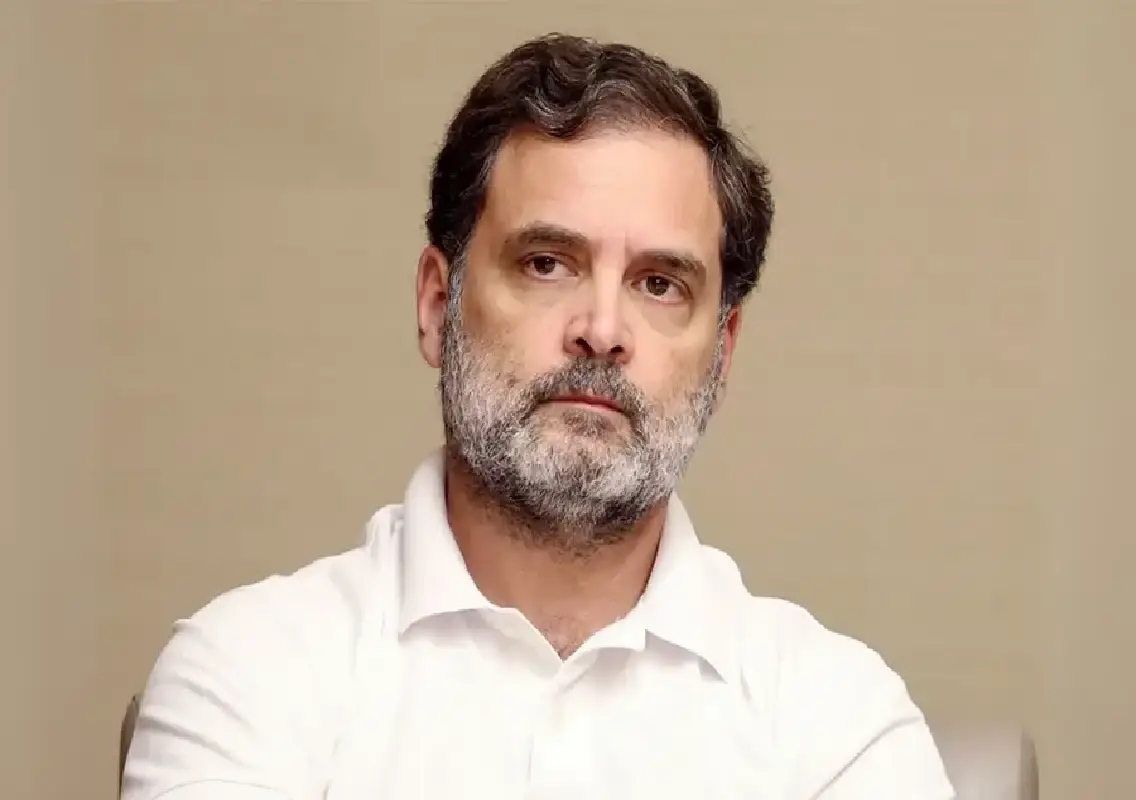


New Delhi: Leader of Opposition in the Lok Sabha Rahul Gandhi on Wednesday sharply criticised the Centre over the India–US trade deal, alleging that the government and Prime Minister Narendra Modi had “fully surrendered” to American interests during negotiations. His remarks triggered strong reactions in the House, adding to the ongoing political confrontation between the ruling alliance and the Opposition over trade, data, and economic policy.
Speaking during proceedings in the Lok Sabha, Gandhi questioned the government’s approach to tariff, data, digital trade, agriculture, and energy-related provisions that he claimed were part of the understanding between the two countries. The government has not accepted the allegations and has maintained that international trade engagements are conducted in national interest.
Sharp attack in Lok Sabha
Rahul Gandhi said in the Lok Sabha that it was “tragic” that the future of 1.4 billion Indians had allegedly been compromised through the trade arrangement. He claimed the Prime Minister would not normally agree to such terms but had done so under pressure.
According to Gandhi, the agreement involved major concessions in areas he described as strategically important, including tariffs, digital trade rules, and data governance. He alleged that India had weakened its position in negotiations and suggested that critical national interests were affected.
He further claimed that key economic sectors, including agriculture, textiles, and energy security, could face long-term consequences if the reported terms of the deal were implemented in full.
Claims on data and digital trade
A central theme of Gandhi’s speech was the issue of data governance and digital trade. He argued that Indian user data is among the country’s most valuable strategic assets and should be protected through strong localisation and regulatory controls.
He alleged that the deal framework allows freer cross-border data flows and relaxes requirements such as local data storage and source code disclosure. According to him, such provisions could reduce India’s regulatory control over digital platforms and emerging technology sectors.
Gandhi said that in any negotiation with the United States, India should insist on equal footing and reciprocal respect, especially in matters relating to data access and digital infrastructure.
Concerns over farmers and industry
The Leader of Opposition also raised concerns about the potential impact of trade liberalisation on Indian farmers and domestic industry. He argued that Indian agriculture could face pressure if exposed to competition from highly mechanised and large-scale overseas farm systems.
He also expressed apprehension about the textile and manufacturing sectors, claiming that tariff changes and market access terms could disadvantage Indian producers compared to regional competitors.
On energy, Gandhi said India must retain flexibility in sourcing oil and energy resources based on national interest and price advantage, and not be constrained by external expectations linked to trade arrangements.
Political message on negotiation stance
Gandhi said that a future government led by the Opposition bloc would negotiate differently, stressing parity and sovereignty in trade and technology discussions. He said India should approach major powers as an equal partner and clearly define red lines in areas such as data, agriculture, and energy.
He added that protecting domestic stakeholders — including farmers and small industries — should be central to any international trade framework.
His remarks were part of a broader Opposition push to question the government’s economic and foreign trade policies during the current parliamentary session.
Government yet to respond in detail
At the time of his remarks, there was no detailed point-by-point response placed on record in the House from the government specifically addressing each of Gandhi’s claims. Government representatives have previously stated in similar contexts that trade negotiations are complex, ongoing, and structured to balance strategic, economic, and geopolitical priorities.
Officials have also maintained that any final trade agreement goes through multiple levels of scrutiny before adoption.
Conclusion
Rahul Gandhi’s comments have intensified the political debate around the India–US trade engagement, particularly on issues of data protection, tariffs, and sectoral safeguards. While the Opposition has framed the deal as a strategic concession, the government is expected to defend its approach as pragmatic and nationally aligned. The issue is likely to remain a flashpoint in Parliament in the coming days.