









Port Blair: Congress leader Rahul Gandhi has once again voiced concerns over the proposed Great Nicobar infrastructure project, alleging that the ambitious development plan could cause irreversible environmental damage to one of India’s most ecologically sensitive regions.
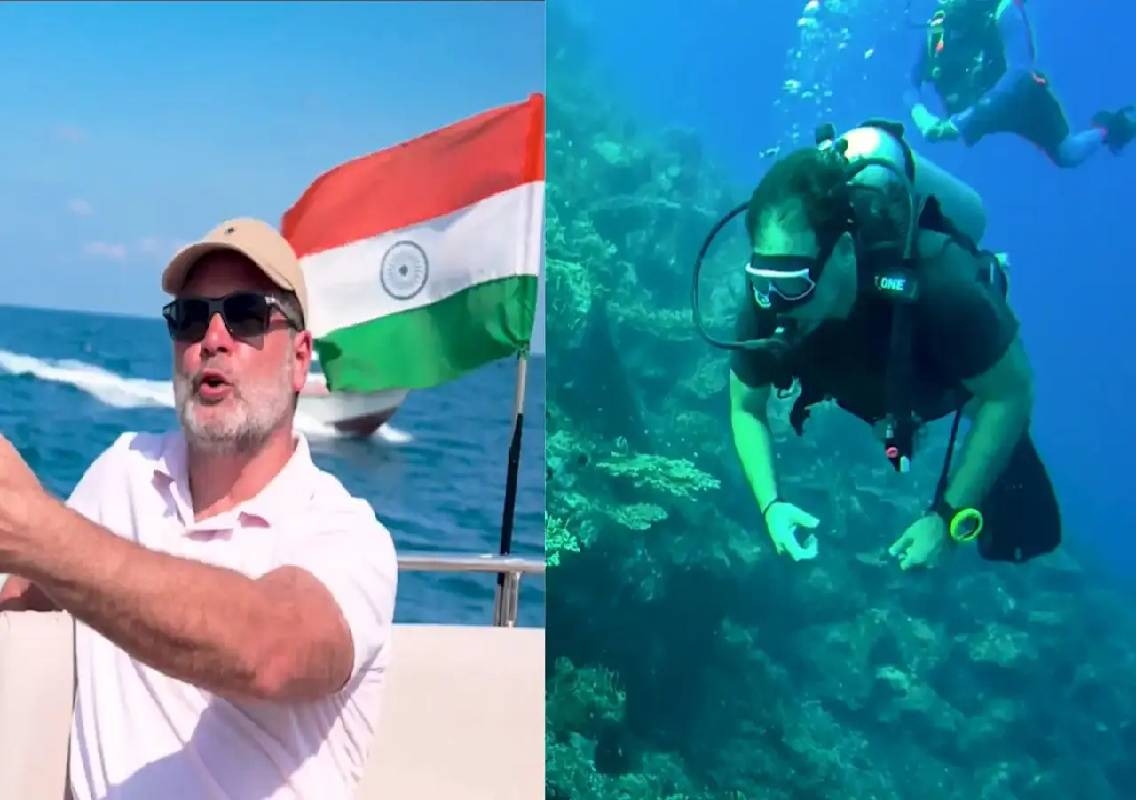
The Leader of Opposition in the Lok Sabha shared a 16-minute video on social media platform X detailing his recent visit to the Andaman and Nicobar Islands. The video featured Gandhi exploring parts of the islands, interacting with local residents and tribal communities, and scuba diving among coral reefs near Great Nicobar.
During the video, Gandhi expressed concern over the potential impact of the project on forests, coral reefs and indigenous communities living in the region.
Rahul Gandhi highlights ecological concerns
Reflecting on his visit, Gandhi described Great Nicobar as one of the most pristine natural environments in the country and said he was troubled by the scale of development proposed for the island.
“I was a bit disturbed that such beauty is going to be destroyed. I was like, more and more people should experience this. I don’t think people understand, certainly the government doesn’t understand,” he said in the video.
The Congress leader stated that he had spent time meeting local residents, tourists and members of tribal communities to understand their perspectives on the project.
While expressing support for tourism development, Gandhi emphasised that growth should be environmentally sustainable and balanced with conservation objectives.
“We are 100 per cent on board with pushing and developing facilities for ecologically balanced tourism in the Andaman Islands,” he said.
According to Gandhi, the scale of the proposed project could significantly alter the natural landscape and threaten ecosystems that have remained largely undisturbed for generations.
Concerns over forests and tribal communities
A major focus of Gandhi’s criticism centred on the project’s proposed land use and its potential impact on local communities.
He claimed that large tracts of land would be affected by the development and alleged that tribal populations and settlers could face displacement.
“Please understand this, this is four times New Delhi. They are building this project in the most pristine ecological environment this country has,” he said.
Gandhi further alleged that tribal communities had not been adequately consulted during the planning process and questioned whether legal safeguards under the Forest Rights Act had been properly implemented.
According to him, several local stakeholders informed him that procedures required under the legislation were not followed in their intended spirit.
The Congress leader called for greater transparency and wider consultation before major decisions affecting indigenous populations and ecologically sensitive areas are finalised.
Coral reefs and marine biodiversity under spotlight
Gandhi also raised concerns regarding the impact of large-scale infrastructure development on coral reef systems surrounding Great Nicobar.
He argued that coral ecosystems are critical biodiversity hotspots and play an important role in supporting marine life and environmental stability.
Drawing a comparison to wildlife conservation efforts on the mainland, Gandhi said damage to coral reefs would represent a significant loss of natural resources.
“Destroying Nicobar corals is as if you’re killing hundreds and hundreds of tigers in India,” he said.
Environmental experts have long highlighted the ecological importance of coral reefs, which provide habitat for numerous marine species while also helping protect coastlines from erosion and extreme weather events.
The Congress leader argued that any disruption to these ecosystems could have long-term consequences for biodiversity in the region.
What is the Great Nicobar project?
The Great Nicobar Project is one of India’s largest planned infrastructure initiatives and is proposed near Galathea Bay in the southernmost part of the Andaman and Nicobar Islands.
The project is estimated to cost between ₹72,000 crore and ₹92,000 crore and includes several major components aimed at transforming the island into a strategic economic hub.
Key elements of the project include:
- A transhipment port
- A dual-use civil and military airport
- A new township
- Gas and solar-based power facilities
- Tourism and supporting infrastructure
The project has been positioned as a major driver of economic growth and regional connectivity.
Why the government supports the project
The Central government has defended the project as strategically important for India’s economic and national security interests.
Great Nicobar’s location near the Malacca Strait, one of the world’s busiest maritime trade routes, is considered a significant advantage. A substantial portion of India’s cargo currently passes through foreign transhipment hubs, including Colombo.
The government believes that developing a major transhipment port in Great Nicobar could reduce dependence on overseas ports, strengthen maritime capabilities and enhance India’s strategic presence in the Indo-Pacific region.
Officials have also highlighted the project’s employment potential, stating that it could generate more than 1.28 lakh jobs and contribute significantly to regional development.
Additionally, the infrastructure plan is increasingly being viewed within the context of India’s broader strategic competition and maritime interests in the region.
Conclusion
Rahul Gandhi’s latest remarks have reignited the debate surrounding the Great Nicobar Project, bringing environmental and tribal rights concerns back into the spotlight. While the government maintains that the development is essential for economic growth, strategic security and job creation, critics continue to question its ecological impact. As discussions continue, the project remains one of the most closely watched infrastructure initiatives in India, balancing development ambitions against environmental conservation and indigenous rights.