







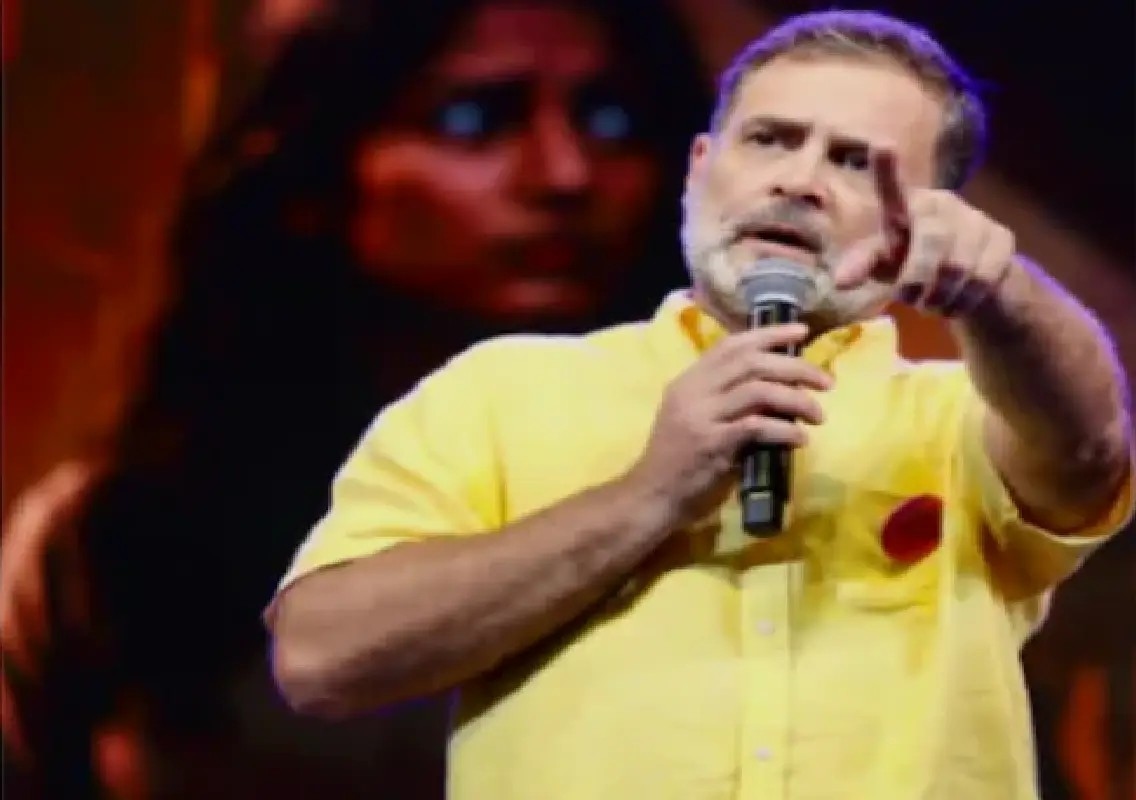


New Delhi: Congress leader and Leader of Opposition in the Lok Sabha Rahul Gandhi appears to be adopting a more direct political style, combining surprise street protests with renewed outreach to young voters.
His recent actions have included unannounced protests, sit-ins and programmes aimed at connecting with Gen Z, signalling a shift from simply raising issues to staying involved on the ground.
Surprise protests become a new strategy
On August 21, Gandhi reached a Delhi DCP office seeking an FIR for student Sahil Lohchab, who suffered pellet injuries during a July 20 student protest. After police did not immediately register the complaint, Gandhi staged a sit-in and remained there for around six hours. An FIR was subsequently registered.
A month earlier, Gandhi had surprised security officials by heading towards Prime Minister Narendra Modi’s residence during protests over alleged examination irregularities. He and other opposition leaders were later detained.
The BJP criticised the demonstrations as the “politics of anarchy”, while the Congress presented them as direct intervention on issues affecting students and citizens.
From Bharat Jodo to Gen Z outreach
Gandhi’s political image has also evolved through initiatives such as the Bharat Jodo Yatra and the youth-focused Chhatron Ki Goonj programme.
The latter has taken him into conversations with students about paper leaks, recruitment delays, coaching pressure and uncertainty over examinations and jobs. A recent Pune edition focused strongly on young women and gender expectations.
His approach has also faced challenges. Student protests in Jharkhand, where Congress is part of the ruling alliance, forced Gandhi to respond to criticism over the party’s position on recruitment-related grievances.
The latest strategy comes after the Cockroach Janata Party (CJP) and its youth mobilisation gained significant attention. Whether Gandhi’s increased street presence and Gen Z outreach will translate into electoral gains for Congress remains to be seen.