







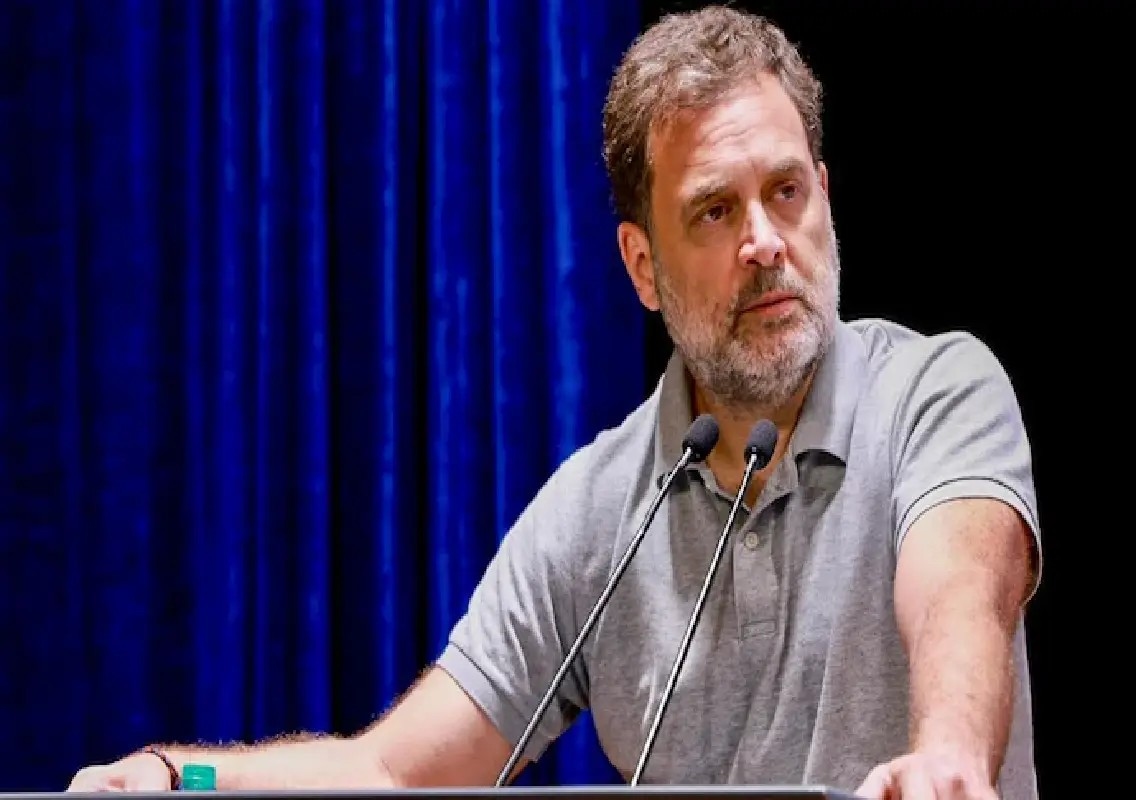


Serampore: Congress leader Rahul Gandhi on Saturday criticised Prime Minister Narendra Modi and West Bengal Chief Minister Mamata Banerjee, alleging that both leaders prioritise the interests of the wealthy over those of ordinary citizens.
Addressing an election rally in Serampore in Hooghly district, Gandhi placed the two leaders in the same bracket, claiming that their governance models are similar in benefiting the rich while neglecting the poor.
Allegations on governance and priorities
Gandhi alleged that while the Prime Minister follows such an approach at the national level, the Chief Minister does the same within West Bengal. He said both leaders are focused on retaining power rather than addressing the needs of the people.
He also criticised Modi’s leadership, alleging that despite projecting himself as a patriot, his policies do not align with the interests of the common people.
Criticism of political approach
The Congress leader further claimed that the political environment in the country is increasingly shaped by fear and division. He alleged that such an approach undermines unity and social harmony.
According to Gandhi, the country is witnessing a broader ideological contest between opposing visions of governance and society.
Ideological battle highlighted
He framed the political landscape as a clash between two ideologies — one represented by the Indian National Congress, which he said stands for unity and brotherhood, and the other by the Bharatiya Janata Party and the Rashtriya Swayamsevak Sangh, which he accused of promoting division.
Political context
The remarks come amid ongoing political activity and campaigning in West Bengal, where parties are intensifying their outreach efforts ahead of upcoming electoral contests.
Such statements are expected to draw responses from rival parties, further sharpening the political discourse in the state and beyond.
Conclusion
Rahul Gandhi’s comments underline the continuing political rivalry between major parties, with leaders increasingly framing their campaigns around ideological differences and governance models. As election activities progress, such exchanges are likely to remain a key feature of the political narrative.