







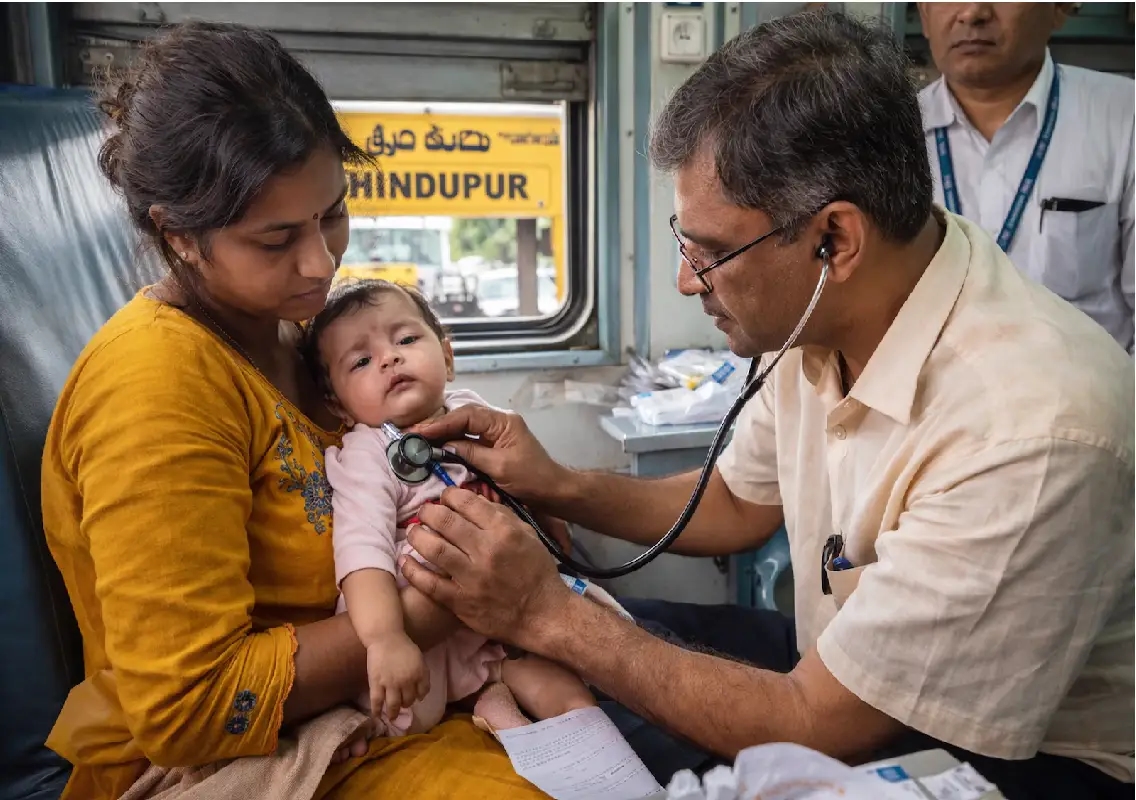


A heartening incident on board an Indian train has highlighted the efficiency of emergency response systems, after railway staff arranged immediate medical assistance for a sick infant during a long-distance journey.
Baby falls ill during train journey
The incident occurred on March 13 during a journey from Bengaluru to Gujarat, when a dentist mother noticed her baby falling ill after being fed drumstick soup. The infant began vomiting repeatedly, causing panic for the parents travelling on the moving train.
With limited options available mid-journey, the mother approached the Train Ticket Examiner (TTE) to seek help, unsure if immediate medical assistance could be arranged.
Swift response brings relief
Railway staff responded promptly, coordinating with authorities to arrange a doctor at the next station. By the time the train reached Hindupur, medical assistance was already in place.
The doctor examined the baby and provided necessary treatment and medicines, ensuring the child’s condition stabilised. The mother also noted that a proper bill was issued, reflecting transparency in the process.
From panic to reassurance
Sharing her experience on social media, the mother described the moment as a transition “from panic to relief,” expressing gratitude for the quick and organised response.
She also urged fellow parents not to panic during emergencies while travelling, emphasising that railway staff can facilitate timely help if informed promptly.
Social media applauds Indian Railways
The video of the incident quickly went viral, garnering over 2.5 million views and widespread appreciation. Many users praised Indian Railways for its preparedness and commitment to passenger safety.
Several comments highlighted that such real-life stories reinforce public trust in the system, with users calling the response “commendable” and “reassuring.”
Strengthening trust in public services
Indian Railways’ ability to coordinate medical support during transit underscores the importance of robust emergency systems in public transport. In critical moments, timely intervention can make a significant difference, especially for vulnerable passengers such as infants.
The incident stands as a reminder of how efficient coordination and responsive staff can turn a potentially dangerous situation into one of relief and gratitude.