







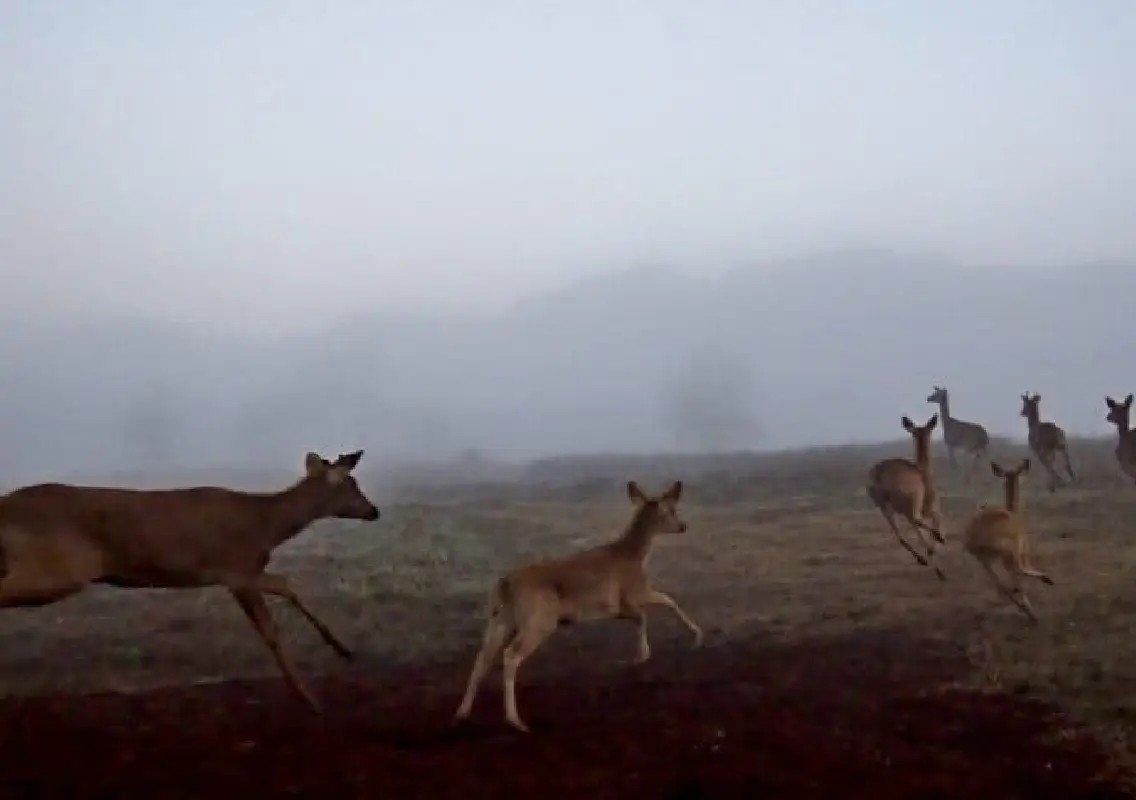


A major wildlife conservation effort in Madhya Pradesh has shown encouraging results after the endangered hard-ground swamp deer population successfully increased following a carefully planned relocation programme.
The hard-ground swamp deer, also known as the barasingha, is a rare subspecies found only in India and adapted specifically to solid grasslands rather than swampy habitats.
Population grows from 98 to 172
According to a recent study, the Madhya Pradesh Forest Department relocated 98 hard-ground swamp deer from Kanha Tiger Reserve to Satpura Tiger Reserve between 2015 and 2023.
Researchers found that the relocated population had grown to 172 individuals by 2023, with second- and third-generation fawns being recorded regularly.
Conservationists said this indicates that the animals are not merely surviving but are successfully establishing a stable breeding population in their new habitat.
Single habitat posed major risk
Experts had long warned that keeping the entire hard-ground swamp deer population limited to Kanha created a dangerous “single point of failure.”
Neha Awasthi from the International Union for Conservation of Nature (IUCN) explained that isolated wildlife populations face serious threats from disease outbreaks, environmental disasters, genetic inbreeding, and population fluctuations.
The relocation programme was designed to reduce those risks and improve the long-term survival chances of the subspecies.
Grassland restoration aided survival
Forest officials reportedly created predator-proof acclimatisation enclosures before releasing the deer into open grasslands.
The habitat was also actively managed through grassland restoration, planting native forage species, and removing invasive plants such as lantana and congress weed.
Researchers observed that the deer in Satpura appeared physically healthy and comparable to those in Kanha, suggesting the new habitat provides sufficient food, water, and shelter.
Meanwhile, another 48 hard-ground swamp deer have recently been introduced into Bandhavgarh Tiger Reserve, where the population has already increased to 64.
Conservationists say the success offers hope for the long-term survival of one of India’s rarest deer species.