







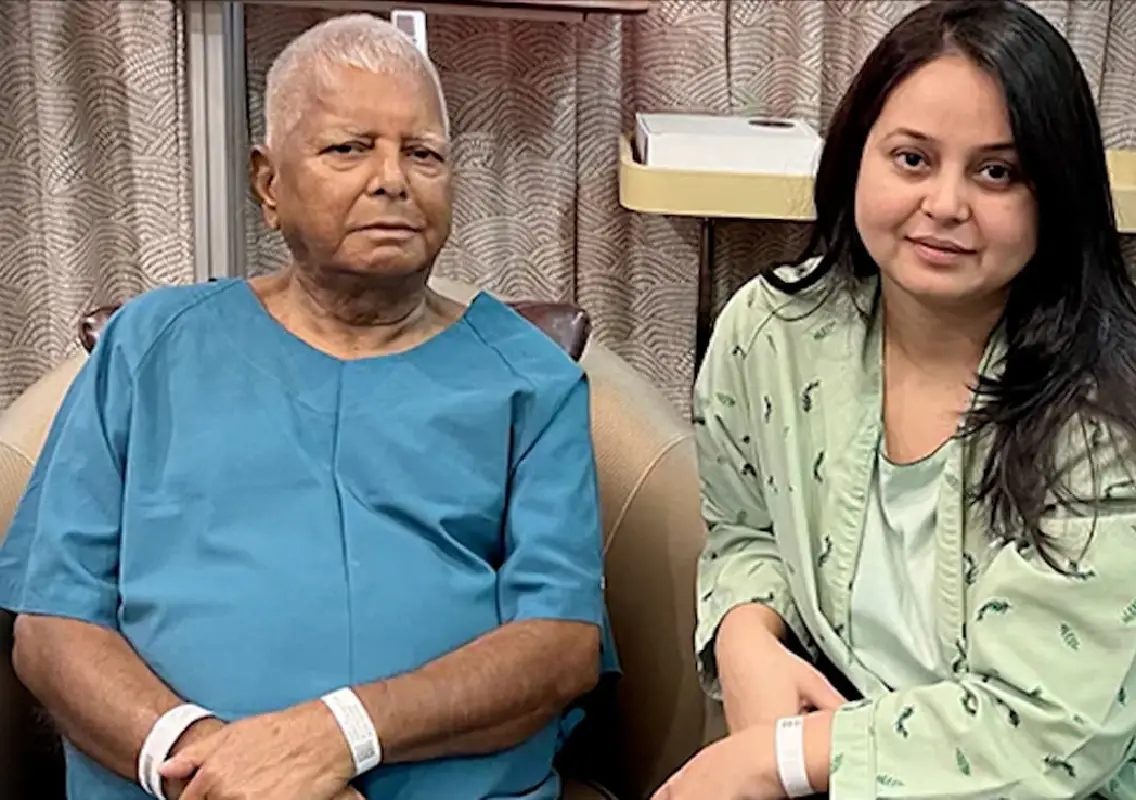


The Rashtriya Janata Dal (RJD) is attempting to contain a deepening public feud within party patriarch Lalu Prasad Yadav’s family after his daughter Rohini Acharya levelled explosive allegations against her brother and former deputy chief minister Tejashwi Yadav and his close associates. The internal discord, now widely discussed on social media and political circles, comes at a time when the party is still grappling with its poor performance in the recent Bihar assembly elections.
Rohini alleges harassment and ‘bad kidney’ charge
The family rift took an unexpected and dramatic turn after Rohini posted emotional messages on X, claiming she was quitting politics and distancing herself from the family. On November 17, she accused associates of Tejashwi Yadav of spreading rumours that she had donated a “bad kidney” to Lalu Prasad Yadav “in exchange for crores of rupees and a party ticket”.
Rohini, who donated a kidney to her father in 2022 and later contested the Saran Lok Sabha seat, alleged that she was mentally harassed and “driven out” of her home by Tejashwi, Rajya Sabha MP Sanjay Yadav and Rameez, a close friend of Tejashwi since his cricketing days.
“Yesterday abuses were heaped on me and I was accused of donating my bad kidney to my father, and that too in exchange for crores of rupees and a party ticket,” she wrote on X, expressing anguish and accusing the two aides of maligning her.
RJD calls it a ‘family matter’
Senior RJD leader Mrityunjay Tiwari, attempting damage control, refused to make a political comment on Rohini’s accusations. Calling her a “daughter and sister everyone would want,” he insisted the issue was an internal matter of the Yadav family.
“This is a family matter. Members of the family will speak on this. The party’s top leadership will review what went wrong during the election. Only then can we respond,” he said.
The RJD leadership is reportedly concerned that the public feud could further weaken the party’s already fragile image after its disappointing performance, securing only 25 seats in the 243-member Bihar assembly.
Opposition seizes the moment
Predictably, political rivals used the controversy to target the RJD.
Bihar Deputy Chief Minister Vijay Kumar Sinha of the BJP said, “RJD’s anarchy earlier used to show outside, and now shows within the family. How will people with such ideology who can’t keep their family intact, keep the state functioning well?”
BJP national general secretary Tarun Chugh added that the “dynastic clan of the INDI alliance is continuously disintegrating,” questioning how leaders who cannot unite their own families can unite Bihar.
The JD(U) also criticised the RJD’s alleged treatment of Rohini. Madan Sahni, newly elected MLA from Bahadurpur, said, “May God bless everyone with such a daughter. She should receive the respect she deserves. Politics should not impact personal life and family matters.”
Congress plays it down
In contrast, the Congress, an RJD ally until recently, dismissed the issue lightly, remarking, “Hota rehta hai,” indicating that such disputes are not uncommon in political families.
What caused the feud?
According to party insiders, tensions peaked after Rohini demanded accountability for RJD’s electoral debacle. She criticised Tejashwi’s advisers Sanjay Yadav and Rameez, calling them self-styled strategists who ignored ground feedback.
Little is known publicly about Rameez, except that he hails from Balrampur in Uttar Pradesh and his father-in-law Rizwan Zaheer is a former MP. Rohini shared a post describing Rameez as “a gangster with a criminal bent of mind, a murder accused who works for Sanjay Yadav.”
Sources say her demands for organisational reform and her criticism of Tejashwi’s inner circle escalated tensions, eventually leading to the outburst seen online.
Conclusion
As the feud spirals into a full-blown political controversy, the RJD leadership faces mounting pressure to resolve differences within the Yadav family before they further damage the party’s morale and public standing. With the spotlight firmly on the internal crisis, the coming days will likely determine how the party restructures itself — and whether it can avoid deeper fissures ahead of future elections.