


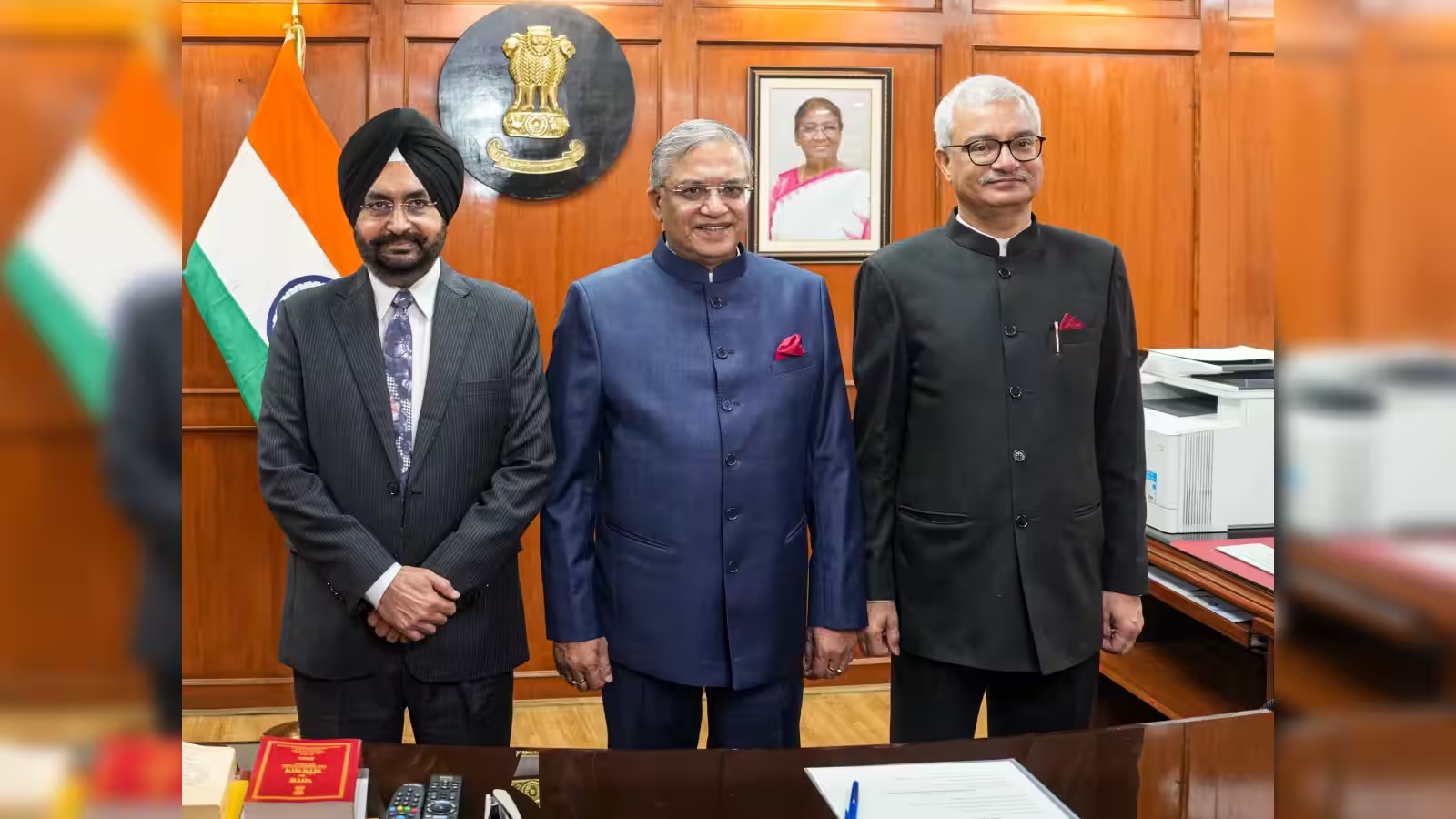


New Delhi: The Cabinet Secretariat did not initiate formal action on complaints filed by two Election Commissioners against a senior officer of the Election Commission of India, stating that their letters were submitted in their individual capacities and did not constitute an official communication from the poll panel as a whole, documents obtained through a Right to Information (RTI) application have revealed.
Election Commissioners Sukhbir Singh Sandhu and Vivek Joshi separately wrote to Cabinet Secretary T V Somanathan on July 29, 2026, raising concerns about the conduct of Maneesh Garg, a senior deputy election commissioner. Garg, an Indian Administrative Service (IAS) officer, was appointed to the Election Commission by the Appointments Committee of the Cabinet (ACC) on September 2, 2024.
The letters were released in response to an RTI application filed by activist Commodore Lokesh K Batra (retd). The documents provide details of the allegations made by the two commissioners and explain why the Cabinet Secretariat decided against taking formal action at that stage.
The dispute centred on an order concerning the allocation of work among senior officers of the Election Commission. The commissioners reportedly believed the changes could affect the handling of voter-record modifications by shifting responsibilities towards the central level instead of leaving them with officials at the state level.
What the two Election Commissioners alleged
According to a Cabinet Secretariat note included in the RTI response, Sandhu and Joshi alleged that Garg issued an order changing the work allocation of officers senior or equivalent to him after assuming charge as the link officer of the deputy election commissioner (Administration).
The commissioners said the revised allocation was made without prior consultation with the Election Commission or the officers concerned. They also alleged that the changes were introduced despite repeated oral and written instructions directing officials not to make such alterations without prior discussion or approval from the Commission.
The Cabinet note recorded their concerns about the process followed by Garg.
Both commissioners further alleged that his actions violated the Chief Election Commissioner and Other Election Commissioners (Appointment, Conditions of Service and Term of Office) Act, 2023.
Joshi raised an additional concern, stating that when he sought the relevant file from the Administration Division, it was not provided to him.
The complaints therefore involved questions about administrative authority, internal consultation and access to official records within the Election Commission. The allegations, however, were claims made by the two commissioners and do not, by themselves, establish that Garg committed a violation.
Dispute over work allocation and voter records
The complaints followed an order issued by Garg concerning the allocation of responsibilities among senior officials. The Indian Express had reported in September that the two commissioners approached the Cabinet Secretary because they believed the order could centralise the handling of changes to voter records.
According to that report, the commissioners were concerned that matters which could be handled by officials at the state level might instead come under greater control at the central level.
The Election Commission subsequently addressed the matter in a statement issued on September 26. It said the work allocation orders issued by Garg had not been implemented following directions from the two commissioners.
The poll panel also said the complaints concerned an officer on deputation and did not relate to policy matters or the Commission’s information technology division.
The statement provided the Commission’s account of the administrative dispute, while the RTI documents shed light on the separate complaints sent to the Cabinet Secretariat and the government’s response.
The episode has raised questions about how disagreements involving senior officers of a constitutional body are handled, particularly when the complaints are made by individual members rather than through a formal institutional decision.
Why the Cabinet Secretariat did not initiate action
A note prepared by the Cabinet Secretariat on August 3, 2026, initially proposed seeking the Chief Election Commissioner’s opinion on the complaints.
The note stated that the Chief Election Commissioner could be asked to provide his views on the issue and that a draft demi-official letter had been submitted for approval.
However, a subsequent note dated August 4 set out concerns about taking action on complaints from individual Election Commissioners without an official communication from the Commission as a whole.
The note emphasised that the Election Commission is a constitutional body designed to function independently and transparently, without executive interference.
It stated that the commissioners’ communications had to be taken seriously but could not be treated as formal representations from the Commission itself.
The Cabinet Secretariat also observed that although Garg had been appointed by the Appointments Committee of the Cabinet, he was functioning as an officer of the Election Commission. His work and conduct were therefore governed by the rules and guidelines applicable to the poll panel.
The note concluded that initiating action without an official communication from the Commission as a whole could be inappropriate and might be interpreted as interference in the functioning of the constitutional body.
It recommended acknowledging the complaints and sending copies to the Principal Private Secretary to the Chief Election Commissioner for information.
This approach meant the Cabinet Secretariat recorded the complaints but did not initiate the formal action initially contemplated in the August 3 note.
Cabinet Secretariat refers to Section 18 of the 2023 Act
The August 4 note also referred to Section 18 of the Chief Election Commissioner and Other Election Commissioners (Appointment, Conditions of Service and Term of Office) Act, 2023.
As cited in the note, the provision states that the Commission should conduct its business unanimously as far as possible, with differences of opinion resolved through a majority decision.
The Cabinet Secretariat relied on this provision while explaining why complaints from individual commissioners could not automatically be treated as an official position of the institution.
The distinction was central to the decision. While the complaints were submitted by two members of the Commission and concerned the conduct of an officer serving within it, the Secretariat considered that an official communication from the Commission as a whole was necessary before taking further action.
The note did not dismiss the concerns as unimportant. Instead, it stated that they should be acknowledged while avoiding a step that could be seen as executive interference in the poll panel’s functioning.
The documents therefore point to a distinction between recording complaints from individual constitutional office-holders and initiating action through the executive government against an officer working in the Commission.
Cabinet Secretary acknowledges receipt of complaints
Cabinet Secretary T V Somanathan signed an acknowledgement confirming receipt of the two commissioners’ letters.
The acknowledgements were issued on August 5, 2026, with copies marked to the Department of Personnel and Training, the Establishment Officer and the office of the Chief Election Commissioner.
The draft note was also marked to the secretary of the Department of Personnel and Training and the Establishment Officer so the matter could remain on record.
According to the note, keeping the complaints on file would “enable it to be taken into account in future decision-making regarding the officer”.
The documents indicate that the Cabinet Secretariat chose to preserve the complaints for possible consideration in future decisions rather than proceed with immediate formal action.
The acknowledgement letters confirmed that the complaints had been received, but they did not amount to a finding on the allegations against Garg.
What the RTI documents reveal
The RTI response provides a record of the concerns raised by Sandhu and Joshi, the initial proposal to seek the Chief Election Commissioner’s opinion and the subsequent decision to refrain from further action at that stage.
The central issue was not only the disputed work allocation order but also the question of how the executive should respond to complaints from individual members of an independent constitutional body.
The commissioners alleged that Garg changed responsibilities without consultation and despite instructions against such action. The Election Commission said the orders were not implemented after directions from the two commissioners. The Cabinet Secretariat, meanwhile, considered that action based on individual complaints could risk being viewed as interference in the Commission’s functioning.
The documents do not establish whether the allegations against Garg were independently examined or resolved through another internal process.
The case highlights the institutional boundaries between the Cabinet Secretariat and the Election Commission, as well as the importance of procedures for addressing disagreements within constitutional bodies. The complaints have been formally acknowledged and placed on record, but the RTI material does not indicate that the Cabinet Secretariat initiated disciplinary or other formal action against the officer.