







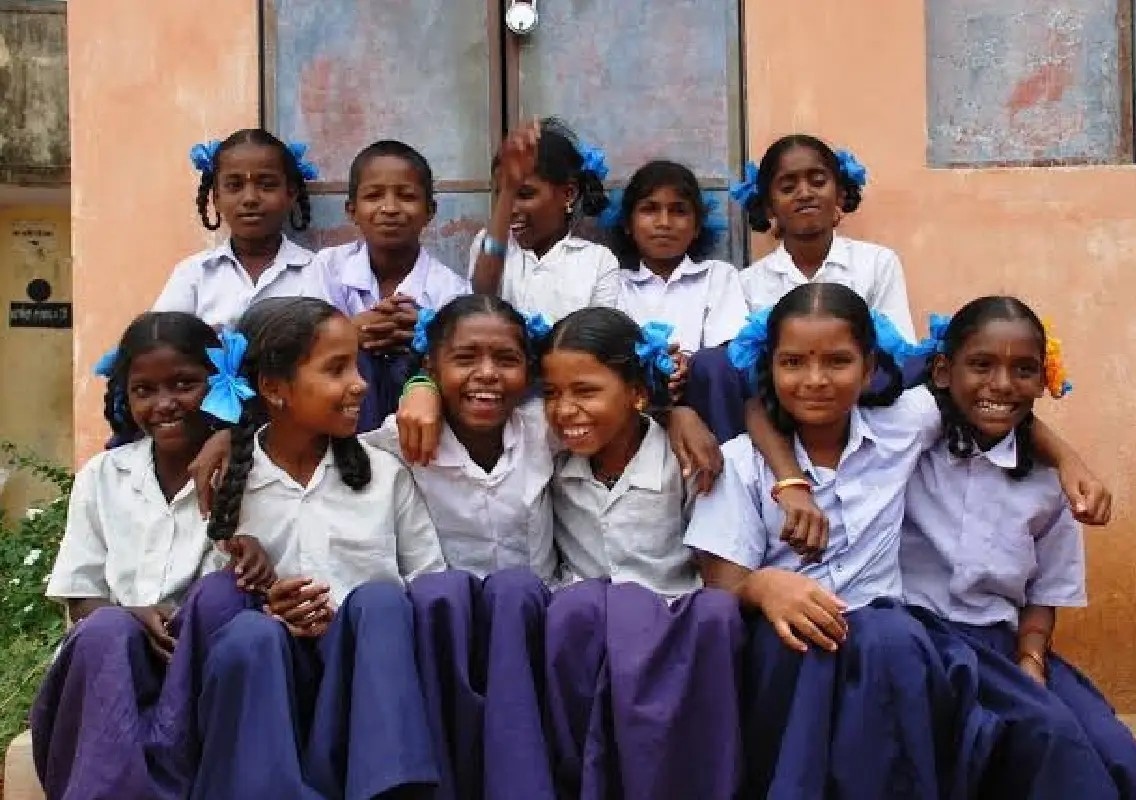


New Delhi: India has made considerable progress in improving access to education, but a significant gender gap persists, particularly in rural areas. Findings from the National Family Health Survey-6 (NFHS-6) indicate that the disparity between boys and girls in educational attainment is substantially wider in rural India than in urban areas.
The findings point towards a key reason behind this divide: the availability and accessibility of secondary schools close to where families live.
While primary education is relatively more accessible across the country, the transition to secondary education remains a major hurdle for many rural girls. Greater distances to schools, concerns over safety, transportation difficulties and household responsibilities can make continuing education considerably more difficult.
NFHS-6, covering the 2023–24 period, shows an overall improvement in women’s educational attainment. The proportion of women with 10 or more years of schooling has risen to 46.4 per cent, compared with 41 per cent in NFHS-5.
Distance becomes a bigger barrier after primary school
For many children, attending a nearby primary school is possible even in rural communities. The situation changes when students reach the secondary level.
Secondary schools are generally fewer and more widely dispersed than primary schools. As a result, girls may have to travel considerably farther to continue their education.
Distance can have several consequences. Families may be reluctant to allow adolescent girls to travel long distances alone, particularly where public transport is limited. Concerns about safety can become more pronounced as girls grow older.
For families with limited financial resources, arranging daily transport can also be difficult.
These challenges can eventually lead parents to prioritise household responsibilities or marriage over further education, particularly when the perceived benefits of continuing school are not immediately visible.
Rural-urban divide remains visible
The difference between rural and urban areas is not simply a question of whether a school exists. It is also about how easily students can reach it and whether the surrounding conditions allow them to remain in education.
Urban areas generally have a denser network of schools and better transportation options. Students can often choose between several institutions without travelling long distances.
In rural areas, however, a student may have only one secondary school serving a large geographical area. A long journey can become a significant obstacle, especially for adolescent girls.
Research based on earlier NFHS data has similarly found substantial urban-rural differences in women’s educational attainment. NFHS-5 data showed that 56.3 per cent of urban women had completed at least 10 years of schooling, compared with 33.7 per cent in rural areas.
Why girls are particularly affected
The problem is closely connected with broader social and economic inequalities.
Girls in rural communities often face expectations to contribute to household work, care for younger siblings or assist with family occupations. As they enter adolescence, these responsibilities can increase.
Safety and mobility concerns can further restrict their ability to travel independently.
Social attitudes can also influence decisions about girls’ education. In some communities, families may regard investment in a daughter’s education differently from investment in a son’s education, particularly when marriage is expected to take place at a relatively young age.
Although the prevalence of early marriage has declined significantly, it remains an important factor affecting girls’ education. NFHS-6 data show that the proportion of women aged 20–24 who were married before the legal age of 18 declined to 20.1 per cent in 2023–24, from 47.4 per cent in 2005–06.
Secondary education is the critical transition
The challenge is particularly important because secondary education represents a critical stage in a young person’s development.
Completing more years of schooling can improve a girl’s knowledge, confidence and future employment opportunities. Education is also closely linked with better health awareness, later marriage, greater decision-making power and improved economic opportunities.
When girls leave school early, the consequences can extend well beyond education.
A girl who completes secondary education is more likely to have opportunities to pursue higher studies, vocational training or employment. Conversely, dropping out during adolescence can restrict her choices for years to come.
This makes improving access to nearby secondary schools an important part of addressing India’s gender gap.
Progress is visible, but access must improve
NFHS-6 also shows that India is moving in the right direction on several education indicators.
The share of females aged six years and above who have ever attended school increased from 71.8 per cent in NFHS-5 to 73.7 per cent in NFHS-6. The proportion of women with at least 10 years of schooling also increased from 41 per cent to 46.4 per cent.
These improvements demonstrate that educational access has expanded.
However, national averages can conceal significant differences between communities. A girl living in a well-connected urban neighbourhood may face very different circumstances from one living in a remote rural village.
The challenge, therefore, is not merely to increase enrolment but to ensure that girls remain in school through secondary education and beyond.
Better transport can make a difference
Making secondary education physically accessible could help address one of the most immediate barriers.
Safe and affordable transport, bicycles for students, hostels and residential schools can reduce the distance between rural girls and educational institutions.
Schools also need adequate sanitation facilities, particularly for adolescent girls. A safe and supportive school environment can make families more comfortable with allowing their daughters to continue their education.
Government programmes aimed at improving girls’ education therefore need to look beyond enrolment figures and consider the practical difficulties faced by students every day.
Education can strengthen women’s future opportunities
The education gap is ultimately connected with the broader question of women’s empowerment.
Better education can improve women’s access to employment and economic opportunities while strengthening their ability to make decisions about health, marriage and family life.
India’s progress in women’s education has been significant, but the rural-urban divide shows that the benefits have not been distributed equally.
The NFHS-6 findings underline an important lesson: building a school is only the first step. Ensuring that a girl can safely and affordably reach that school — and continue attending it through secondary education — is equally important.
For rural India, closing the gender gap will require sustained investment in schools, transport, safety, sanitation and social awareness. It will also require families and communities to see girls’ education not as an optional investment, but as an essential foundation for their future.
If India is to achieve meaningful gender equality in education, the distance between a rural girl and her secondary school must no longer determine how far she can go in life.