







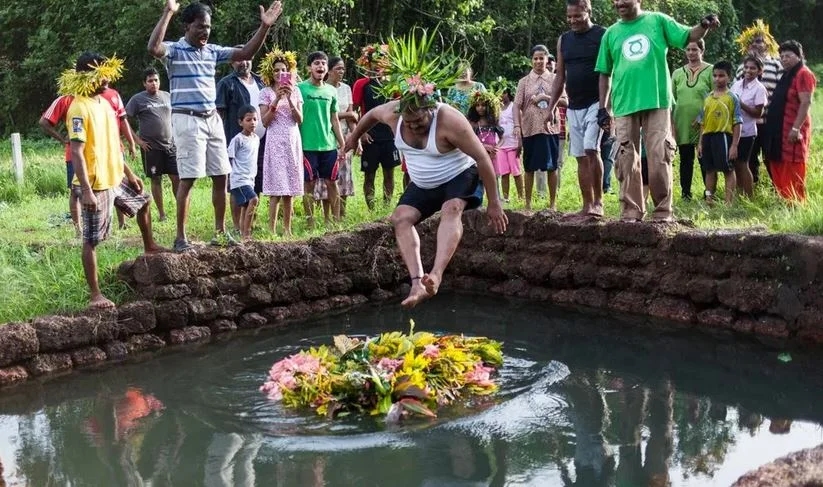


MUMBAI: Once a quiet feast rooted in East Indian and Goan communities, San Joao — the Feast of St John the Baptist — has transformed into a vibrant, citywide celebration across Mumbai, blending age-old Christian ritual with local tradition, rain-soaked revelry, and cultural renewal. Celebrated on June 24, the day honours St John the Baptist, the saint who baptized Jesus and heralded new beginnings.
In Mumbai, San Joao’s popularity has soared, with events now stretching from Marine Lines to Manori, drawing crowds from both Catholic and non-Catholic communities. Its widespread appeal lies in its joyful embrace of rain, nature, baptismal symbolism, and a unique twist — it also honours newlyweds, particularly the son-in-law in East Indian households.
Jaavaycha Sann: Welcoming the New Son-in-Law
In places like Uttan, the groom is ceremonially welcomed with fireworks, digs up a coin buried under an arka plant for luck, and is led in procession by a brass band to a village well. There, women wash the couple’s feet, a practice echoing baptismal purification and community acceptance. While Goans do not follow this ritual, both East Indian and Goan tables are filled with festive delicacies — pork Indyal, stuffed chicken, and mutton stew.
Water as Ritual and Joy
As a nod to St John’s act of baptism, water is central. In Mumbai and Thane, wells, tanks, and pools become sites of joyful immersion. “We’d toss water from terraces or douse each other with pipes,” laughs Wency Pereira. With traditional wells disappearing, TMC pools and inflatable setups have taken over in some areas.
From Gaothans to Grand Carnivals
Over the last decade, San Joao has expanded into gymkhanas, clubs, and resorts, especially in Gorai and Manori. Today, 1,000+ people gather at single events, featuring live bands, rain dances, and ceremonial plunges led by brides. At Mumbai Meri Jaan Foundation’s event, attendance touched 1,700 last year and is expected to cross 2,500 this year.
Reviving Faith Through Wells
Yet, amidst the carnival-like energy, traditionalists express concern. Groups like the Mobai Gaothan Panchayat (MGP) emphasize cultural grounding and environmental revival, encouraging celebrations at restored village wells. “Reclaiming these spaces reconnects us to our roots and helps save the water bodies themselves,” says Alphi D’Souza.
Leading by example, the Vakola East Indian community will host its first San Joao at the local gaothan well this year, anchoring festivity in heritage.