







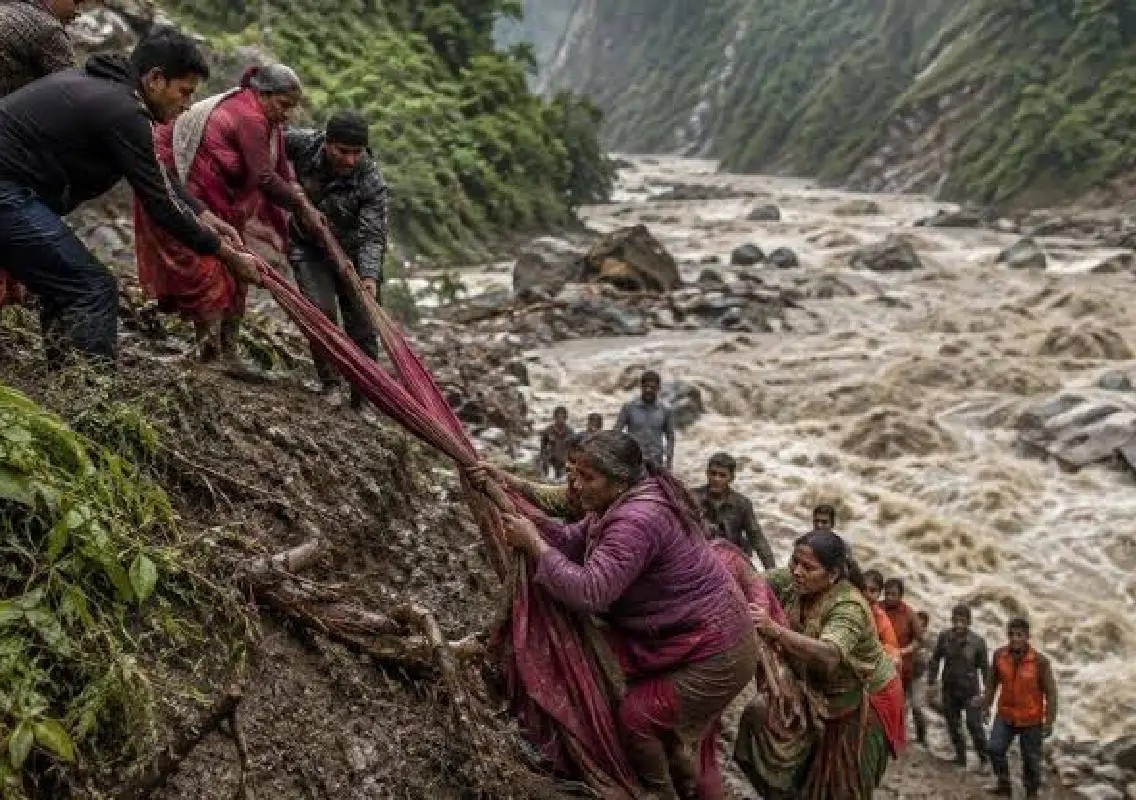


A saree turned into an unlikely lifeline after devastating floods and falling boulders engulfed a mountain road near the Nepal-Tibet border, helping people trapped in the disaster zone climb to safety.
The simple piece of clothing was lowered from the top of a mud-covered embankment as those stranded below struggled to escape the flooded and treacherous terrain.
Saree lowered to help people reach higher ground
The road had been overwhelmed by floodwaters and falling boulders, leaving those caught in the area with few options to escape.
With the ground covered in mud and thorny undergrowth making movement difficult, a saree was lowered from above the embankment.
Those below used the makeshift lifeline to scramble up the muddy slope and reach safer ground.
What would ordinarily be a piece of everyday clothing became a crucial rescue aid in a moment when conventional equipment was unavailable.
A desperate climb through mud and thorns
The escape was far from easy. The affected stretch was covered in mud and debris, while thorny vegetation added to the difficulty of reaching higher ground.
Those caught in the disaster had to move carefully through the unstable terrain as floodwaters and falling rocks continued to threaten the area.
The saree provided a means of bridging the difficult climb, allowing people below to pull themselves towards the top of the embankment.
An ordinary saree, an extraordinary rescue
The dramatic rescue highlights how ordinary objects can become vital in the middle of a disaster.
With people stranded on one side of a mud-covered embankment and safer ground above, the saree became a makeshift rope when no conventional rescue equipment was immediately available.
The image of a saree being used to pull people to safety captures the desperation of those caught in the Nepal disaster — and the quick thinking that can make a difference when every second matters.
For those who survived, the humble piece of fabric became much more than clothing. In the midst of floodwaters, mud and falling boulders, it became a lifeline to safety.