







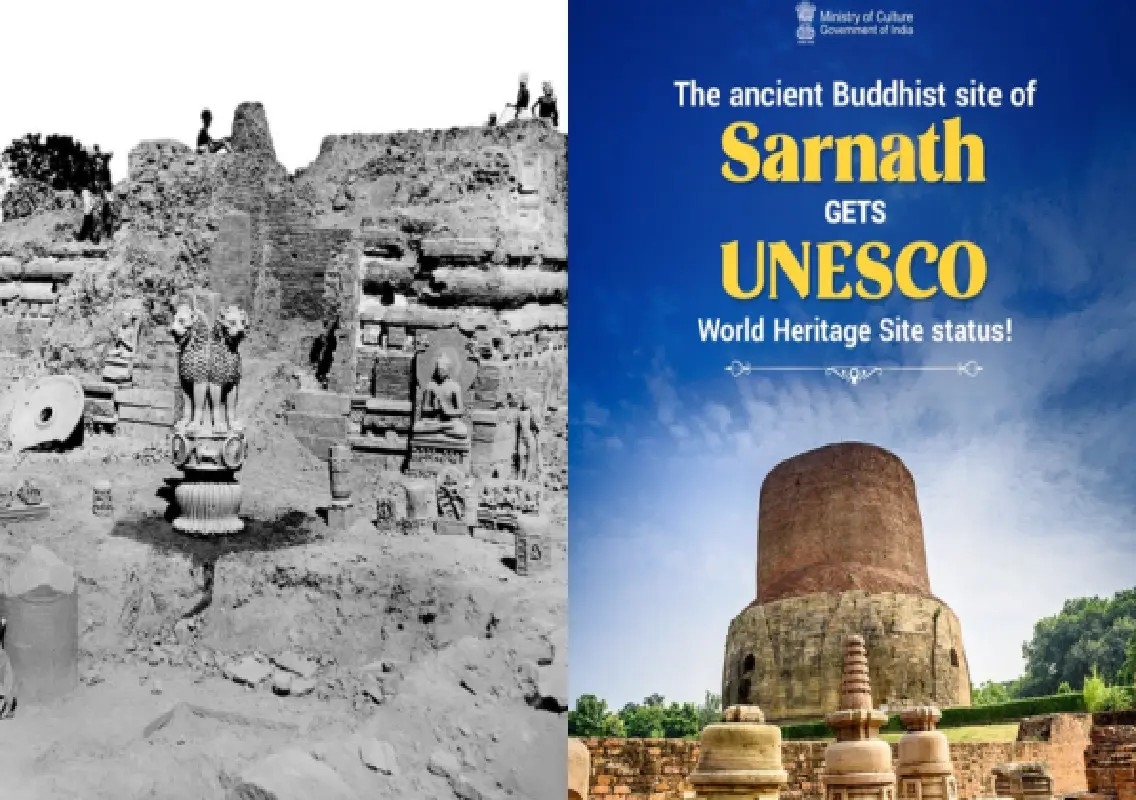


New Delhi: The ancient Buddhist site of Sarnath has been inscribed on the UNESCO World Heritage List, marking a significant milestone for India’s cultural and historical legacy. The recognition highlights Sarnath’s global importance as one of the most revered centres of Buddhist heritage and a symbol of peace, wisdom and compassion.
Welcoming the development, Union Minister for Culture and Tourism Gajendra Singh Shekhawat described the inscription as a defining moment for India’s cultural heritage. He said the recognition reinforces the country’s enduring contribution to world civilisation through its rich spiritual and philosophical traditions.
Minister hails global recognition
In a post on social media, Shekhawat said Sarnath stands as a timeless beacon of peace, wisdom and compassion.
He noted that the ancient site reflects the profound spiritual and philosophical contributions of Indian civilisation to humanity and continues to inspire people across the world.
According to the minister, the UNESCO inscription reaffirms India’s position as a cradle of ideas that have influenced generations beyond its borders.
Historic significance of Sarnath
Located near Varanasi in Uttar Pradesh, Sarnath is one of Buddhism’s holiest pilgrimage sites. It is believed to be the place where Gautama Buddha delivered his first sermon after attaining enlightenment, setting in motion the teachings of Buddhism.
The site is home to several ancient monuments, stupas, monasteries and archaeological remains that attract pilgrims, historians and tourists from around the world.
Its historical, archaeological and religious importance has made Sarnath a key destination for those seeking to understand India’s ancient heritage and Buddhist traditions.
Boost to heritage conservation and tourism
The UNESCO World Heritage inscription is expected to enhance international recognition for Sarnath, strengthening heritage conservation efforts and promoting cultural tourism.
The inclusion is also likely to increase global interest in the site, encouraging more domestic and international visitors while supporting conservation initiatives to preserve its historical and architectural significance for future generations.
The recognition marks another important achievement for India in safeguarding and showcasing its rich cultural heritage on the global stage.