


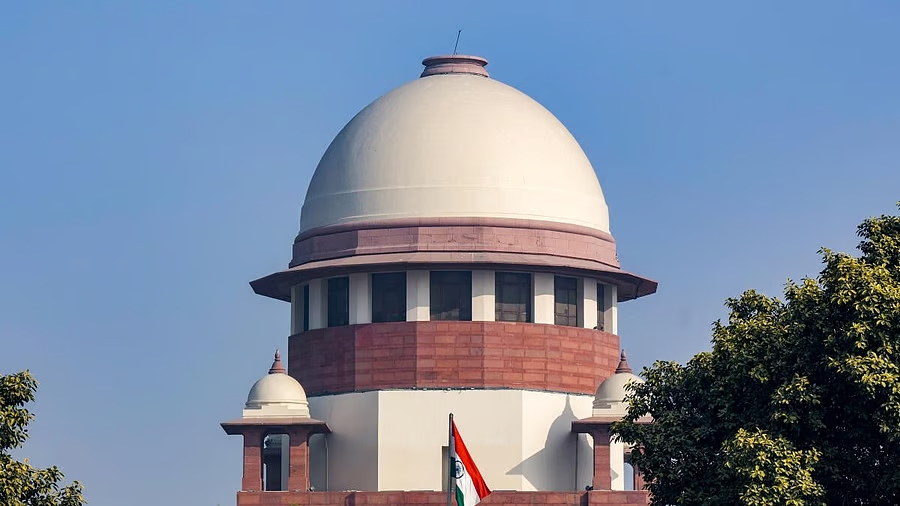


New Delhi: The Supreme Court on Thursday upheld a Madras High Court ruling that a person who converts from Hinduism to Islam cannot claim reservation under Tamil Nadu’s Backward Class (Muslim) category solely on the basis of conversion.
A bench of Justices Prashant Kumar Mishra and Shree Chandrashekhar dismissed the Tamil Nadu government’s challenge to the High Court verdict, holding that social backwardness associated with a person’s earlier caste or community status cannot automatically establish membership of a different notified backward-class community after conversion.
The court said that statutory benefits and affirmative action under Article 16(4) of the Constitution cannot be claimed merely on the basis of membership in a previous social order when eligibility depends on belonging to a particular notified category.
The ruling upheld the High Court’s decision to strike down the Tamil Nadu government order issued on March 9, 2024, which sought to provide a route for certain people who converted to Islam to obtain Backward Class (Muslim) community certificates.
The Supreme Court also addressed the legal position of Scheduled Caste status following religious conversion, stating that a person professing a religion other than Hinduism, Sikhism or Buddhism cannot retain Scheduled Caste status under the existing constitutional framework.
SC says conversion alone does not establish backward-class membership
In its judgment, the Supreme Court distinguished between a person’s earlier caste or community identity and membership of a specific backward-class community notified by the state after conversion.
The bench held that conversion to Islam, Christianity or another non-Hindu social order does not automatically transfer a person’s former caste-based status into a different notified backward-class category.
“No statutory benefit, protection, reservation, or other entitlement under Article 16(4) of the Constitution” that depends on membership of a particular Hindu social order can be extended merely because a person belonged to that social order before conversion, the court said.
It added that backwardness experienced in an earlier social setting cannot, by itself, establish eligibility for affirmative action in the community into which a person converts.
The court’s reasoning centred on the legal requirements for membership of a notified category. It said that conversion does not, by itself, confer membership of any particular backward-class community recognised by the state.
The ruling therefore does not treat a person’s religious conversion as sufficient proof of eligibility for reservation under the Backward Class (Muslim) category.
Scheduled Caste status after conversion
The bench also considered the constitutional framework governing Scheduled Caste status.
It said that a person professing a religion other than Hinduism, Sikhism or Buddhism cannot be treated as a member of a Scheduled Caste under the existing provisions governing such recognition.
According to the judgment, conversion to a religion outside those specified in the framework results in the loss of Scheduled Caste status attached to the person’s earlier caste identity.
The court said such a person cannot claim affirmative-action benefits that depend on Scheduled Caste membership merely by relying on their former status.
This aspect of the judgment concerns the legal conditions for Scheduled Caste recognition. It is distinct from the question of whether a person may qualify for a backward-class category on other legally established grounds.
The bench also clarified that the effect of reconversion to Hinduism cannot be determined solely by referring to a person’s earlier caste status.
Instead, the competent authority must conduct an independent, fact-specific assessment to establish whether the original caste or social identity has genuinely revived and whether the person meets the applicable constitutional and legal requirements.
Seven notified Muslim backward-class communities at the centre of the case
The dispute concerned Tamil Nadu’s system of identifying eligible communities for reservation benefits.
The state government argued that it had acted on the basis of a report by the Tamil Nadu Backward Classes Commission. It said the March 9, 2024, government order was intended to ensure that socially and educationally backward people would not lose access to reservation benefits solely because they had converted to Islam.
The order provided a mechanism for issuing Backward Class (Muslim) community certificates to eligible converts from specified categories, including backward classes, most backward classes, denotified communities and Scheduled Castes.
The Supreme Court, however, held that conversion alone could not establish membership of one of the seven notified backward-class Muslim communities in the state.
It said a person’s previous caste or community status could not automatically be transposed into membership of a distinct Muslim backward-class category.
The judgment also rejected the idea that a private religious body could conclusively determine a person’s entitlement to statutory reservation benefits. Such eligibility must be established under the applicable constitutional and legal framework.
How the dispute began
The case originated with a petition filed by Sameer Ahamed, who converted from Hinduism to Islam in 2015. His conversion was notified through a Gazette notification in 2016.
Ahamed subsequently married according to Islamic rites and sought a certificate identifying him as belonging to the Muslim Lebbai community so that he could claim reservation benefits.
The dispute eventually reached the Madras High Court, which examined whether conversion alone could make a person eligible for a specific notified backward-class Muslim category.
On June 25, the High Court ruled that conversion to Islam did not, by itself, entitle a person to reservation under the Backward Class (Muslim) category.
It also declared the Tamil Nadu government order dated March 9, 2024, unconstitutional.
The High Court observed that a person who converts to Islam may be recognised as Muslim but cannot automatically be classified as belonging to a particular notified backward-class Muslim community for reservation purposes.
The Tamil Nadu government challenged the ruling before the Supreme Court, maintaining that its order sought to protect eligible people from losing reservation benefits because of religious conversion.
The Supreme Court reserved its decision on the state government’s plea on August 7 before delivering its ruling on Thursday.
Court upholds High Court’s conclusion
The Supreme Court concluded that the Madras High Court’s decision did not warrant interference, although it set out its own constitutional reasoning.
The bench reiterated that a person who converts to Islam does not become a member of one of Tamil Nadu’s notified backward-class Muslim communities through conversion alone.
It also stressed that a private religious organisation cannot conclusively decide statutory entitlement to reservation benefits.
The decision reinforces the distinction between religious identity and legal membership of a notified reservation category. While conversion may establish a person’s religious affiliation, eligibility for a specific community-based benefit must satisfy the requirements laid down under the relevant legal framework.
What the ruling means for reservation claims
The judgment addresses a specific legal question: whether conversion to Islam alone is sufficient to establish eligibility for Tamil Nadu’s Backward Class (Muslim) reservation category.
The court’s answer was no. A person seeking such benefits must establish membership of the relevant notified community in accordance with the applicable law rather than relying solely on their earlier caste identity and subsequent religious conversion.
The ruling also makes clear that reconversion does not automatically restore eligibility based only on a person’s antecedent status. The competent authority must examine the individual circumstances and determine whether the relevant legal requirements have been met.
The decision arose from Tamil Nadu’s government order and the dispute over community certification. Its application in individual cases will depend on the relevant constitutional provisions, statutory framework and facts established before the competent authorities.
The Supreme Court has now upheld the High Court’s conclusion that conversion alone cannot confer membership of a notified backward-class Muslim community. The ruling leaves the legal requirements for establishing reservation eligibility central to any future claim under the category.