







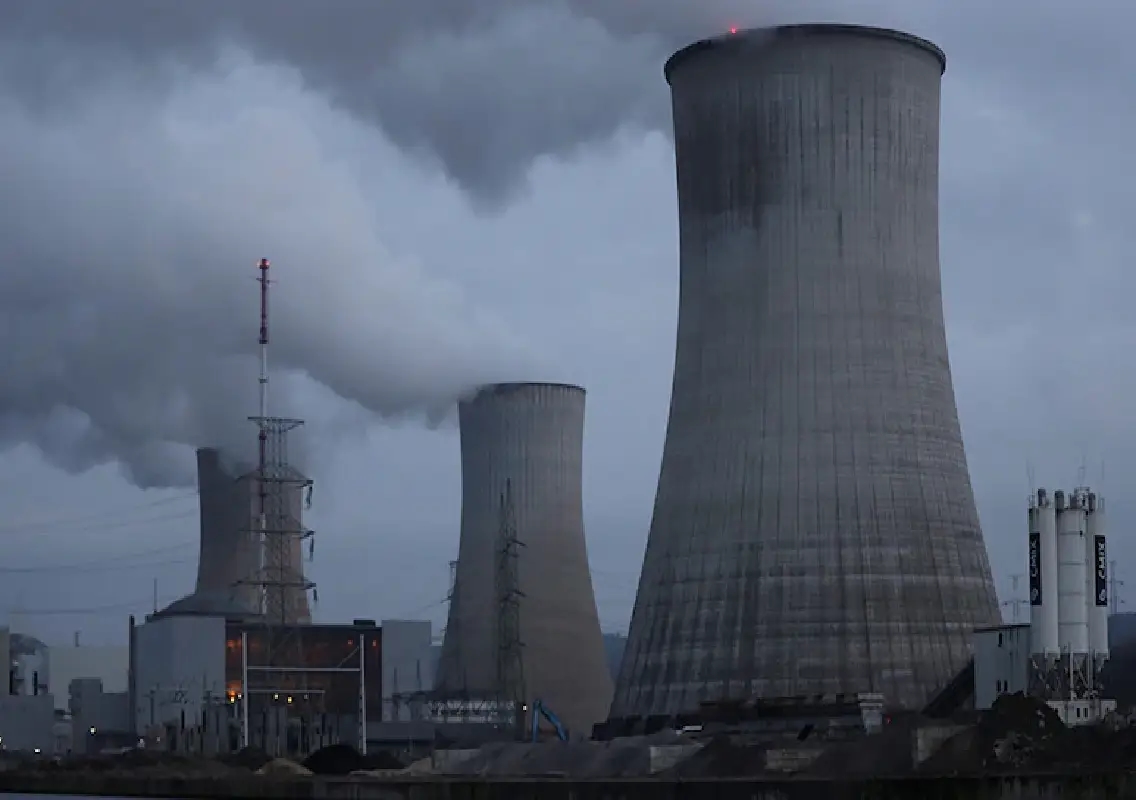


New Delhi: Parliament has approved the Sustainable Harnessing and Advancement of Nuclear Energy for Transforming India (SHANTI) Bill, marking a significant policy shift aimed at expanding India’s civil nuclear energy capacity and opening the sector to private participation while strengthening regulatory oversight and safety mechanisms.
A landmark reform in nuclear policy
The SHANTI Bill was passed during the Winter Session of Parliament, which concluded on Friday. The legislation was approved through a voice vote amid a walkout by several Opposition members, who were protesting the passage of the VB-G RAM G Bill that replaces the Mahatma Gandhi National Rural Employment Guarantee Act (MGNREGA).
Described by the government as a long-overdue overhaul of India’s nuclear energy framework, the SHANTI Bill seeks to modernise laws governing the sector in line with current technological, economic and energy realities, while retaining the core principles of safety and security that have guided India’s nuclear programme since the Atomic Energy Act of 1962.
Opening the sector to private participation
One of the most consequential provisions of the SHANTI Bill is the opening up of India’s civil nuclear sector to private companies and joint ventures. Until now, nuclear power generation and most activities linked to it were dominated almost entirely by government-owned entities.
Under the new law, private players will be allowed to set up and operate nuclear facilities and participate in several parts of the nuclear value chain. This includes activities such as construction, operation and maintenance of nuclear power plants, as well as the transport of nuclear fuel and other supporting services.
However, the government has made it clear that certain sensitive activities will remain under state control. Uranium enrichment and a few other strategically critical processes will continue to be handled exclusively by government agencies, reflecting national security and non-proliferation concerns.
Strengthened regulatory oversight
To address safety and accountability concerns arising from expanded participation, the SHANTI Bill significantly strengthens the regulatory framework. The Atomic Energy Regulatory Board (AERB), which earlier functioned through executive authority, has now been granted statutory status.
With this change, the AERB will have independent legal powers to enforce safety standards, inspect nuclear facilities, investigate accidents and, if necessary, suspend or cancel operations. The regulator’s authority will extend across the entire lifecycle of nuclear facilities, starting from the design and planning stage through construction, operation and eventual decommissioning.
In addition, the bill mandates regulatory oversight even at the architectural and design phase of nuclear plants and related infrastructure, including nuclear waste management facilities. This is intended to ensure that safety considerations are embedded from the earliest stages of project development.
New grievance redressal mechanism
The legislation also provides for the creation of an Atomic Energy Redressal Advisory Council. This body will serve as an appellate authority to hear grievances and appeals against decisions taken by the government or the AERB.
The move is aimed at introducing greater transparency and accountability, particularly as the sector becomes more complex with the entry of private and joint venture entities.
Licensing and compliance framework
Clear and detailed guidelines for licensing nuclear facilities form another key component of the SHANTI Bill. The law outlines eligibility criteria, compliance requirements and monitoring mechanisms for entities seeking to operate in the nuclear energy space.
By standardising the licensing process and placing it firmly under statutory regulation, the government aims to reduce ambiguity, ensure uniform safety standards and attract credible investors with long-term commitments to the sector.
Changes to nuclear liability and compensation
A major area of debate around the SHANTI Bill relates to civil liability in the event of nuclear accidents. The new law reworks provisions earlier governed by the Civil Liability for Nuclear Damage Act, 2010.
While retaining the principle of “no-fault operator liability” — meaning victims do not have to prove negligence to claim compensation — the bill introduces a tiered cap on operator liability. Compensation limits range from ₹100 crore to ₹300 crore, depending on the size and capacity of the nuclear plant involved.
The bill also excludes compensation claims arising from defective equipment or materials, a change that has sparked political and public discussion. Critics argue this could dilute accountability, while the government maintains that the overall compensation framework remains robust and victim-centric.
According to the Centre, the revised liability regime is intended to strike a balance between protecting victims and creating a pragmatic environment for investment, particularly for smaller plants and emerging technologies such as small modular reactors.
Boosting clean energy and long-term goals
The government has positioned the SHANTI Bill as a cornerstone of India’s clean energy transition. Nuclear power, it argues, is essential for meeting growing electricity demand while reducing dependence on fossil fuels and lowering carbon emissions.
The legislation is aligned with India’s long-term target of generating 100 gigawatts of nuclear power by 2047. By encouraging private investment, improving regulatory clarity and supporting newer technologies, the government believes the sector can scale up faster without compromising safety.
Conclusion
The passage of the SHANTI Bill marks a pivotal moment in India’s civil nuclear energy journey. By opening the sector to private participation while reinforcing regulatory oversight and safety norms, the legislation seeks to unlock new capacity and innovation. As implementation unfolds, its success will depend on how effectively safety, accountability and public confidence are maintained alongside ambitious expansion plans.