







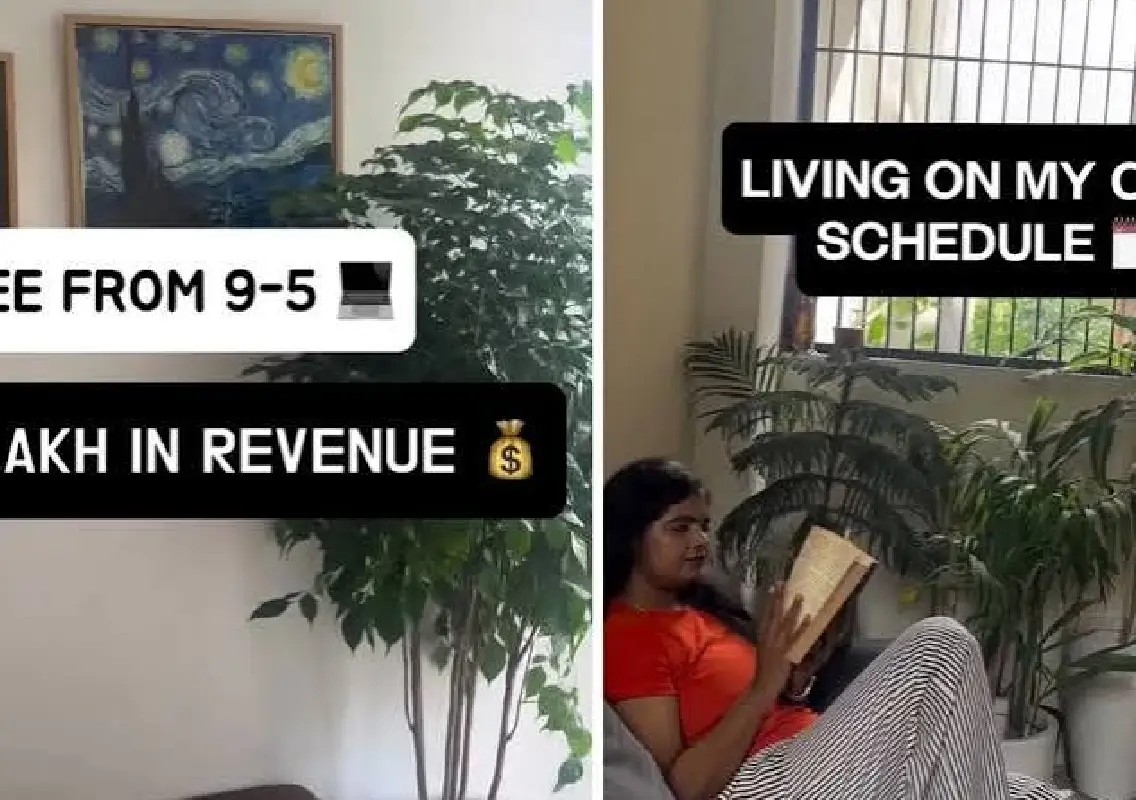


New Delhi: What began as a family decision to spend more time with her child has turned into a short-term rental business generating Rs 21 lakh in revenue for Snigdha, who left her corporate job in 2023 after her child began struggling with separation anxiety.
Without prior hospitality experience or a formal business plan, Snigdha began researching short-term rentals and eventually started putting properties in Delhi on Airbnb.
First booking came on day one
Snigdha said she had never even stayed in an Airbnb before entering the business. After leaving her job, she researched how short-term rentals worked, including the requirements involved in managing a property.
According to her account, she received her first booking on the very first day. That early success encouraged her to continue developing the venture.
The business model involves offering properties to guests for short stays rather than renting them to a single tenant for a longer period.
What running a homestay involves
The operator lists a property on a booking platform and manages reservations and guest requirements. The work can include cleaning, maintenance, check-ins and responding to guests.
Income depends on several factors, including the property’s location, nightly rate, occupancy and operating expenses.
However, the reported Rs 21 lakh is revenue and should not be confused with profit.
Revenue is not the same as profit
A short-term rental business can involve expenses such as rent or loan repayments, maintenance, electricity, cleaning, furnishing, platform fees and taxes.
The amount remaining after these costs would therefore be different from the reported revenue.
Property ownership is also not necessarily required. Operators can manage properties belonging to others, subject to agreements with owners, landlords and housing societies, as well as applicable local rules and taxes.
Flexibility became the biggest reward
For Snigdha, the attraction of the business goes beyond money. She says the venture has given her greater control over her time and allowed her to remain closer to her child while continuing to earn.
Her experience also highlights the growing appeal of flexible work models, while showing that short-term rentals require regular management rather than functioning as completely passive income.