







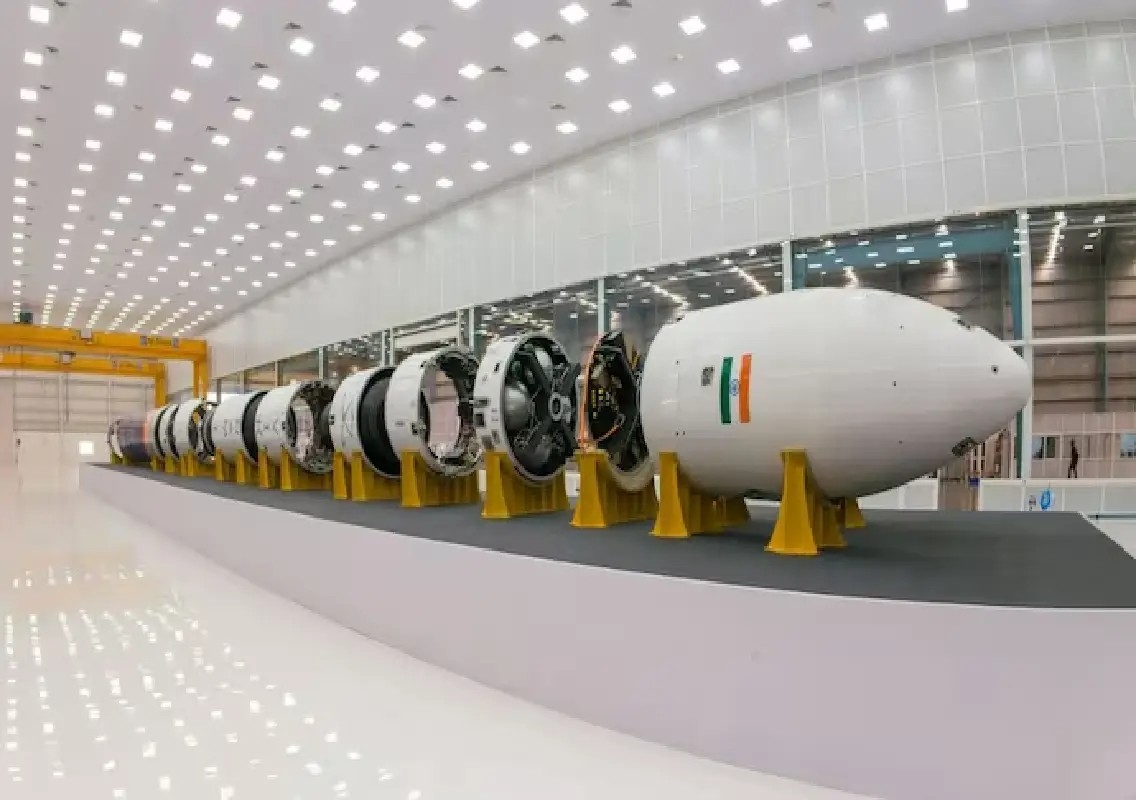


Hyderabad: India’s private space ambitions received a major boost as Skyroot Aerospace advanced towards the maiden launch of its Vikram-1 rocket, completing key pre-launch milestones.
In a significant development, Telangana Chief Minister A. Revanth Reddy visited Skyroot’s Max-Q Campus in Hyderabad to ceremonially flag off the Vikram-1 launch vehicle as it began its journey to the Satish Dhawan Space Centre.
The event marks an important symbolic and operational step towards what could become India’s first privately built orbital rocket launch.
Critical pre-launch testing completed
Skyroot Aerospace confirmed that the Vikram-1 rocket has successfully completed Phase 3 of its Integrated Electrical Test (IET) campaign, one of the most crucial stages before launch.
This phase validated the rocket as a fully integrated system by testing the interaction between the vehicle, onboard electronics and ground software.
According to the company, the tests ensured that all systems worked together seamlessly under simulated launch conditions. Engineers verified the performance of sensors, actuators and control mechanisms to ensure precise responsiveness during flight.
Systems integration and coordination
The IET campaign also focused on ensuring coordination between various operational teams. Simulated launch-day scenarios were carried out to test real-time decision-making and system synchronisation.
Officials said the campaign effectively “brought everything together” for the first time, confirming that the rocket is nearing operational readiness.
What is Vikram-1?
The Vikram-1 rocket, named after Vikram Sarabhai, is designed to place small satellites into low Earth orbit.
It is part of Skyroot’s broader vision to provide cost-effective and flexible launch services for the rapidly growing small satellite market. The vehicle is expected to play a key role in making space access more affordable for commercial and research missions.
Boost for India’s private space sector
The progress of Vikram-1 comes at a time when India is actively opening up its space sector to private participation under reforms supported by the Indian Space Research Organisation and associated regulatory bodies.
Skyroot has emerged as one of the leading private players in this ecosystem, having already demonstrated its capabilities through earlier suborbital missions.
Industry experts believe that successful deployment of Vikram-1 could position the company as a competitive player in the global launch services market.
Launch timeline yet to be announced
Despite the completion of major testing milestones, Skyroot Aerospace has not yet announced an official launch date for Vikram-1.
Observers note that final integration checks, safety validations and regulatory clearances will determine the exact timeline for the mission.
Conclusion
The advancement of Vikram-1 represents a significant milestone for India’s private space industry. If the upcoming launch is successful, it could mark the beginning of a new era in commercial spaceflight from the country, strengthening India’s position in the global space economy and paving the way for increased private sector participation.