







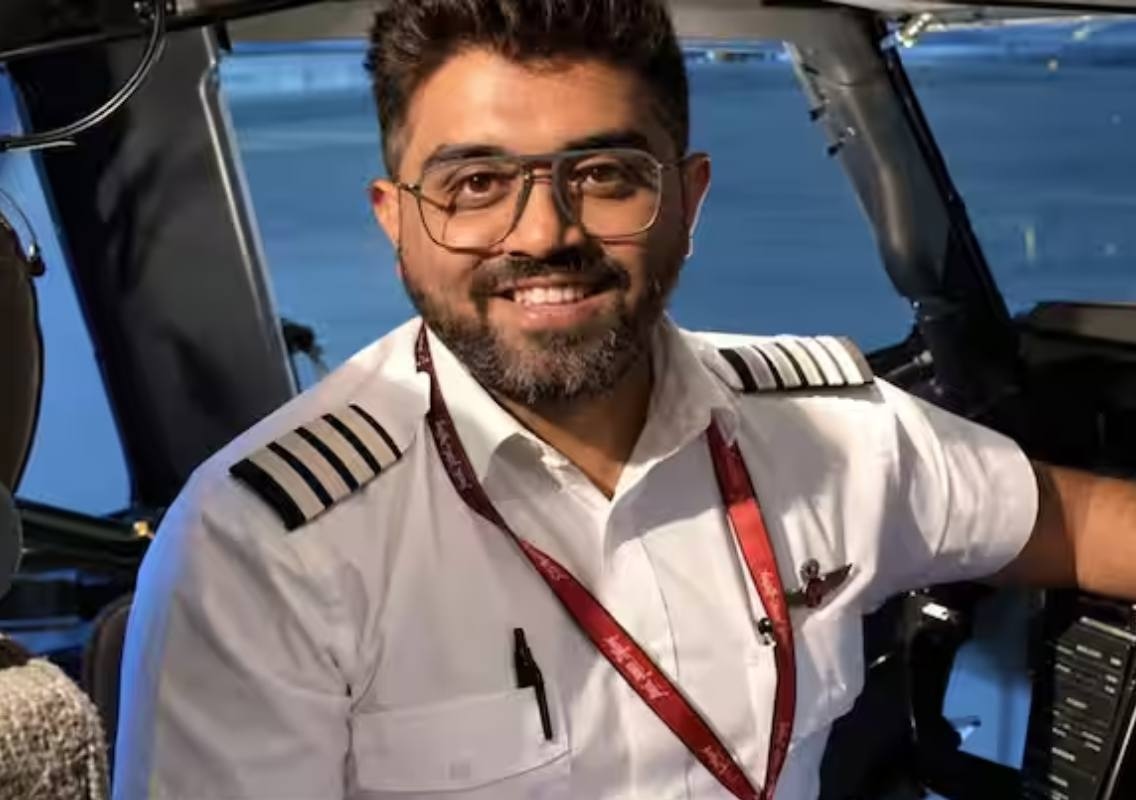


Abu Dhabi: Captain Smit Machchhar, the Indian pilot who helped avert a possible disaster after being attacked inside the cockpit of a flydubai flight, suffered a serious skull injury, damaged vision and memory problems following the assault, according to media reports citing sources familiar with his condition.
Machchhar was attacked inside the cockpit of flydubai flight FZ1073 by its Omani co-pilot, Hamam al-Hammami, during the Dubai-Tel Aviv flight. The attack left the Indian captain with injuries to his head and hand and required emergency medical treatment after the aircraft made an emergency landing in Saudi Arabia.
New details about his condition indicate that the injuries were more serious than initially known. Reports say Machchhar suffered a depressed skull fracture and underwent reconstructive surgery in Saudi Arabia before being transferred to a specialised medical facility in the UAE.
The captain is now recovering in Abu Dhabi, where doctors are monitoring his neurological condition and working to assess and treat the damage to his vision.
Machchhar suffered depressed skull fracture
According to NDTV, citing sources, Machchhar suffered a depressed skull fracture during the cockpit assault.
A depressed skull fracture occurs when a section of the skull is broken and pushed inward. Such an injury can be particularly serious because displaced bone fragments can put pressure on or damage the brain.
Machchhar reportedly received emergency treatment after the aircraft landed in Saudi Arabia. Doctors performed reconstructive surgery on his skull before he was subsequently airlifted to the UAE for further treatment.
The reported injury helps explain the severity of the captain’s condition following the attack.
A skull fracture accompanied by neurological symptoms requires close medical monitoring because doctors must assess possible effects on the brain and surrounding nerves.
Machchhar has remained under observation as specialists continue to monitor his recovery.
Vision was badly affected during the attack
Machchhar has himself described how the initial blows affected his vision.
During a recent conversation with Israeli Prime Minister Benjamin Netanyahu, the captain recalled attempting to stop the attacker but said his vision became severely blurred after the initial assault.
“I tried to stop him. But because of the initial blows, my vision was almost nothing. I was completely blurred out,” Machchhar said, according to the report.
Fresh details indicate that the vision problem has remained an important part of his recovery.
Sources cited by News18 said doctors are working to restore his vision and are closely monitoring the impact of the injuries on his eyesight.
The extent to which his vision will ultimately recover remains a matter for his treating doctors.
The injury is particularly significant for Machchhar because he has expressed a desire to return to flying after recovering.
Memory problems have also emerged
The attack has reportedly affected Machchhar’s memory in addition to his vision.
During his conversation with Netanyahu, the captain said that his memories of the incident were still incomplete.
“My memory is still in bits and pieces right now. But this is what I remember of that time,” Machchhar said.
Sources cited in reports said he has experienced memory problems following the head injury.
Such symptoms are being monitored alongside his other neurological issues as doctors assess his progress.
The captain has reportedly been experiencing intense headaches and has been prescribed sedatives and pain-relieving medication while undergoing treatment.
Doctors are continuing to observe his neurological condition as he recovers from the injuries.
Captain has started walking and eating
Despite the seriousness of his injuries, there are indications that Machchhar’s condition has been improving.
A functionary familiar with his condition told News18 that the captain has started walking a few steps and has begun eating small amounts of food.
“He has started walking, taking a few steps, and has started eating a bit. So, it looks like he is on course to recover,” the functionary was quoted as saying.
The development is significant given the extent of the injuries he sustained during the cockpit attack.
His recovery is expected to remain gradual, with doctors continuing to monitor his neurological condition and other effects of the assault.
The captain is receiving treatment at a specialised facility in Abu Dhabi, where his family has reportedly expressed satisfaction with the medical care being provided.
Machchhar wants to return to flying
Despite the injuries and difficult recovery, Machchhar has reportedly expressed a desire to return to the cockpit.
His return to flying, however, would depend on his medical recovery and the assessment of aviation and medical authorities.
Vision, neurological health, cognitive function and overall fitness are critical for pilots, meaning Machchhar would need to undergo appropriate medical evaluations before any return to flight duties.
For now, the focus remains on his recovery.
Sources said doctors are making efforts to ensure that the damage to his vision does not permanently prevent him from pursuing his ambition of returning to flying.
His determination has reportedly been a source of encouragement for those around him.
Attack took place during FZ1073 flight
Machchhar was commanding flydubai flight FZ1073, which was travelling from Dubai to Tel Aviv when the cockpit attack took place.
The aircraft was carrying 174 people, including passengers and crew.
The incident triggered an emergency after the co-pilot attacked Machchhar inside the cockpit.
The captain managed to open the cockpit door and raise an alarm, allowing passengers and crew members to intervene.
Passengers helped restrain the attacker while other pilots on board assisted with the emergency. The aircraft was eventually diverted to Tabuk in Saudi Arabia, where it landed safely.
Machchhar’s actions during the incident have been widely praised because the attack occurred while the aircraft was in flight and posed a potential threat to everyone on board.
Questions remain over the attacker’s intentions
The attacker’s motives have remained an important part of the investigation.
Reports have described the Omani co-pilot as acting violently inside the cockpit, while authorities have been examining whether the incident involved terrorist intent, prior planning or another motive.
Israeli security officials had previously said they believed the co-pilot acted alone. Authorities in the UAE have also been investigating the circumstances surrounding the attack.
The reported use of a cockpit axe in the assault has added to questions surrounding how the attack was carried out and how the attacker gained access to the weapon.
Investigations into the incident remain separate from Machchhar’s medical recovery, with authorities continuing to examine the motive and circumstances of the attack.
A long road to recovery
Machchhar’s latest medical details show that his recovery is likely to take time.
The reported depressed skull fracture required reconstructive surgery, while his vision and memory have also been affected. His continuing headaches and need for medication indicate that he remains under significant medical supervision.
At the same time, his ability to walk and eat again has offered some encouragement.
Doctors are continuing to monitor his neurological condition and vision as he receives treatment in Abu Dhabi.
The captain’s reported determination to return to flying adds another dimension to his recovery. Whether he can eventually return to the cockpit will depend on the extent of his recovery and the outcome of future medical assessments.
For now, the priority remains stabilising his condition and supporting his rehabilitation after the serious cockpit assault.
Machchhar’s positive outlook has also been noted by people familiar with his recovery. One source described his spirit as a major source of encouragement and said he continues to smile despite the ordeal.
For the Indian pilot, the immediate challenge is no longer controlling an aircraft in an emergency but recovering from injuries sustained while doing so.