


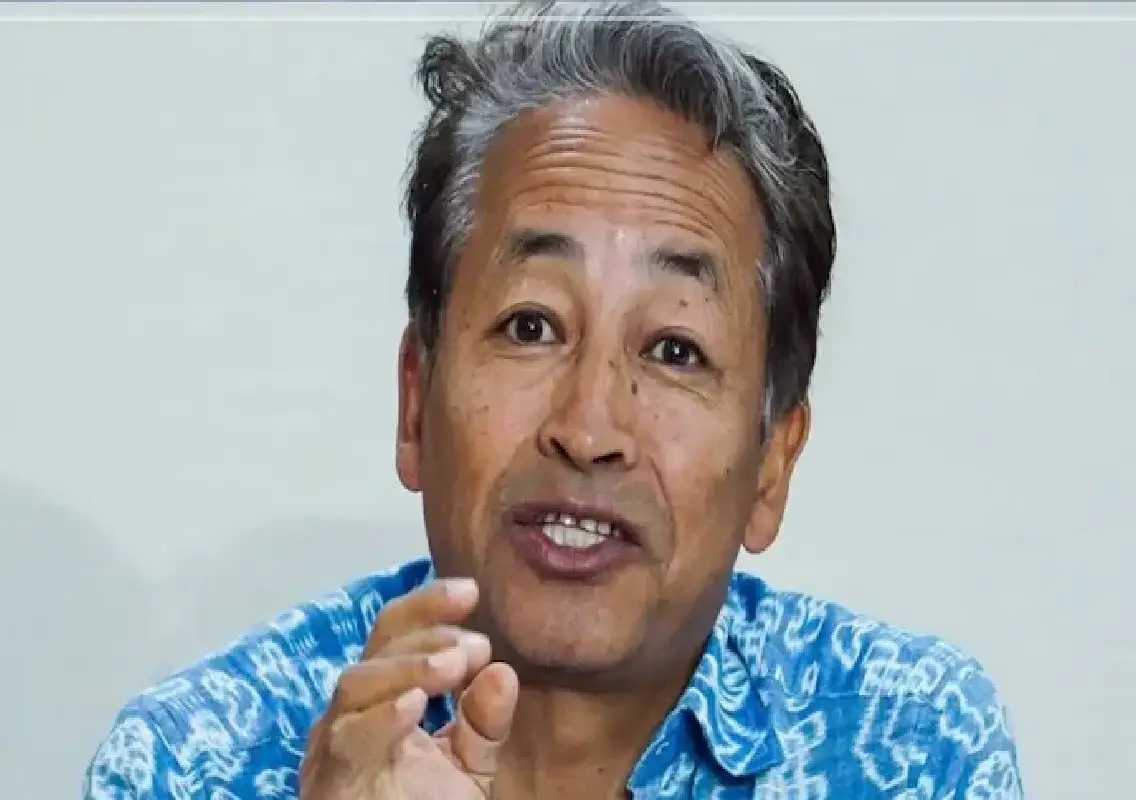


New Delhi: Climate activist Sonam Wangchuk on Saturday warned that he would consider undertaking an indefinite fast or a march on foot if leaders detained ahead of the Cockroach Janta Party’s (CJP) planned protest in Delhi were not released by Sunday. Describing the situation in the country as an “undeclared emergency”, he called for the release of those detained and appealed for peace.
In a post on X, Wangchuk expressed hope that the detained leaders and protesters would be released soon. His statement came amid heightened security in the national capital ahead of the planned demonstration targeting Chief Election Commissioner Gyanesh Kumar over allegations of voter list manipulation.
Wangchuk said he had earlier appealed to leaders from different groups to maintain unity and ensure that the protest remained peaceful. However, he said he had not anticipated that the situation would escalate to the point where several leaders would be detained.
“I will be compelled to consider an Anshan Fast or Padyatra March if they are not released by tomorrow,” he said in his post.
His warning added to the calls for the release of those detained as the political debate over the planned protest intensified.
CJP protest triggers security measures in Delhi
The Cockroach Janta Party had planned a demonstration in Delhi against Chief Election Commissioner Gyanesh Kumar over allegations of manipulation of voter lists. The protest prompted a major security response, with Delhi Police detaining several protesters and Opposition leaders.
Among those detained was CJP founder Abhijeet Dipke. Several Opposition leaders, including former chief ministers, were also reported to have been detained during the police action.
The detentions triggered criticism from Opposition figures, who questioned the handling of the planned demonstration. Rahul Gandhi and Priyanka Gandhi Vadra accused the government of curbing democratic freedoms.
The allegations surrounding voter list manipulation are at the centre of the proposed protest. The planned demonstration sought to draw attention to concerns about the electoral process and the role of the Chief Election Commissioner.
The police response and the detention of political leaders have since become an additional point of contention, with calls for their release emerging alongside criticism of the restrictions imposed ahead of the gathering.
Wangchuk appeals for unity and peaceful protest
Before the planned demonstration, Wangchuk had urged leaders from different groups to remain united and asked young protesters to maintain peace at all costs.
His appeal reflected his emphasis on non-violent methods of protest. Following the detentions, he reiterated his hope that the situation would be resolved through the release of those held by the authorities.
By warning that he might consider an indefinite fast or a foot march, Wangchuk indicated that he was prepared to explore further peaceful forms of protest if the detained leaders were not freed by Sunday.
An anashan or fast is a form of protest in which a person abstains from food to press for a demand. A padyatra involves travelling on foot, often to mobilise public support or draw attention to an issue.
Wangchuk did not announce that either action had begun. His statement was a warning that he would consider these options if the detentions continued beyond the deadline he had indicated.
Why Wangchuk is not joining the Delhi protest
Wangchuk had earlier explained that he would not be able to attend the planned demonstration in Delhi because he was occupied with preparations for the approaching winter in the high Himalayas.
His work includes developing artificial glaciers to improve water security and conducting experiments aimed at addressing the risks associated with glacial lake outburst floods (GLOFs).
Artificial glaciers are designed to help communities manage water availability by storing or directing water in forms that can support use during drier periods. Such initiatives are particularly relevant in high-altitude regions where communities face seasonal water shortages.
Wangchuk also referred to the risks posed by more than 200 glacial lakes in the high Himalayas. Glacial lake outburst floods occur when water accumulated in glacial lakes is suddenly released, potentially causing destructive downstream flooding.
He said his work on water security and GLOF-related risks was important for national security and the safety of communities living in the region.
His decision to remain away from Delhi was therefore linked to these ongoing responsibilities rather than an announced withdrawal of support for peaceful protest.
Invokes Mahatma Gandhi’s legacy
Wangchuk also invoked Mahatma Gandhi’s legacy while appealing to protesters to remain peaceful. He said he hoped the participants would uphold the principles associated with the Father of the Nation.
His remarks came at a time when the detentions and the security response to the planned protest had intensified the debate over the space available for demonstrations and political dissent.
Wangchuk’s call for peace accompanied his demand for the release of those detained. While criticising the situation as an “undeclared emergency”, he urged protesters to avoid violence and maintain unity.
Release deadline puts focus on next steps
Wangchuk’s statement has placed attention on whether the detained leaders and protesters would be released by Sunday and whether he would proceed with either of the forms of protest he mentioned.
As of Saturday, he had expressed hope for their early release but had not confirmed the launch of an indefinite fast or a foot march.
The episode brings together concerns over electoral processes, police action during demonstrations and the use of non-violent protest to press political demands. The developments over the next day will determine whether Wangchuk follows through on his warning or whether the release of those detained leads to a de-escalation of the situation.