


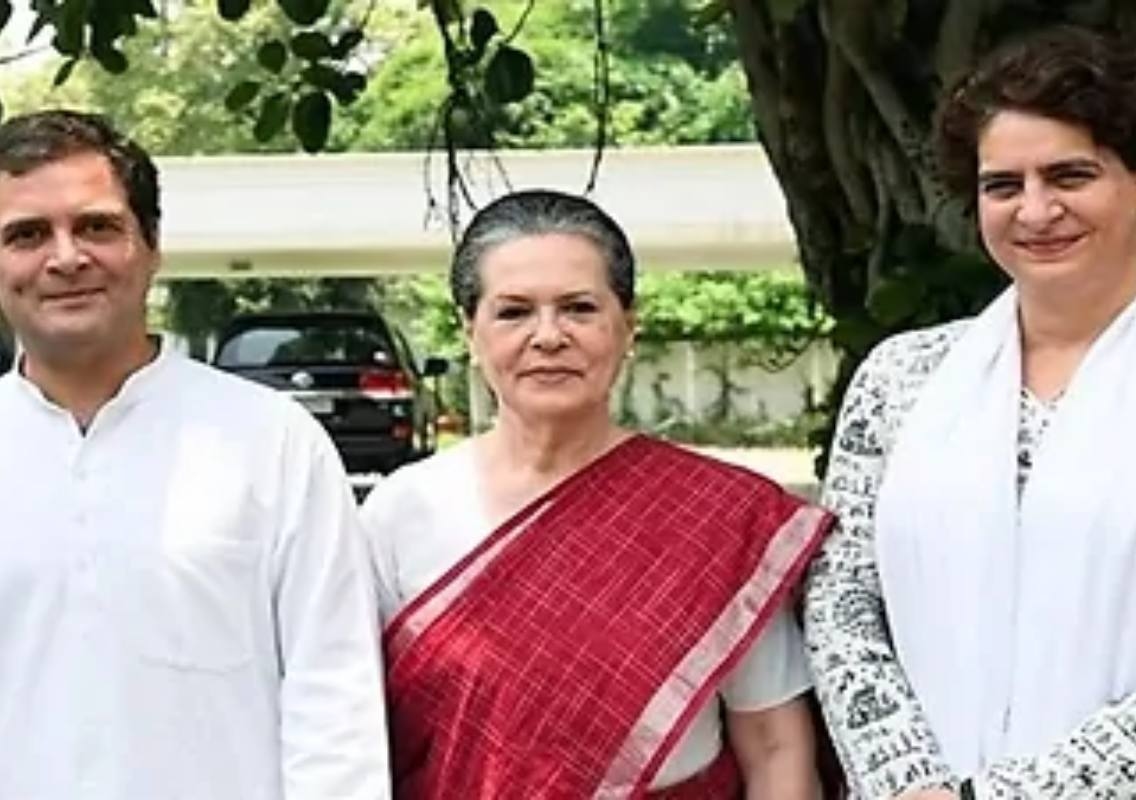


New Delhi: Congress leader Sonia Gandhi has recalled the personal and political struggle behind her decision to decline the Prime Minister’s post in 2004, after the Congress-led United Progressive Alliance (UPA) defeated the Bharatiya Janata Party-led National Democratic Alliance (NDA) in the Lok Sabha elections. In her memoir, Belonging: A Journey of Love, she describes how she initially refused the position, briefly gave in to pressure from alliance leaders and eventually returned to her original decision after a late-night period of reflection and a conversation with her son, Rahul Gandhi.
The memoir, released on November 10, 2026, offers a detailed account of the events surrounding one of the most significant political decisions of her career. Sonia writes that her children, Rahul and Priyanka Gandhi Vadra, had opposed the idea of her becoming Prime Minister even before the election results were announced. Their concerns were shaped by the assassinations of their grandmother, former Prime Minister Indira Gandhi, and their father, Rajiv Gandhi.
Sonia had told Rahul and Priyanka she would not become PM
Sonia Gandhi writes that the question of her possible prime ministership had come up in a conversation with Rahul and Priyanka months before the 2004 general elections.
When one of them asked whether she would accept the position if the Congress won, she responded with an emphatic refusal.
“Absolutely not!” she recalled saying. When her children asked whether she was certain, she replied that she was very clear about her decision.
According to her account, neither Rahul nor Priyanka wanted her to take up the post. They associated the office with the dangers their family had experienced following the assassinations of Indira Gandhi in 1984 and Rajiv Gandhi in 1991.
Sonia says their concerns were understandable given the personal tragedies they had witnessed. She also writes that she felt relieved after expressing her position to them, and did not discuss the matter further with anyone at the time.
During the election campaign, she avoided giving a definitive public answer about whether she would become Prime Minister if the Congress-led alliance secured victory. She says she wanted to prevent a leadership contest within the party while it was fighting the election.
Alliance leaders press Sonia Gandhi to accept the post
The situation changed after the UPA’s victory in May 2004. With Sonia Gandhi leading the Congress, senior party colleagues and alliance leaders expected her to take charge of the government.
In her memoir, she describes feeling torn between her personal reservations and her sense of responsibility towards the party workers and voters who had supported the Congress-led alliance.
One part of her, she writes, rejected the idea of becoming Prime Minister, while another reminded her of the expectations attached to the electoral victory.
At a meeting at her residence, 10 Janpath, alliance leaders urged her to reconsider her refusal. Sonia says she initially told them that she did not want the position. However, the leaders continued to insist that she should accept it.
She recalls feeling overwhelmed by their pressure. Eventually, she uttered a hesitant “theek hai”, which the leaders interpreted as her agreement to become Prime Minister.
The moment did not settle the matter. Sonia’s daughter Priyanka, who was outside the room, learnt that her mother had apparently agreed and went to inform Rahul. The siblings then confronted Sonia about the decision.
Rahul Gandhi questions his mother’s decision
Sonia’s memoir recounts Rahul’s strong reaction when he learnt that she had agreed to take up the Prime Minister’s post.
According to the account, Rahul asked his mother whether she had said yes. Sonia explained that the alliance leaders had refused to listen to her and that she had felt pressured into agreeing.
Rahul questioned why she had given in to that pressure, reminding her of the risks the family associated with the office. Priyanka also urged her not to allow others to force her into a decision she had previously made clear.
The exchange prompted Sonia to reconsider her brief acceptance. She withdrew to her bedroom, where she spent time reflecting on the competing arguments.
The memoir describes her lying on the side of the bed where Rajiv Gandhi used to sleep. She writes that she found herself thinking about her Italian upbringing, her life in India and the responsibilities she felt towards the country that had become her home.
She also considered the possibility that her foreign origin would become a major political issue if she became Prime Minister. Sonia writes that she feared the controversy could create further divisions and harm the country.
Her thoughts moved between the expectations of Congress supporters and her own conviction that she should not accept the post.
‘Sonia, be true to yourself’: The moment of clarity
After a long period of emotional deliberation, Sonia says her doubts began to clear as she was drifting towards sleep.
She recalls an inner voice telling her: “Sonia, be true to yourself. You’ve always known it. Just leave it!”
The moment helped her return to the position she had expressed to Rahul and Priyanka before the election. She says she felt lighter after arriving at the decision and was convinced that declining the post was the choice she could stand by.
A few hours later, she went to Rahul’s room and told him that she had made up her mind.
According to her memoir, Rahul responded positively and told her that it was the right decision. He embraced her, and Sonia says she felt reassured by his reaction.
The conversation was an important moment in the final decision-making process, as she had initially struggled to balance the demands of party colleagues with her family’s concerns and her own reservations.
Sonia Gandhi tells Congress MPs she will not become PM
Even after reaching her decision, Sonia faced pressure from Congress leaders and party MPs. At a meeting of the Congress Parliamentary Party, several members urged her to reconsider and accept the Prime Minister’s position.
Sonia, however, told them that her inner voice did not permit her to take up the post. She began explaining her decision, but the announcement triggered strong reactions among those present.
Her memoir describes how some colleagues surrounded the lectern and pleaded with her to change her mind. The emotional response briefly overwhelmed her, and she had difficulty continuing her speech.
She eventually returned and made it clear that she wanted to nominate another leader to head the government.
Sonia’s decision was also shaped by her assessment of the leadership required to guide the new administration. She believed that the next Prime Minister should have substantial experience in government and a reputation for integrity.
Manmohan Singh becomes Prime Minister
Sonia Gandhi eventually proposed the name of former Finance Minister Manmohan Singh to lead the UPA government.
In her memoir, she explains that Singh’s experience in government, his role in India’s economic reforms and his reputation for integrity were important considerations. She also believed he could provide continuity and reassurance on economic policy.
Sonia writes that Singh was not aligned with any particular faction within the Congress and describes him as a person with a kind and compassionate nature.
She says he was initially reluctant when approached privately about becoming Prime Minister but was eventually persuaded to accept the responsibility.
On May 18, 2004, Sonia and Singh went to Rashtrapati Bhavan to stake the UPA’s claim to form the government. Singh subsequently became Prime Minister, while Sonia continued to lead the Congress.
Memoir revisits a defining moment in Sonia’s political life
Belonging: A Journey of Love, published by HarperCollins India, traces Sonia Gandhi’s life from her childhood in Italy to her marriage to Rajiv Gandhi and her eventual entry into Indian politics. It also reflects on the personal losses and public responsibilities that shaped her journey.
The account of the 2004 Prime Ministerial decision provides a personal perspective on the events that led to Manmohan Singh heading the UPA government. Rather than presenting the decision as a single announcement, Sonia’s recollections describe several stages: her initial refusal, the pressure from alliance leaders, Rahul and Priyanka’s objections, and her final decision after a night of reflection.
Her memoir also places the decision in the context of the family’s experience of political violence and her concerns about the political consequences of accepting the position.
The revelations offer readers an account of how Sonia Gandhi says she arrived at a decision that shaped the leadership of the Congress-led government in 2004.