







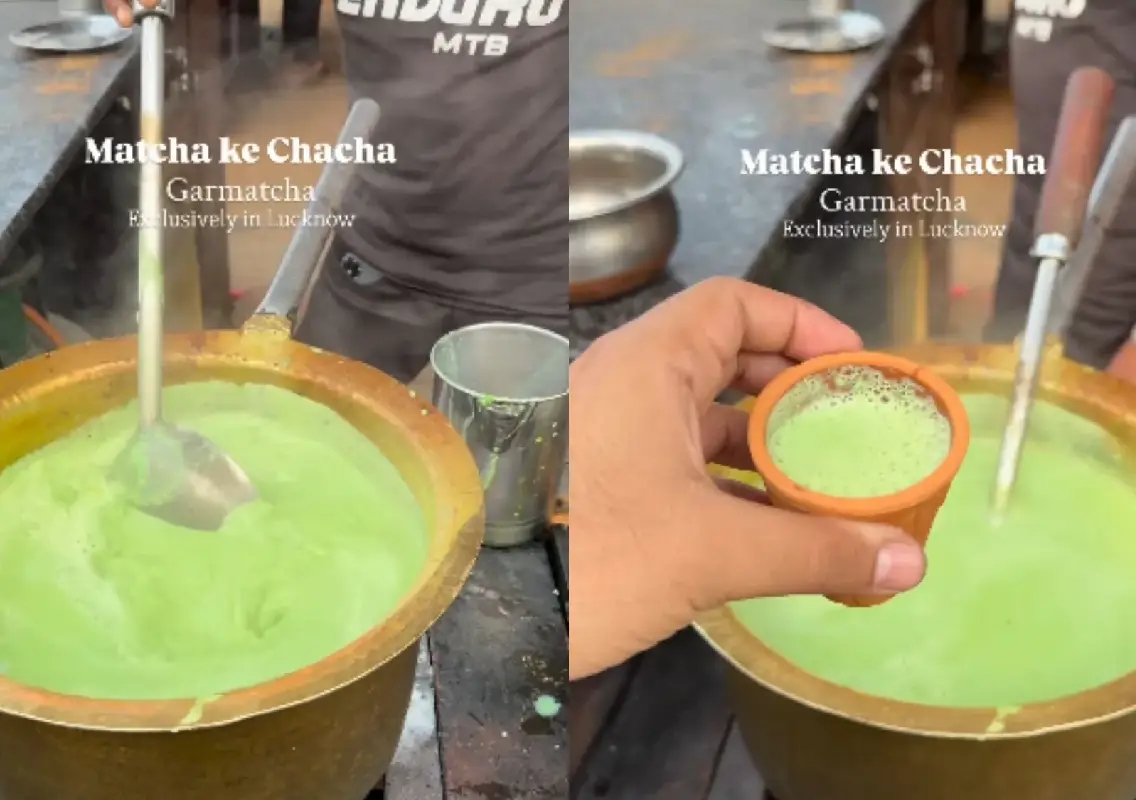


In an age where culinary experimentation knows few boundaries, a new food video from India has left social media users both amused and baffled. A street vendor, allegedly from Lucknow, was seen preparing what he called “garam matcha” — essentially serving matcha as a hot beverage in a style unfamiliar to traditional Japanese tea practices.
Matcha, a finely powdered green tea from Japan, is globally celebrated for its antioxidants and is typically prepared with carefully controlled temperatures to preserve flavour and nutrients. The vendor’s version, however, appeared to involve boiling water and a roadside preparation style, prompting many viewers to label it an unnecessary and confusing twist.
Viral clip draws mixed reactions
The short video, shared on Instagram by the handle ayanahmad99_, showed the vendor confidently promoting “garam matcha” as a special offering. Captioned “Garam matcha, exclusive in Lucknow,” the clip quickly gained traction, clocking over 36,000 views within two days of being posted.
While some viewers laughed it off as harmless innovation, many criticised it as an example of food trends being distorted purely for online attention. Several users questioned whether the vendor even had customers for such a product or if the video was simply “clickbait” designed to chase likes and views.
Social media responds with humour and scepticism
The comment section quickly filled with witty and sarcastic remarks. One user joked about the inevitability of “matcha pani puri” making an appearance next, while another quipped, “Ghar ghar matcha yojana!” Others were less amused, calling the preparation “ridiculous” and accusing the vendor of misrepresenting a culturally significant beverage.
Despite the criticism, a few netizens defended the act as “culinary syncretism”, arguing that Indian street food culture has always thrived on adaptation and improvisation.
Food trends and internet fame
Times Now, which reported on the video, noted that it could not independently verify the authenticity or location of the vendor. Regardless, the clip highlights how global food trends, when filtered through local creativity and social media virality, often spark intense debate — blurring the line between innovation and gimmick.