







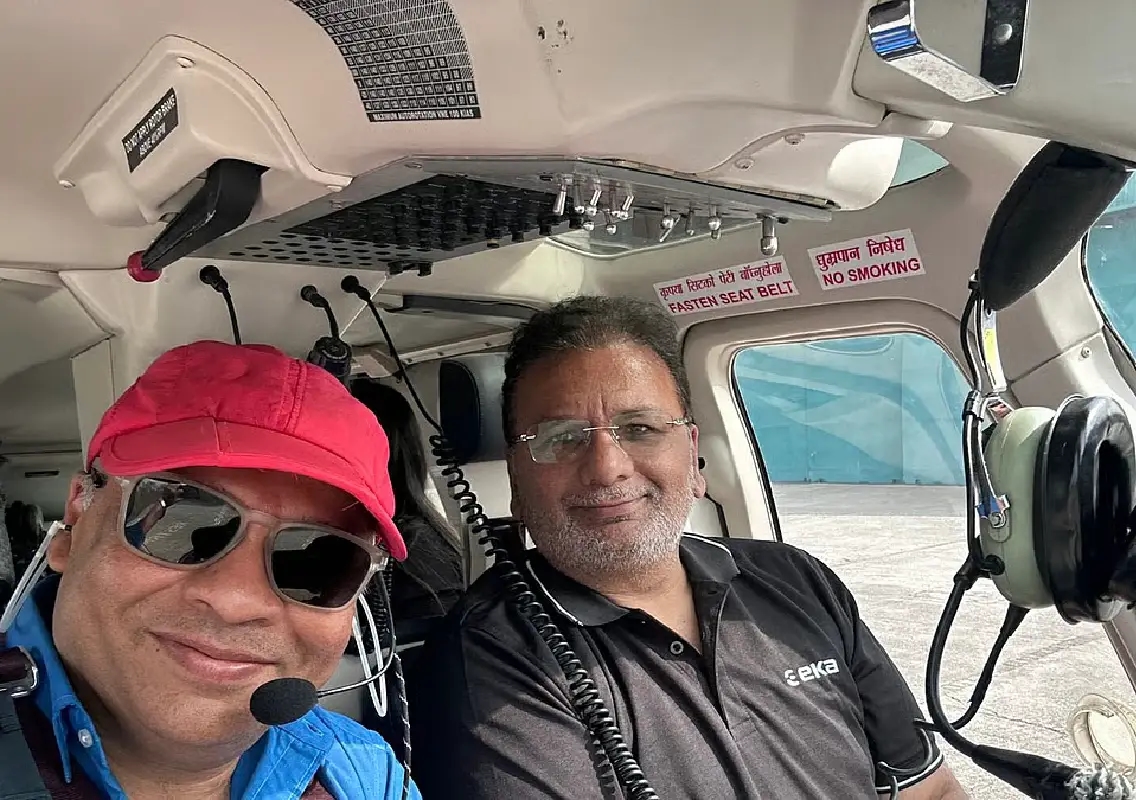


Chairman of EKA Mobility and Pinnacle Industries, Sudhir Mehta, has gone viral after taking a helicopter to reach Pune when he was stranded for nearly eight hours in a massive traffic jam on the Mumbai–Pune Expressway.
The gridlock followed a gas tanker accident that left thousands of commuters stuck for hours. Mehta later shared aerial footage of the miles-long congestion on social media, drawing attention to what he described as serious infrastructure and emergency-response gaps on one of India’s busiest high-speed corridors.
## Call for exits and helipads on expressway
Posting on X, Mehta said lakhs of people had been stranded for over 18 hours due to a single incident. He urged authorities to plan emergency exits at multiple points along the expressway, allowing vehicles to turn back and reduce cascading congestion during accidents.
“For such emergencies, we need exits at different points on the expressway which can be opened to allow vehicles to return,” he wrote.
Mehta also proposed mandatory helipads near the expressway for emergency evacuation. “Helipads cost less than ₹10 lakh to make and require less than one acre of open area. These should be available at various points for crisis situations,” he added.
He thanked Nitin Welde, an air veteran and civil aviation helicopter consultant, for assisting him in arranging the helicopter ride back to Pune.
## Netizens divided over privilege and planning
The post triggered mixed reactions online. Some users questioned whether helipads were necessary, suggesting better traffic management and faster communication to halt vehicle movement after accidents. Others argued that authorities should be held accountable for preparedness on critical highways.
A few users pointed out that rail alternatives like Vande Bharat trains could ease pressure on roads, while others criticised the optics of using a helicopter amid public hardship.
## Spotlight on expressway preparedness
While Mehta’s helicopter ride drew attention for its optics, the episode has reignited debate on disaster preparedness, traffic diversion planning and emergency infrastructure on major highways.
As authorities review the incident, commuters hope the conversation leads to concrete steps — so future accidents do not leave thousands stranded for hours on a key economic corridor.