







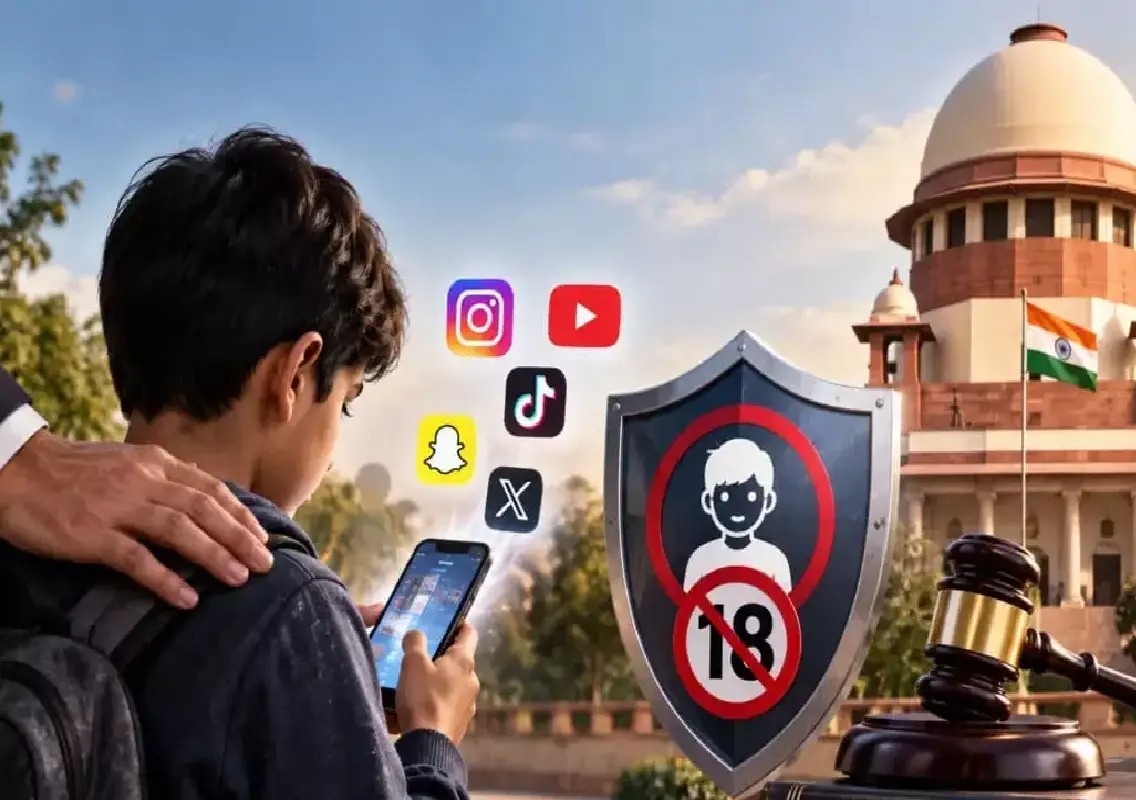


New Delhi: Can a child below 18 legally create an account on a digital platform without a parent’s permission? The Supreme Court is examining this important question as children become increasingly active on social media, gaming and other online services.
A Supreme Court bench headed by Chief Justice of India Surya Kant has issued notice to the Centre on a public interest litigation (PIL) that raises questions about minors entering into online agreements and giving consent on digital platforms.
Why the case matters
Creating an online account often involves accepting a platform’s terms and conditions, sharing personal information and agreeing to how data may be collected or used.
The PIL argues that children below 18 may not have the legal capacity to independently enter into certain agreements. This has raised questions about whether platforms should obtain parental consent before allowing minors to register.
The issue could have significant implications for social media companies, online gaming services and other digital platforms used by children.
Parents could play a bigger role
If the court eventually requires stronger parental involvement, platforms may need to introduce more effective systems to establish a user’s age and obtain consent from parents or guardians.
For families, the issue goes beyond simply deciding whether a child should have a social media account. It also concerns privacy, personal data, online safety and the responsibilities of companies providing digital services.
Children can be particularly vulnerable online because they may not fully understand the long-term consequences of sharing personal information or agreeing to complicated terms and conditions.
A significant digital safety question
The Supreme Court’s notice to the Centre comes at a time when children’s use of digital platforms is expanding rapidly.
The proceedings could help clarify how existing Indian laws apply to minors using online services and whether additional safeguards are required.
For parents, the case could eventually bring greater clarity on who should give consent when children enter India’s increasingly digital world.