


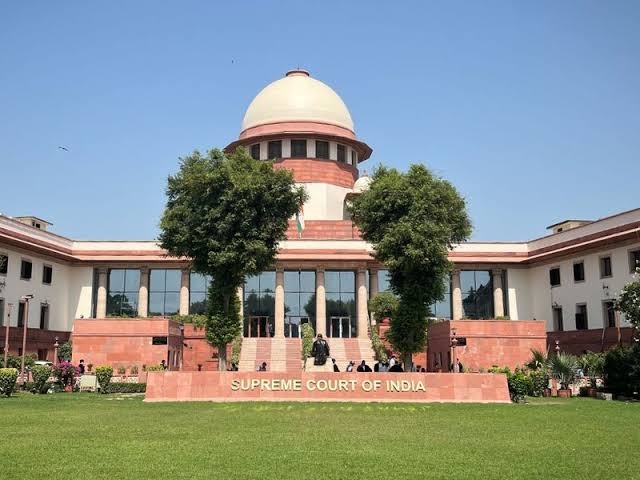


New Delhi: The Supreme Court has declined to clarify its earlier ruling on cheque-bounce cases under Section 138 of the Negotiable Instruments Act (NI Act), observing that the judgment does not automatically override state-specific restrictions on money lending. It said parties remain free to raise objections concerning the enforceability of loans before the trial courts or superior courts hearing their cases.
A bench of Justices Prashant Kumar Mishra and N V Anjaria disposed of a miscellaneous application filed by Vyomesh Mahipatray Shah seeking clarification of the Supreme Court’s May 26, 2026 judgment in M/s Mansi Finance (Chennai) Ltd vs M Lalitha and Others.
The applicant argued that the earlier ruling, which restored certain proceedings under Section 138 involving promissory notes and dishonoured cheques, should not be interpreted as allowing unlicensed money lenders in Maharashtra to pursue recovery through cheque-bounce proceedings.
The court said the earlier judgment had not examined the interaction between the NI Act and the money-lending laws of Tamil Nadu or Maharashtra. Any objection based on a state law, therefore, would have to be considered by the court dealing with the particular case.
What was the clarification sought?
The miscellaneous application concerned the scope of the Supreme Court’s May 26 judgment in Mansi Finance.
The applicant sought clarity on whether the ruling could be relied upon in cases involving loans advanced by unlicensed money lenders in Maharashtra.
The argument was that the legal position in Maharashtra differs from that under the Tamil Nadu Money-lenders Act, 1957. Under the Maharashtra Money-Lending (Regulation) Act, 2014, an advance carrying interest against a promissory note falls within the definition of a loan.
The applicant contended that the Maharashtra legislation prohibits unlicensed money lending and makes loans advanced in violation of its provisions unenforceable. Consequently, such a loan, it was argued, could not qualify as a legally enforceable debt for the purposes of Section 138 of the NI Act.
The application was therefore aimed at ensuring that the earlier Supreme Court ruling was not treated as removing the statutory protections and restrictions imposed by state money-lending legislation.
How Maharashtra’s money-lending law applies
The Maharashtra Money-Lending (Regulation) Act, 2014 regulates money-lending activities in the state and requires lenders to obtain the necessary licence.
The applicant relied on two provisions of the legislation:
- Section 4: Prohibits money lending without the required licence.
- Section 13: Provides for the unenforceability of certain loans advanced in contravention of the Act.
The applicant argued that where an unlicensed lender advances money against a promissory note in Maharashtra, the transaction would fall within the statutory definition of a loan and could attract the prohibition under Section 4.
According to the argument, Section 13 would also prevent the lender from enforcing the prohibited loan. If the underlying debt is not legally enforceable, the complainant would face an objection under the Explanation to Section 138 of the NI Act.
The distinction between the two state laws was central to the application. The applicant pointed out that the Tamil Nadu Money-lenders Act, 1957 treats certain advances against promissory notes differently from the Maharashtra legislation.
The Supreme Court, however, did not decide whether the particular Maharashtra statutory provisions would defeat a Section 138 complaint in every such case. It left that issue open for determination by the courts hearing the relevant proceedings.
Supreme Court explains scope of Mansi Finance ruling
The bench observed that the May 26 judgment in Mansi Finance primarily dealt with questions relating to vicarious liability under Section 141 of the NI Act and the maintainability of complaints against certain accused persons.
The earlier judgment had not examined the relationship between Section 138 of the NI Act and the money-lending statutes of either Tamil Nadu or Maharashtra.
Since those statutory questions had not arisen for consideration in the original proceedings, the bench found no need to issue the broader clarification sought by the applicant.
The court also made it clear that the earlier ruling should not prevent parties from raising objections based on applicable state legislation.
In its order, the bench observed that if a party contends that Section 13 of the Maharashtra Act bars recovery of a loan advanced by an unlicensed money lender against a promissory note, the concerned court can examine whether the debt qualifies as legally enforceable under Section 138.
The bench said the issue could be considered by the court where the matter is pending or by a superior court, depending on the proceedings and the objections raised.
What did the intervenor argue?
Ashok Commercial Enterprises, which intervened in the matter, opposed the request for clarification.
The intervenor submitted that the Mansi Finance judgment did not require any additional explanation. It argued that courts across the country could apply the legal principles laid down in that judgment to the facts and circumstances of individual cases.
The submission was that the earlier ruling should be read within the scope of the issues it had actually decided, rather than being treated as a decision on every possible question concerning the enforceability of debts under state money-lending laws.
The Supreme Court accepted this position and disposed of the miscellaneous application, while preserving the right of parties to raise statutory objections before the appropriate courts.
Why the distinction matters for cheque-bounce cases
Section 138 of the NI Act deals with the dishonour of cheques issued towards the discharge of a debt or other liability. For a prosecution under the provision to succeed, the cheque must relate to a legally enforceable debt or liability, subject to the statutory requirements.
The Explanation to Section 138 specifically refers to a legally enforceable debt or other liability.
This makes the legal status of the underlying transaction important in cases involving loans advanced in violation of state money-lending laws.
If a borrower argues that a loan is unenforceable because it was advanced by an unlicensed lender, the court dealing with the cheque-bounce complaint may have to examine the relevant state legislation and the facts of the transaction.
The Supreme Court’s latest order does not establish that every cheque issued against a loan from an unlicensed money lender is automatically outside Section 138. Nor does it declare that the earlier Mansi Finance ruling overrides state-level restrictions.
Instead, it leaves the question open for consideration where a specific statutory objection is raised.
What the order means for pending cases
The order allows parties involved in pending cheque-bounce proceedings to rely on applicable state money-lending laws when challenging the enforceability of the underlying debt.
Such objections can be raised before the trial court or a superior court, depending on the stage and circumstances of the case.
The court hearing the matter will have to examine the relevant legislation, the nature of the transaction, the lender’s licensing status and whether the statutory provisions apply.
This approach also means that the outcome may differ depending on the state law governing the transaction and the facts established in each case.
The Supreme Court has not granted a blanket exemption from Section 138 proceedings to borrowers who have obtained loans from unlicensed lenders. Equally, it has not ruled that a cheque-bounce complaint must proceed regardless of a statutory prohibition on the underlying loan.
Supreme Court keeps the issue open
The October 29, 2026 order clarifies the limits of the earlier Mansi Finance judgment without expanding its scope to questions that were not considered in that case.
The bench declined to issue the requested clarification because the earlier ruling had not examined the Tamil Nadu or Maharashtra money-lending statutes.
At the same time, it expressly preserved the right of parties to raise objections concerning statutory bars on the enforceability of loans before the courts dealing with their cases.
The decision leaves trial courts and superior courts to determine whether a particular loan advanced by an unlicensed money lender can constitute a legally enforceable debt under Section 138 of the NI Act.
For pending cheque-bounce cases involving state-specific money-lending restrictions, the relevant statutory provisions and the facts of each transaction will therefore remain central to the judicial determination.