







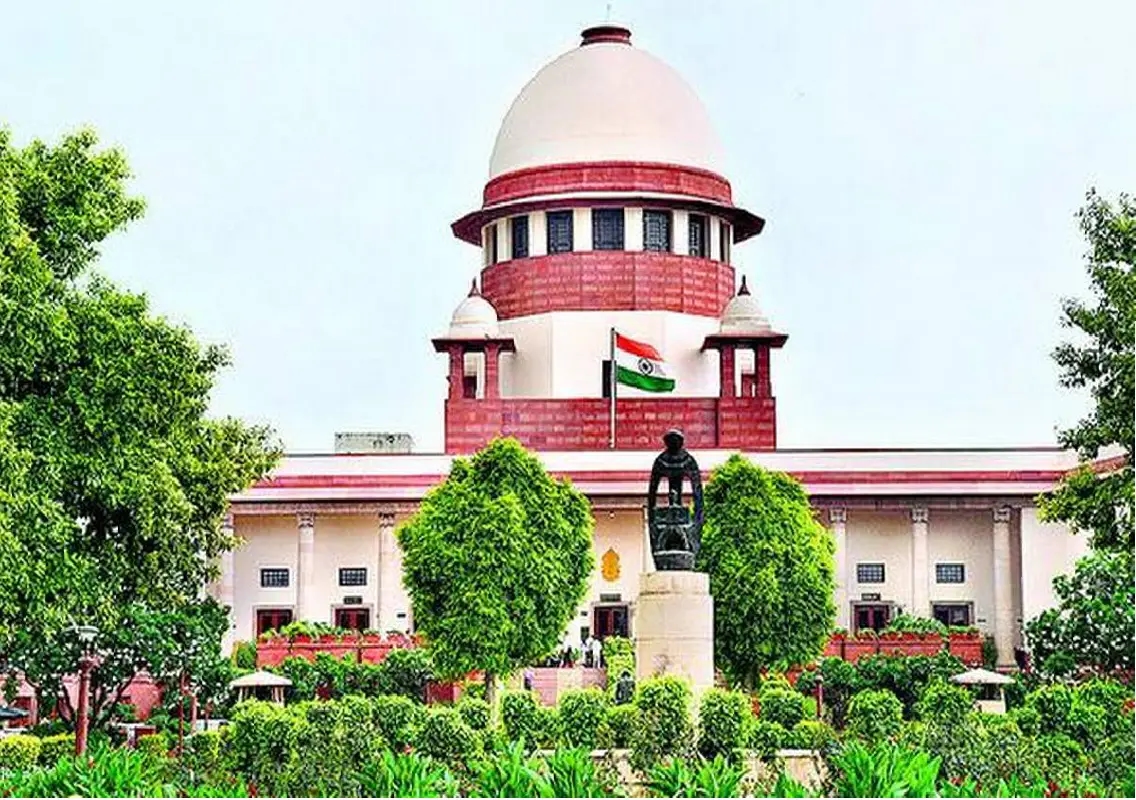


New Delhi: The Supreme Court on Wednesday put the University Grants Commission (UGC) Regulations, 2026, on hold, observing that the new rules suffer from “complete vagueness” and are prone to misuse. The interim stay came amid widespread protests, particularly by students from the general category, who alleged that the regulations were discriminatory and lacked clarity in addressing complaints of caste-based discrimination affecting all sections of society.
A two-judge Bench comprising Chief Justice of India Surya Kant and Justice Joymalya Bagchi directed that the regulations be re-examined and issued notice to the Centre and the UGC. The court emphasised that the language of the regulations must be carefully reviewed by experts to ensure that they do not result in unintended consequences or deepen social divisions on university campuses.
Court questions direction of social progress
During the hearing, the Chief Justice expressed concern over the persistence of caste-based discrimination even after 75 years of India’s independence. Reflecting on the broader societal implications of the regulations, he questioned whether the country was moving forward or regressing in its approach to equality and social cohesion.
“In a country after 75 years, all that we have achieved, to become a classless society; are we becoming a regressive society?” the Chief Justice remarked. He pointed out that some of the worst instances of discrimination in educational institutions arise from cultural intolerance, particularly against students from different regions such as the South or the North-East.
He cautioned against measures that could promote segregation, including proposals for separate hostels, stating that such steps could undermine the idea of social integration. Drawing from personal experience, the Chief Justice noted that students from diverse backgrounds had traditionally lived together in hostels, fostering understanding rather than division.
Concerns over segregation and misuse
The Bench warned that poorly drafted regulations could be exploited, leading to outcomes contrary to the intended goal of equity. The Chief Justice drew parallels with historical segregation in the United States, where racial divisions led to separate schools for different communities.
“I hope we don’t go to segregated schools like the US, where blacks and whites went to different schools. This kind of situation can be exploited,” he observed, underlining the need for caution while framing policies aimed at social justice.
Justice Joymalya Bagchi, while acknowledging the constitutional mandate to protect marginalised communities, agreed that there should be no regression from progressive legislation. He stressed that laws intended to promote equality must be inclusive and carefully balanced.
Background of the UGC Regulations 2026
The UGC Regulations, 2026, mandate all universities and colleges across the country to establish an Equal Opportunity Centre (EOC) and campus-level committees to inquire into complaints of discrimination and promote equity and inclusion. The regulations were framed with the stated objective of addressing caste-based discrimination in higher educational institutions.
However, soon after their notification, the regulations sparked protests and legal challenges. Critics argued that the rules were ambiguous and failed to provide a clear mechanism for students from the general category to raise complaints, thereby creating an unequal framework for addressing discrimination.
Petitioners challenge definition of caste discrimination
Appearing on behalf of the petitioners, advocate Vishnu Shankar Jain strongly criticised the definition of “caste-based discrimination” under Section 3(c) of the regulations. He argued that the definition restricts caste discrimination to acts committed against Scheduled Castes, Scheduled Tribes and Other Backward Classes, effectively excluding members of the general category.
“We are challenging Section 3(c) of the regulations. Caste-based discrimination is defined as the caste-based discrimination against SC, ST and OBC. This completely excludes the members of the general category,” Jain submitted.
He further contended that such a definition violates Article 14 of the Constitution, which guarantees equality before the law. According to him, discrimination cannot be presumed to operate only against one segment of society, and any regulatory framework must recognise that unfair treatment can affect individuals across social categories.
Court examines constitutional provisions
The Bench noted that Article 15(4) of the Constitution empowers the State to make special provisions for the advancement of Scheduled Castes and Scheduled Tribes. At the same time, the judges underscored that constitutional safeguards for disadvantaged groups should not result in the exclusion of others from the protection of law.
The court observed that while affirmative action remains a cornerstone of India’s constitutional framework, the drafting of subordinate legislation such as UGC regulations must be precise, balanced and free from ambiguity to prevent misuse.
Status quo to continue under 2012 rules
With the UGC Regulations, 2026, put on hold, the Supreme Court directed that colleges and universities must continue to follow the existing 2012 regulations governing grievance redressal and anti-discrimination measures. This ensures that there is no regulatory vacuum while the matter remains under judicial scrutiny.
The court’s decision has provided temporary relief to protesting students and institutions that had raised concerns about the practical implementation of the new rules.
Next hearing and way forward
The Supreme Court has scheduled the next hearing in the matter for March 19. By then, the Centre and the UGC are expected to respond to the court’s observations and clarify their stand on the contested provisions.
Conclusion
The interim stay on the UGC Regulations, 2026, highlights the judiciary’s insistence on clarity, inclusiveness and constitutional balance in policymaking. As the debate over equity and discrimination in higher education continues, the final outcome of the case is likely to have far-reaching implications for universities, students and the broader discourse on social justice in India.