







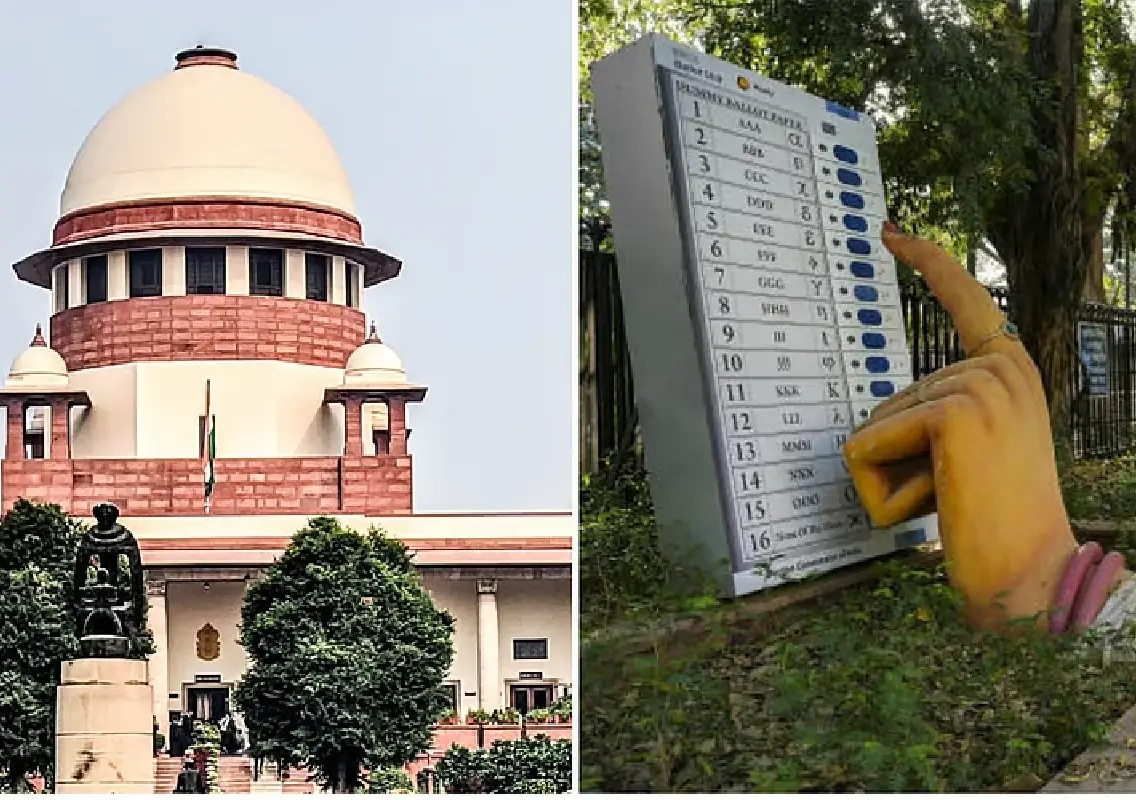


New Delhi: The Supreme Court on Thursday underscored the importance of an independent and impartial process for appointing the Chief Election Commissioner (CEC) and Election Commissioners (ECs), observing that the Election Commission must not only function independently but also be seen to do so.
The court questioned why Parliament excluded the Chief Justice of India (CJI) from the selection committee under the Chief Election Commissioner and Other Election Commissioners (Appointment, Conditions of Service and Term of Office) Act, 2023, and reserved its verdict on the Centre’s request to refer the matter to a Constitution Bench.
Court questions exclusion of CJI
A Bench comprising Justices Dipankar Datta and Satish Chandra Sharma observed that the CJI is part of selection committees for key constitutional appointments such as the CBI Director and the Lokpal.
The judges asked what justified replacing the CJI with a Union Cabinet Minister in the panel responsible for selecting the CEC and Election Commissioners—positions considered crucial to the functioning of India’s democracy.
The court remarked that while the Election Commission must be independent, it must also inspire public confidence by appearing independent.
Centre defends law passed by Parliament
Appearing for the Centre, Attorney General R. Venkataramani and Solicitor General Tushar Mehta argued that Parliament’s legislative wisdom should not be questioned merely because an alternative model exists.
Mehta submitted that people must trust the Prime Minister’s constitutional role and argued that it would be inappropriate to presume that the government would act in bad faith while making appointments.
The Bench clarified that it was not questioning the Prime Minister’s integrity but emphasised that the selection process should visibly reflect fairness and impartiality.
Challenge to 2023 appointment law
The Supreme Court is hearing petitions challenging the constitutional validity of the 2023 Act, under which the President appoints the CEC and ECs based on the recommendation of a committee comprising the Prime Minister, the Leader of the Opposition and a Union Cabinet Minister nominated by the Prime Minister.
The law replaced an interim arrangement laid down by a five-judge Constitution Bench in 2023, which had directed that appointments be made by a committee comprising the Prime Minister, the Chief Justice of India and the Leader of the Opposition until Parliament enacted a law.
After hearing detailed arguments from both sides, the Supreme Court reserved its verdict on the Centre’s plea seeking reference of the matter to a larger Constitution Bench.