







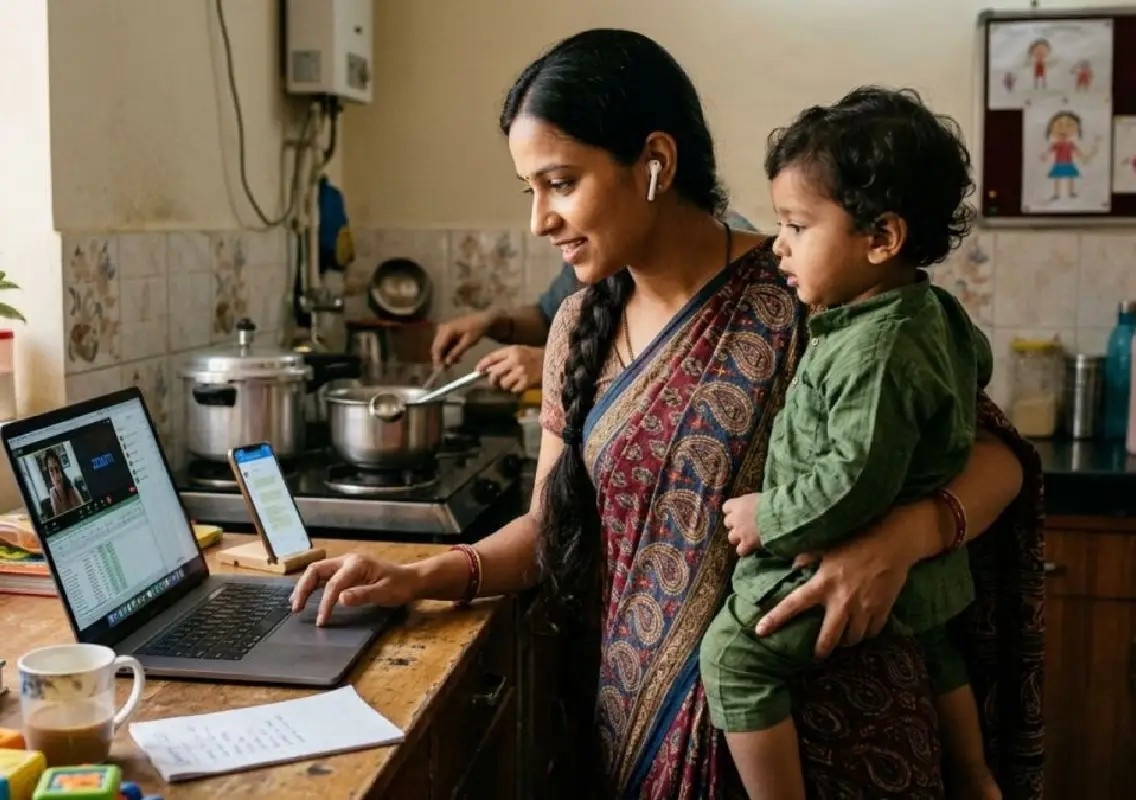


In a significant ruling, the Supreme Court has said that women who manage households should not be viewed merely as homemakers, describing them instead as “nation builders” whose contributions extend far beyond domestic responsibilities.
A bench led by Justice Sanjay Karol observed that unpaid household work and caregiving play a crucial role in raising future generations, strengthening families and contributing to national development.
‘Marriage does not mean hiring a maid’
The court made strong observations on gender roles within marriage, stating that household responsibilities are shared duties and cannot be placed solely on women.
“Marriage does not mean hiring a maid,” the bench remarked, emphasising that a woman’s aspirations, career goals and personal identity do not end after marriage.
The court further clarified that women pursuing careers while caring for their families cannot be accused of neglecting their marital responsibilities.
Unpaid work deserves recognition
Highlighting the often-overlooked value of domestic labour, the court said homemakers make immense contributions to family welfare and wealth creation through years of unpaid work.
According to the judgment, a homemaker’s role goes far beyond cooking and cleaning. It includes raising children, nurturing values, supporting family members and contributing to human development.
The court stressed that these contributions carry measurable economic and social value and deserve greater recognition in society.
New compensation guideline announced
The observations were made while the court was considering compensation principles in cases involving the accidental death of homemakers.
In a major move, the Supreme Court fixed the value of “loss of domestic care” at ₹30,000 per month for motor accident compensation cases. It said compensation should reflect not only financial loss but also the value of care and services that families lose when a homemaker dies.
The court also directed High Courts across the country to ensure quicker disposal of motor accident compensation cases.
A powerful message
Legal experts have described the ruling as one of the strongest judicial recognitions of unpaid domestic labour in recent years.
For millions of women whose work often goes unnoticed, the Supreme Court’s message was clear: a woman running a household is not merely a homemaker but a nation builder whose contribution deserves respect, recognition and value.