







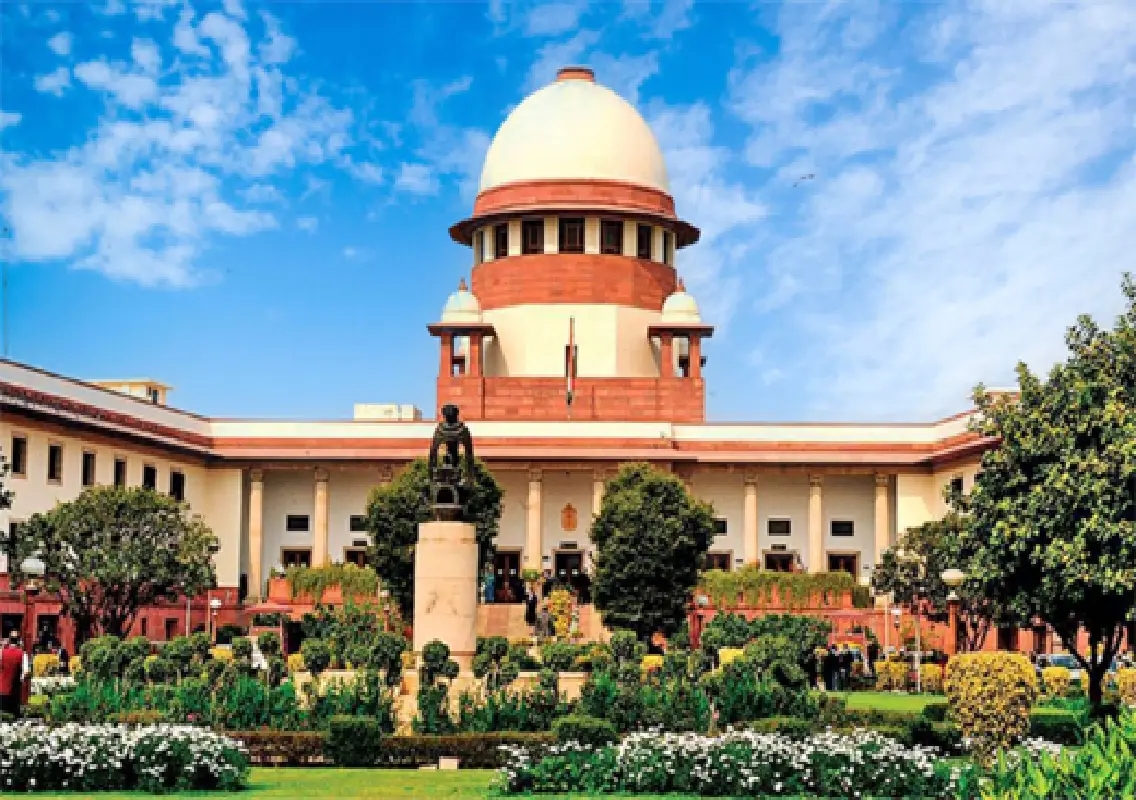


New Delhi: The Supreme Court of India on Thursday strongly criticised political parties across states for promoting what it termed a growing “freebie culture”, observing that such largesse could hamper economic development and needs to be revisited.
The court made the remarks while hearing a plea related to the DMK government-led Tamil Nadu Power Distribution Corporation Ltd, which had proposed providing free electricity without distinguishing between financially weaker sections and those who can afford to pay.
‘High time to revisit such policies’
A bench comprising Chief Justice Surya Kant and Justices Joymalya Bagchi and Vipul M Pancholi observed that while it is the state’s duty to support the poor, indiscriminate distribution of benefits could undermine fiscal stability.
“Most of the states in the country are revenue deficit states and yet they are offering such freebies,” the bench remarked, adding that economic development of the nation would be hampered by such distribution of largesse.
The Chief Justice noted that states continue to run fiscal deficits while announcing expansive welfare schemes. “Yes, it is the state’s duty to provide. But the ones who are enjoying freebies… is it not something that should be looked at?” he observed orally during the hearing.
He further questioned whether a significant portion of annual revenue — nearly 25 per cent in some cases — could instead be channelled into development projects.
Planned expenditure versus appeasement
The bench emphasised that the issue was not limited to any one state but was prevalent across the country. Justice Joymalya Bagchi pointed out that if such schemes are considered necessary, they should be incorporated into the Budget as planned expenditure with proper justification.
“It’s not one State we are talking about, it’s about all states. It is planned expenditure. Why don’t you make Budget proposals and give justification that this is my outlay on unemployment of people?” he said.
The court suggested that instead of blanket freebies, governments could consider targeted measures such as unemployment support or structured welfare schemes aimed at improving livelihoods.
Concern over fiscal priorities
The top court also questioned the timing of the Tamil Nadu utility’s move, noting that the decision to expand free electricity supply came after tariff announcements.
“What kind of culture are we developing in India?” the bench asked, expressing concern that states appear to be focusing primarily on salary payments and welfare distribution at the cost of capital and development expenditure.
The Chief Justice further observed that while it is understandable for states to extend benefits to those incapable of paying electricity charges, failing to distinguish between the needy and those who can afford to pay may amount to an appeasement policy.
Wider policy debate
The remarks add judicial weight to an ongoing national debate over the fiscal sustainability of pre-election promises and universal subsidy schemes. Several states have in recent years rolled out free or subsidised electricity, transport and cash transfer schemes.
While supporters argue that such measures provide essential relief and social security, critics contend that unchecked expansion of subsidies can strain state finances and limit spending on infrastructure, health and education.
The matter remains under consideration, and the court’s observations are likely to influence future discussions on balancing welfare commitments with fiscal discipline.