







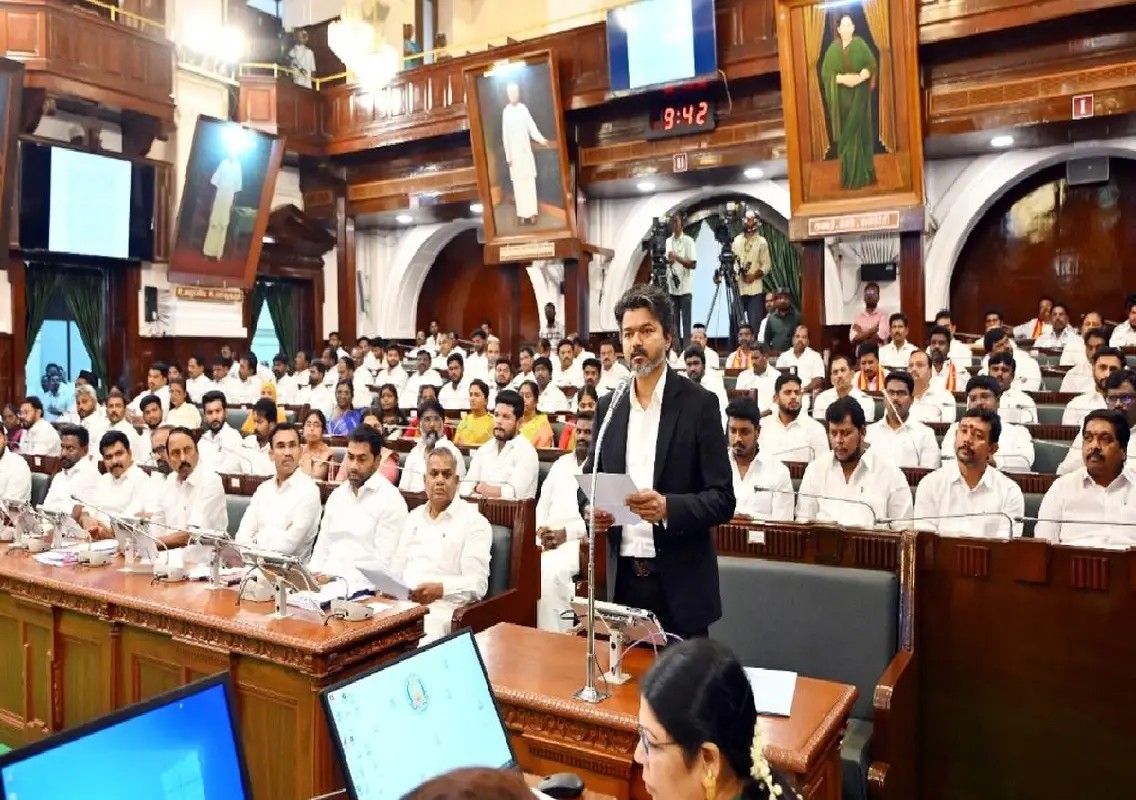


Chennai: The Tamil Nadu Legislative Assembly on Friday unanimously adopted a resolution opposing the Karnataka government’s proposal to construct a balancing reservoir across the Cauvery River at Mekedatu, escalating the long-standing interstate dispute over water sharing in the Cauvery basin.
The resolution, moved by Tamil Nadu Chief Minister C. Joseph Vijay, expressed strong objection to what the state described as Karnataka’s unilateral attempt to proceed with the Mekedatu project without obtaining the concurrence of the other basin states or securing the necessary approvals from the Union government.
The development marks the latest chapter in the decades-old Cauvery water dispute between Karnataka and Tamil Nadu, a matter that continues to hold significant political, agricultural and economic importance for both states.
Resolution cites tribunal award and Supreme Court verdict
Chennai legislators stated that the proposed Mekedatu project cannot be undertaken without adhering to the provisions of the final award issued by the Cauvery Water Disputes Tribunal on February 5, 2007, and the judgment delivered by the Supreme Court of India on February 16, 2018.
According to the resolution, both the tribunal and the Supreme Court had recognised the Cauvery basin as a deficit basin and apportioned the available water among the basin states. The resolution argued that no new project should be undertaken in the basin that could alter the existing allocation framework or result in additional utilisation of water.
The Assembly maintained that any major project within the basin requires consultation and agreement among all affected states before receiving approval.
Demand to withhold approvals
The resolution urged the Union government not to grant any form of approval to the Mekedatu project, including technical, administrative or environmental clearances.
Tamil Nadu lawmakers also called upon the Centre to advise Karnataka against proceeding with the construction of a dam or any new water storage project at Mekedatu or elsewhere in the Cauvery basin without obtaining the consent of the concerned basin states and the approval of the Union government.
The Assembly stressed that the Cauvery issue remains a highly sensitive matter between Tamil Nadu and Karnataka and should be handled in accordance with legal and constitutional procedures.
Call for new tribunal
As part of the resolution, the Tamil Nadu government reiterated its request made in a letter dated March 4, 2026, seeking the constitution of a new tribunal under Section 4 of the Inter-State River Water Disputes Act, 1956.
The Assembly urged the Centre to establish the tribunal to address issues arising from interstate river water disputes and provide an appropriate mechanism for resolving concerns related to future projects within the Cauvery basin.
The move reflects Tamil Nadu’s position that any changes affecting water availability and allocation should be examined through established legal processes.
Objection to DPR examination
The resolution also specifically urged the Central Water Commission (CWC) not to examine, process or approve the Detailed Project Report (DPR) submitted by the Karnataka government for the Mekedatu project.
Tamil Nadu contends that consideration of the DPR without resolving the concerns of downstream states could adversely affect the interests of basin stakeholders and undermine the existing framework governing water sharing.
The state has consistently maintained that the project could potentially impact water flows available to Tamil Nadu, particularly during periods of low rainfall and drought.
Mekedatu remains a contentious issue
The proposed Mekedatu balancing reservoir has been a source of disagreement between Karnataka and Tamil Nadu for several years. Karnataka has argued that the project is intended to provide drinking water to Bengaluru and neighbouring regions while also generating hydroelectric power.
Tamil Nadu, however, has repeatedly expressed concerns that the project could affect downstream water availability and alter the implementation of the Cauvery water-sharing arrangement.
The issue has frequently resurfaced in political and legal forums, reflecting the broader challenges associated with managing interstate river resources in India.
Conclusion
The unanimous resolution adopted by the Tamil Nadu Assembly signals continued opposition to Karnataka’s proposed Mekedatu reservoir project and reinforces the state’s demand for strict adherence to existing legal and water-sharing frameworks. With Tamil Nadu urging the Union government to withhold approvals and consider the formation of a new tribunal, the Mekedatu issue is likely to remain a significant point of contention between the two states in the coming months.