







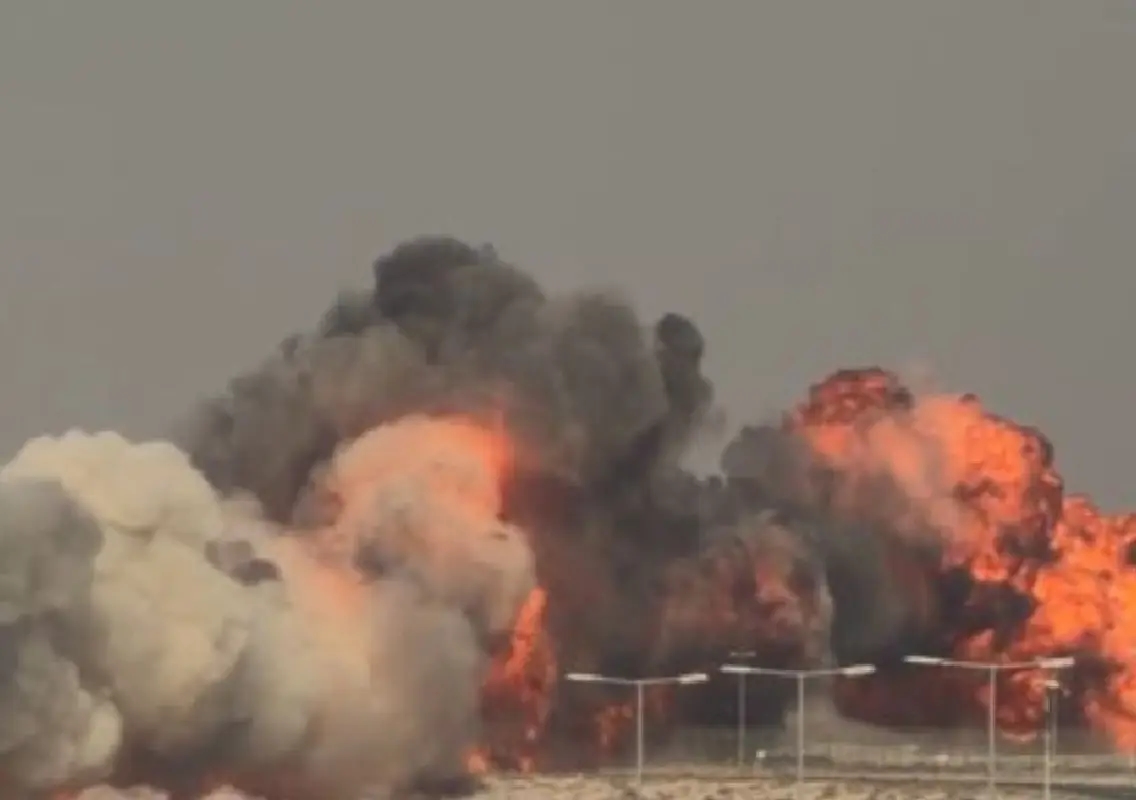


An Indian Air Force (IAF) Tejas fighter jet that crashed during an air show in Dubai was executing a negative-G turn moments before impact, according to aviation experts who analysed early visuals of the manoeuvre. The pilot of the aircraft died in the crash
Jet seen losing altitude after loop manoeuvre
While a complete understanding of the crash awaits a formal investigation, preliminary assessments based on videos of the display suggest that the Light Combat Aircraft (LCA) Tejas suddenly lost altitude while attempting to regain level flight after completing a loop. Experts noted that the aircraft appeared to be under negative-G forces during the manoeuvre, leading to a rapid and unexpected descent.
The crash occurred during a demonstration flight at the air show, with spectators capturing the final moments of the aircraft as it descended faster than expected before striking the ground.
What negative-G means in aviation
Negative-G refers to forces acting opposite to the direction of normal gravity. Aircraft experience these forces during aerobatic manoeuvres, sudden descents or turbulence. Pilots often feel a sensation of being lifted from their seats when under negative-G.
If not controlled properly, such forces can cause blood to rush to the head, potentially leading to disorientation or a temporary loss of consciousness. To counter these effects, fighter pilots undergo extensive training to handle both positive-G and negative-G environments safely.
Experts, however, emphasised that video-based assessments remain speculative and that only a detailed technical inquiry can determine whether the negative-G manoeuvre directly contributed to the crash.
Tejas: India’s most stable modern fighter with rare crash history
The aircraft involved belonged to a squadron based in Sulur, Tamil Nadu, and had been in service since 2016. Despite the tragic incident, the Tejas has one of the best safety records in the IAF.
The Dubai crash is only the second accident in 24 years of the aircraft’s development and operational history. The first crash occurred in Rajasthan’s Jaisalmer in March 2024 — 23 years after Tejas’s maiden test flight in 2001.
Following the recent retirement of the MiG-21 fleet, the Tejas has been considered the IAF’s next primary workhorse due to its reliability, modern avionics and low maintenance profile.
Designed to be unstable — for agility
Like several modern fighter aircraft, including the American F-16, the Tejas is intentionally designed to be aerodynamically unstable to enhance agility during combat. This instability allows for sharper turns and more responsive manoeuvres but requires a sophisticated fly-by-wire system to keep the aircraft stable in real time.
The flight control computer constantly adjusts the control surfaces to counter instability, enabling the aircraft to perform tight aerobatic displays such as loops, rolls and negative-G manoeuvres.
Conclusion
The tragic loss at the Dubai air show has cast a spotlight on the complexities of advanced aerobatic flying and the risks inherent in demonstration flights. As the aviation community awaits the findings of the official inquiry, experts continue to analyse available footage to better understand the sequence of events. The Tejas programme, despite the setback, remains one of India’s most reliable and technologically advanced aviation achievements.