







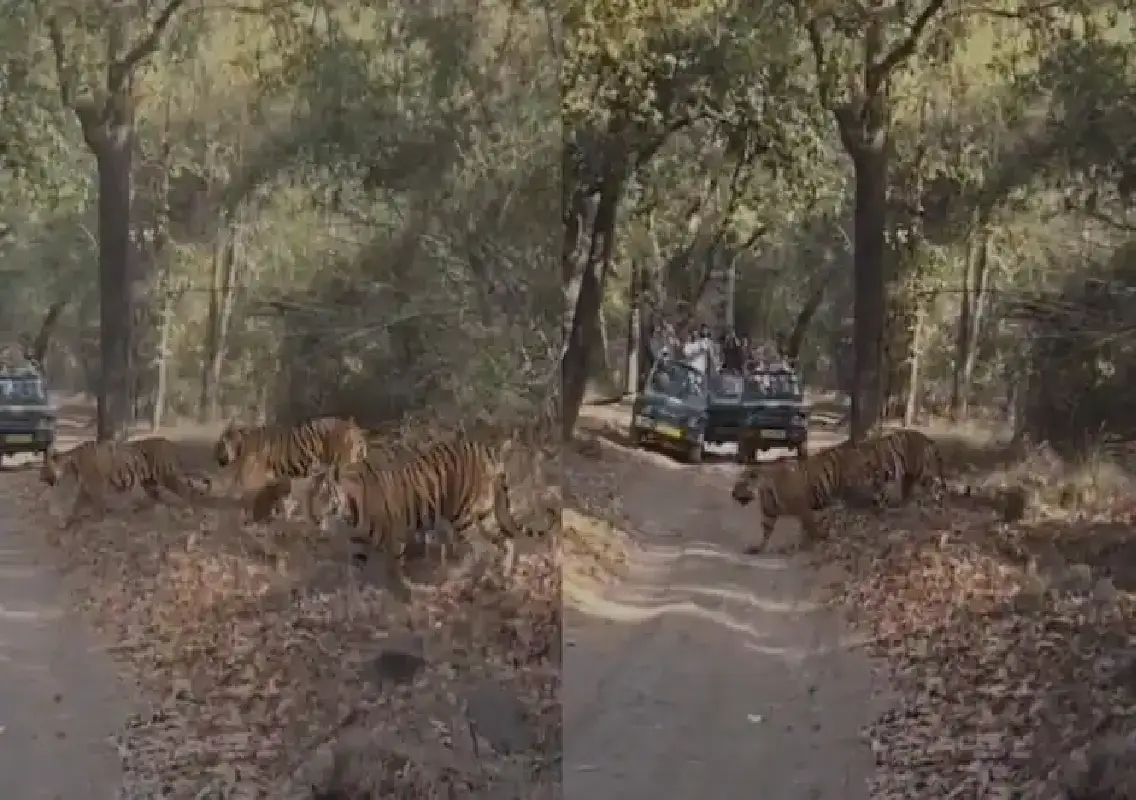


Bandhavgarh: A family of tigers from Bandhavgarh Tiger Reserve in Madhya Pradesh has captured widespread attention online, with videos shared by tourists and wildlife enthusiasts going viral across social media platforms.
The clips show the big cats calmly walking across forest paths, often in close proximity to safari vehicles, offering rare and mesmerising glimpses into the lives of tigers in the wild.
Chakradhara tigress and her cubs steal the spotlight
The group, popularly known as the “Chakradhara family,” is led by a six-year-old Bengal tigress, Chakradhara. She is frequently seen moving through the Tala zone of the reserve along with her five cubs.
The cubs, described as playful and curious, have been spotted exploring forest trails, occasionally pausing near safari routes, delighting visitors and photographers.
Such repeated sightings of an entire tiger family together are considered rare in the wild, making the phenomenon particularly special.
Presence of male tiger adds to rarity
Adding to the excitement, a nine-year-old male tiger named Bajarang has also been seen accompanying the tigress and cubs on some occasions.
Wildlife experts note that adult male tigers typically maintain distance from cubs, except under certain circumstances. Therefore, sightings of the entire family together—including the male—are uncommon and noteworthy.
Tala zone becomes hotspot for sightings
The Tala zone, one of the most popular safari areas within Bandhavgarh, has become a hotspot for these sightings in recent weeks. Tourists visiting the reserve have been fortunate to witness the tiger family crossing paths and moving through the forest undisturbed.
The increasing number of sightings has turned the Chakradhara family into a major attraction, boosting interest among wildlife enthusiasts and photographers.
Rich biodiversity of Bandhavgarh
Bandhavgarh Tiger Reserve, located in the Umaria district, is known for having one of the highest densities of Royal Bengal tigers in the world. The reserve spans approximately 1,537 sq. km., featuring a mix of dense Sal forests, bamboo thickets, grasslands, and rocky cliffs.
Apart from tigers, the reserve is home to a diverse range of wildlife, including leopards, sloth bears, gaur (Indian bison), wild dogs, and more than 250 species of birds.
The tiger population in the reserve is currently estimated to be around 75, making it one of India’s प्रमुख destinations for wildlife tourism.
Social media buzz and conservation awareness
The viral videos have not only entertained viewers but also sparked conversations around wildlife conservation and responsible tourism. Many users have expressed awe at the rare sightings while also emphasising the need to maintain safe distances and respect wildlife habitats.
Forest officials continue to regulate safari movements to ensure that such interactions do not disturb the animals.
Conclusion
The viral rise of the Chakradhara tiger family highlights the unique appeal of India’s wildlife reserves and the importance of preserving natural habitats. As tourists flock to witness these rare moments, authorities stress the need for sustainable tourism practices to protect these majestic animals for future generations.